Direct answer: Attic frost forms when moisture reaches a roof surface cold enough to freeze. In Oakville homes, the moisture may arrive through ceiling air leakage, a disconnected exhaust duct, high indoor humidity or exterior water entry. Insulation, air sealing and ventilation have different roles; the correct fix starts by locating the source and pattern.
How attic frost and condensation form
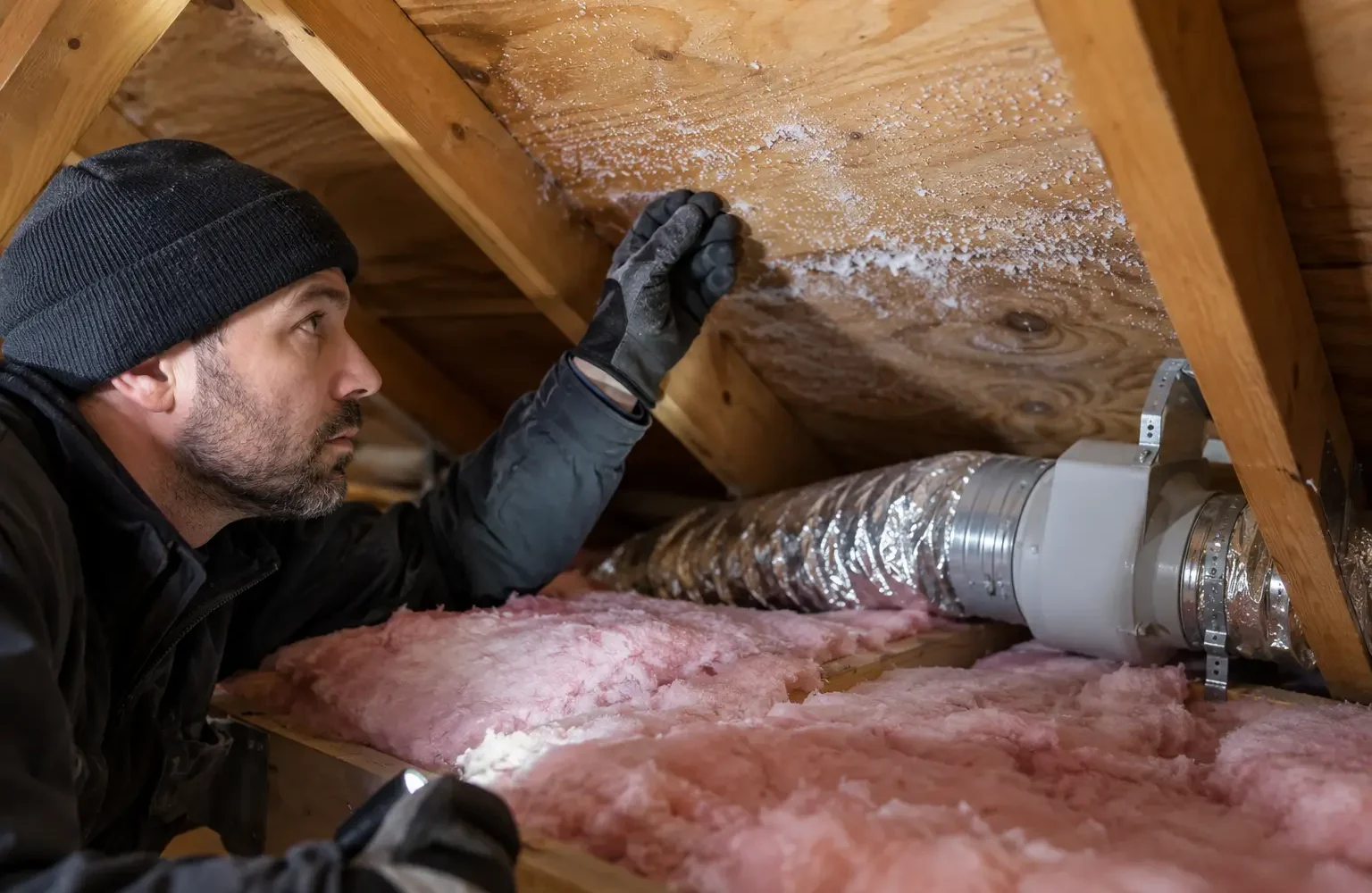
Air can hold different amounts of water vapour depending on its temperature. Warm indoor air carries moisture from people, cooking, bathing, plants, humidifiers and drying laundry. When that air reaches cold roof sheathing, it cools. If the surface is below the dew point, water condenses. If the surface is below freezing, that water appears as frost.
Frost can accumulate quietly during a cold period. When outdoor temperatures rise or the roof warms in sun, it melts. The meltwater may drip onto insulation, darken nails, stain ceiling finishes or run along framing. By the time the attic is inspected, the white frost can be gone and only secondary evidence remains.
This cycle explains why “the roof does not leak when it rains” does not rule out an attic moisture problem. It also explains why a roof stain does not automatically prove condensation. Exterior water and interior moisture can create overlapping evidence, so location and timing matter.
Four common moisture sources
1. Indoor air leaking through the ceiling
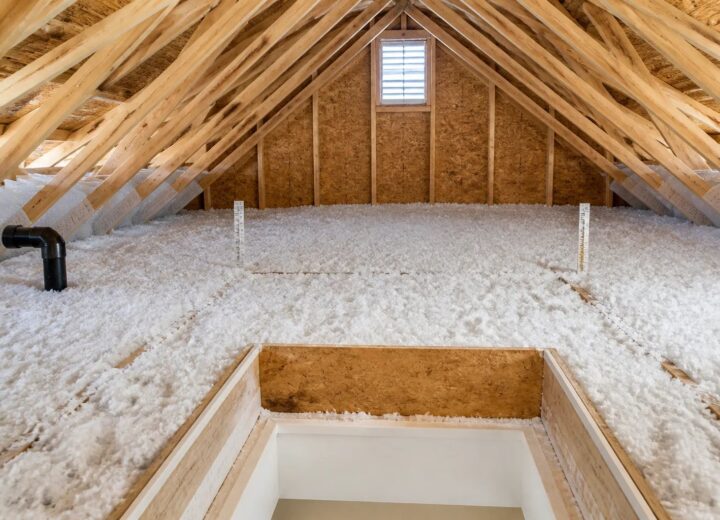
Open top plates, plumbing stacks, wiring holes, dropped ceilings, attic hatches and gaps around fan housings can move warm indoor air into the attic. Stack effect increases this upward pressure during cold weather. A deep insulation layer can hide the openings without sealing them.
2. Bathroom or kitchen exhaust delivered into the attic
A disconnected, torn or poorly routed duct can release concentrated warm moist air beneath the roof. Even a duct that reaches an exterior hood may leak at joints or collect condensate if it is uninsulated and poorly sloped through cold space. The termination should be traced, not assumed.
3. High indoor humidity
Humidifiers, long showers, cooking, many plants, drying clothes indoors and inadequate mechanical ventilation can raise winter humidity. The safe indoor level changes with outdoor temperature and window performance. Persistent window condensation is a useful warning that the house may be carrying more moisture than cold surfaces can tolerate.
4. Roof, flashing or exterior water entry
Damaged shingles, flashing, vents, ice, snow or wind-driven rain can introduce water from outside. The path may follow sheathing or framing before dropping into insulation. Weather records and photographs during the event help a roofer distinguish this source from condensation.
What insulation, air sealing and ventilation each do
Insulation reduces heat flow
Attic insulation slows conductive heat moving through the ceiling. Consistent coverage helps keep the interior ceiling warmer and reduces heat reaching the roof. It does not close an open plumbing chase, lower indoor humidity or connect a fan duct. Adding more over a wet or defective assembly can hide the evidence and make corrective work harder.
Air sealing reduces moisture transport with indoor air
Air sealing targets accessible leakage paths at the ceiling plane. Large chases need durable closures; small joints may use compatible sealants. Chimneys, flues, recessed fixtures and fire-rated details require approved methods and clearances. The most practical time to seal is before a top-up buries the floor.
Ventilation carries small background loads through an intended path
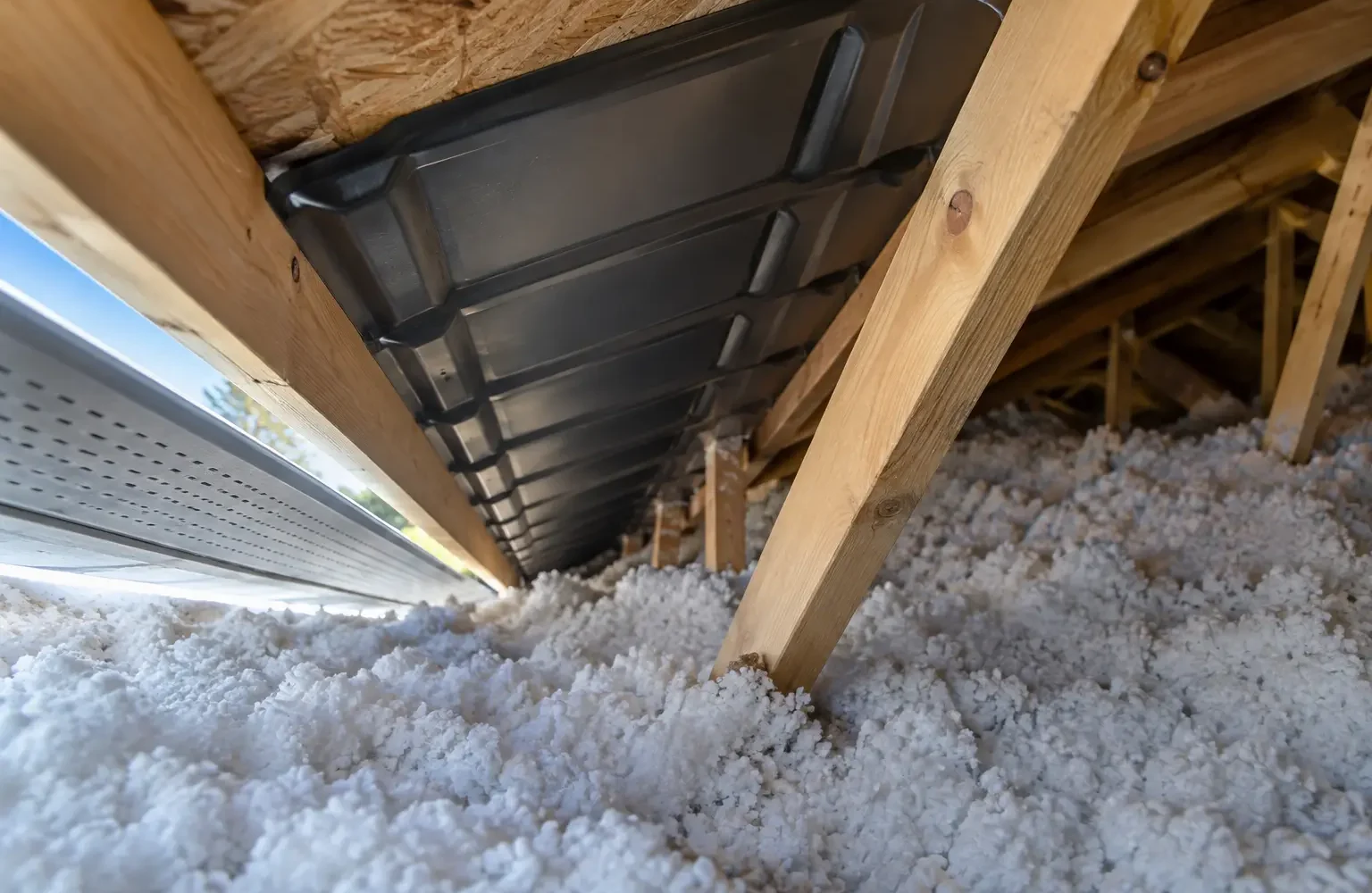
In a conventional vented attic, soffit intake and upper roof exhaust help remove heat and modest moisture. Baffles preserve the path above insulation at low eaves. Attic ventilation is not designed to absorb the concentrated discharge of a bath fan or compensate for major ceiling leakage.
Adding roof vents without understanding intake, wind and existing outlets can create little improvement or new weather-entry risks. The goal is a coherent lower-to-upper path, not the greatest number of holes.
What the frost pattern may suggest
| Observed pattern | Possible interpretation | Follow-up |
|---|---|---|
| Heavy localized frost above a bathroom | Fan duct leakage or a ceiling path may be delivering moisture | Trace the duct and inspect the ceiling area |
| Frost near an open plumbing chase | Stack-driven indoor air leakage | Assess a durable closure and sealing detail |
| Widespread light frost during extreme cold | General leakage plus indoor humidity may be involved | Record humidity, inspect multiple leakage paths and ventilation |
| Staining tied to one flashing or valley | Exterior water entry may be likely | Qualified roofing inspection during relevant weather |
| Wet insulation below a disconnected exhaust | Direct interior moisture source | Correct termination, assess material and dry assembly |
| Dark nails without current frost | Past condensation is possible | Use seasonal history and other evidence; do not diagnose from one sign |
Patterns are clues, not lab results. Air can travel within a cavity, and water can run along wood. Begin at the evidence and follow paths rather than assuming the source sits directly above the wettest spot.
A step-by-step attic moisture investigation
- Preserve the event. Take photographs safely from the hatch or a proper platform before frost melts. Include wide views and close details.
- Record conditions. Note outdoor temperature, recent snow or rain, indoor humidity, humidifier setting, bath and kitchen fan use, and which rooms are below.
- Check active water. If water is entering during a storm, prioritize interior protection and a qualified roofing assessment.
- Trace exhaust ducts. Follow each bathroom and kitchen duct to an outdoor termination. Look for loose joints, tears, low condensate traps and insufficient insulation.
- Inspect accessible ceiling paths. Review hatches, top plates, wiring, plumbing and large chases while respecting clearances.
- Review the vented path. Confirm soffit intake, baffles and upper exhaust are present and not blocked.
- Assess insulation condition. Identify wet, matted or contaminated material and the boundary of the affected area.
- Separate specialist issues. Refer roofing, electrical, structural, mould or hazardous-material conditions appropriately.
- Choose and document the sequence. Correct sources, dry the assembly, complete preparation, then restore insulation.
Indoor humidity: use the house as evidence
There is no single indoor relative-humidity number that is safe for every Oakville home and every winter temperature. Older windows may condense at a level tolerated by better glazing. Colder outdoor air lowers the temperature of exposed surfaces. A humidistat reading can also differ from the actual level elsewhere in the house.
Use window condensation, frost history and measured indoor humidity together. Reduce unnecessary humidification during very cold weather, use kitchen and bathroom exhausts, and ensure the home has appropriate mechanical ventilation. Do not lower humidity so aggressively that occupants experience other problems; the aim is a level the particular building can manage.
Prioritize repairs in the right order
First: stop active exterior or mechanical sources
Repair roof or flashing leaks through a qualified roofer. Connect and seal mechanical exhausts to appropriate exterior terminations. Correct plumbing leaks. These sources can deliver more water than passive attic ventilation can remove.
Second: remove damaged material where necessary and dry
Insulation that remains saturated, matted, contaminated or required to be removed for access may need targeted or broad removal. The exposed roof and ceiling components should reach a suitable condition before new material is installed. Significant mould or structural damage requires the appropriate professional.
Third: seal accessible indoor-air paths
Close large chases and seal smaller penetrations with details suited to each surface and risk. Improve the attic hatch. If deep insulation prevents access, define the extent of localized or broader removal needed for the planned work.
Fourth: restore ventilation and insulation
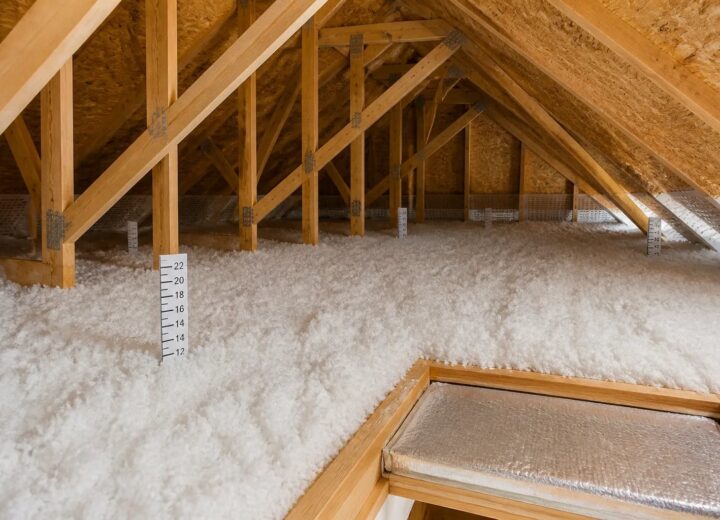
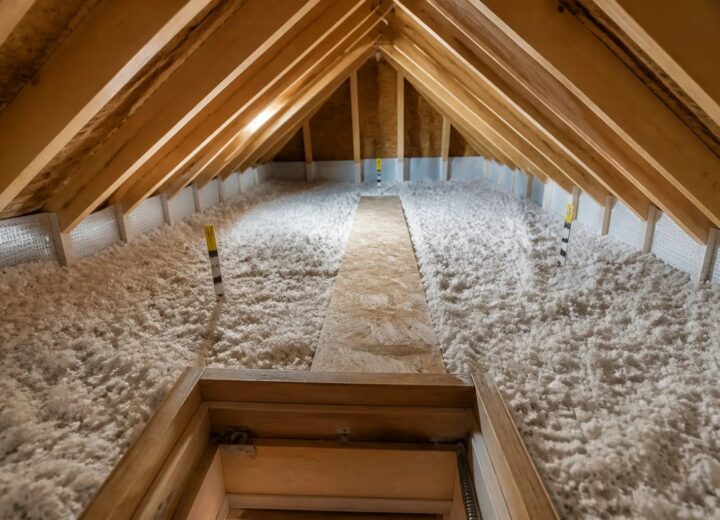
Install or extend baffles and dams where necessary, then restore continuous insulation without blocking the path. Review low eaves, hatches and transitions rather than concentrating only on the open centre.
Why “just add vents” can fail
If a bathroom fan exhausts into the attic, another roof vent does not stop the moisture. If a large chase moves indoor air upward, ventilation treats only part of the symptom. If flashing leaks, the problem is exterior water. Diagnose the source before changing the roof.
What happens to wet attic insulation?
The answer depends on material, amount of water, duration, contamination and access. A small area affected by a repaired leak may be removed and replaced. Fibre that briefly became damp but dried without damage may be assessed differently from saturated, collapsed material. Cellulose and fibreglass respond differently to wetting, but neither should be used to hold ongoing water.
Do not decide by colour alone. Dark fibre may contain ordinary dust, while clean-looking material can be damp. A moisture assessment and examination of adjacent wood and drywall provide better evidence.
Prevention and seasonal monitoring
- Operate bathroom and kitchen exhausts during moisture-producing activities and for an appropriate period afterward.
- Confirm ducts remain connected after roof, fan or attic work.
- Adjust humidifier operation in response to outdoor cold and visible condensation.
- Keep the attic hatch gasket and insulation detail functional.
- Preserve soffit baffles and upper vents during every insulation top-up.
- Inspect the roof and attic after unusual storms, ice events or interior leaks.
- Do not store boxes directly on insulation or walk outside a proper service platform.
- Keep before-and-after photographs so new marks can be compared with old ones.
Oakville climate and home context
Oakville’s winter cold can create strong temperature differences across the upper ceiling. Lake-influenced weather, wind, snow and freeze-thaw changes can make a roof symptom appear only under particular conditions. Summer humidity creates a different moisture direction and can expose air-conditioning or duct issues.
Older bungalows may have large open attics with many ceiling penetrations. Dormered and renovated homes can include hidden slopes and side attics. Newer homes can still have disconnected ducts, short baffles or localized insulation disturbance. Construction age changes the likely details, not the need for evidence.
Questions to ask during a frost assessment
- What pattern suggests the suspected source?
- Were all visible bath and kitchen exhaust ducts traced outdoors?
- What indoor humidity and weather records are available?
- Is the roof evidence consistent with exterior leakage?
- Which air-leak paths are accessible and which remain concealed?
- Are soffit intake and upper exhaust connected through clear channels?
- What material is wet, and what drying or removal is required?
- Which repairs must occur before insulation is restored?
Attic frost and condensation FAQs
Will more attic insulation stop frost?
Not by itself. Insulation reduces heat flow, but frost may be driven by ceiling air leakage, high indoor humidity, exhaust ducts or exterior water. The source must be addressed.
Will adding roof vents stop condensation?
Not when a major moisture source continues. Confirm intake, exhaust and baffles, but also trace indoor-air leakage, mechanical exhaust and roof water.
Should every wet patch of insulation be removed?
Material condition, duration, contamination and the corrected source determine the scope. Saturated, damaged or contaminated material often needs removal; a qualified assessment should define the boundary.
Can bathroom exhaust run into a soffit?
The duct should terminate outdoors through an appropriate hood and detail that avoids sending moisture back into the attic intake. Project-specific roof or wall termination design matters.
Why is frost concentrated on roofing nails?
Metal fasteners can be colder than surrounding materials and show condensation or frost first. Their pattern is a clue but does not by itself identify the source.
Can frost disappear without causing damage?
A small event may dry without obvious damage, but repeated or heavy frost can wet insulation and wood. Preserve photographs and investigate recurring conditions.
Do not guess between insulation, sealing and vents
Document the pattern, trace water and indoor moisture paths, then repair in the sequence the evidence supports.
Explore attic condensation and frost