Direct answer
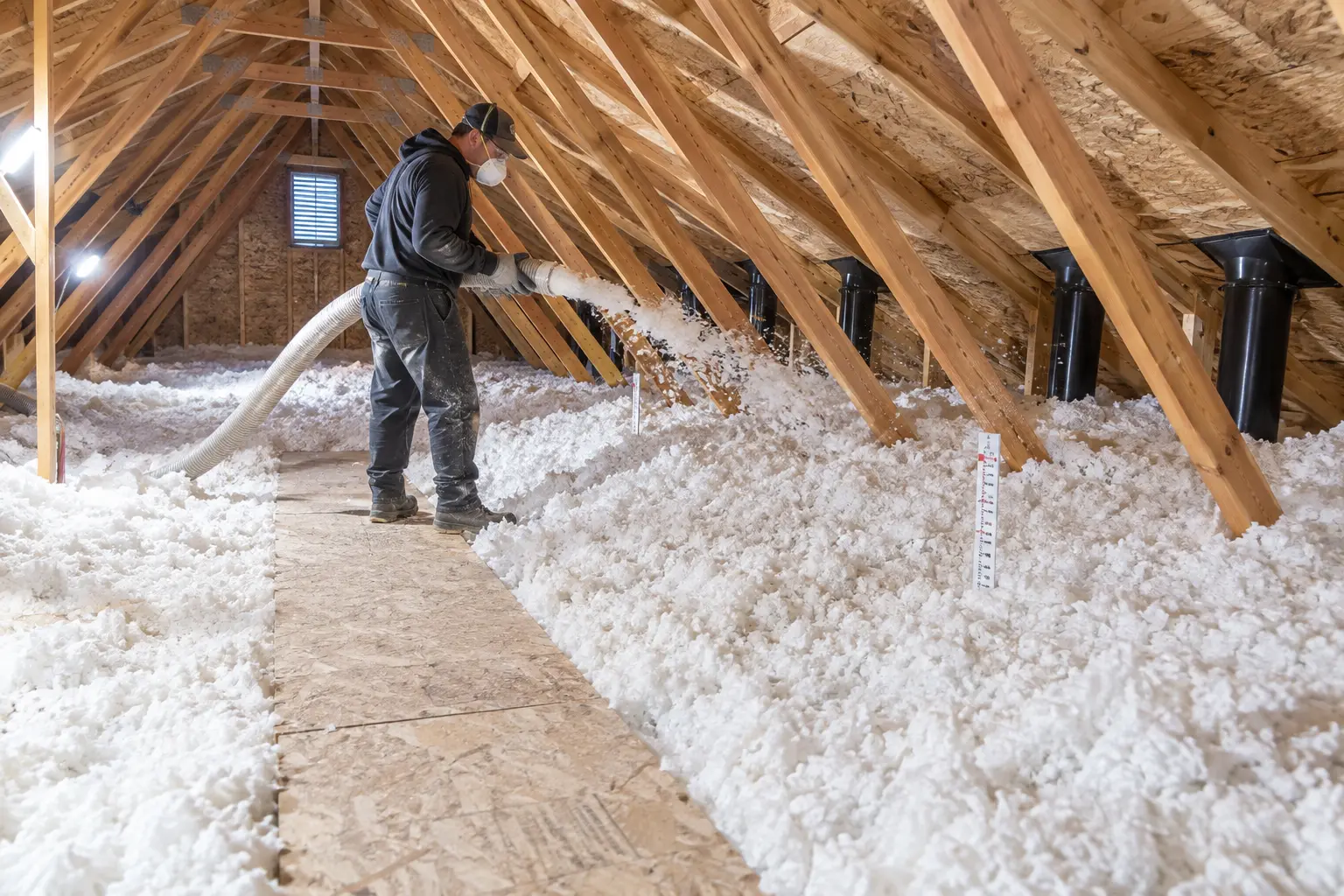
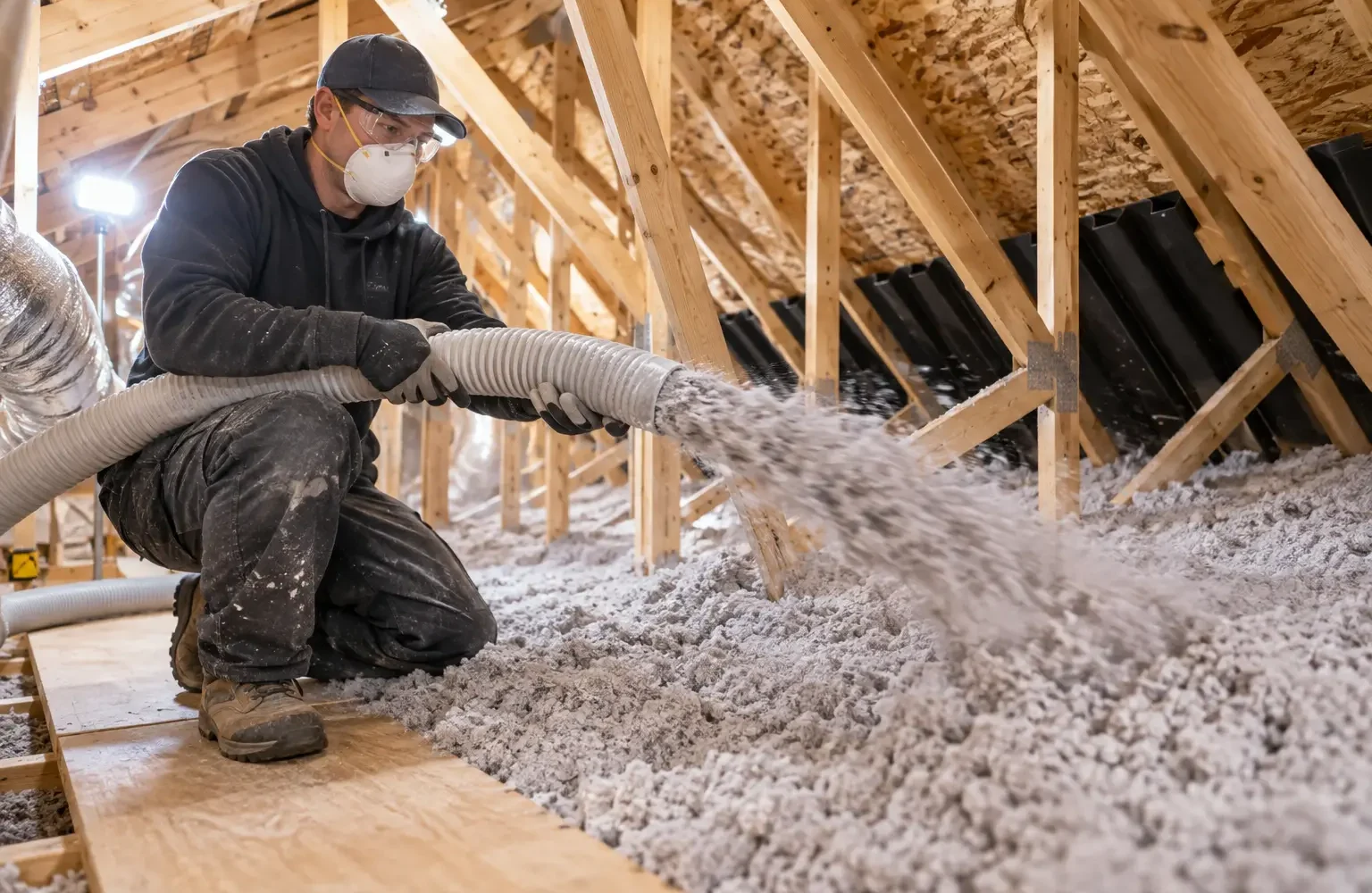
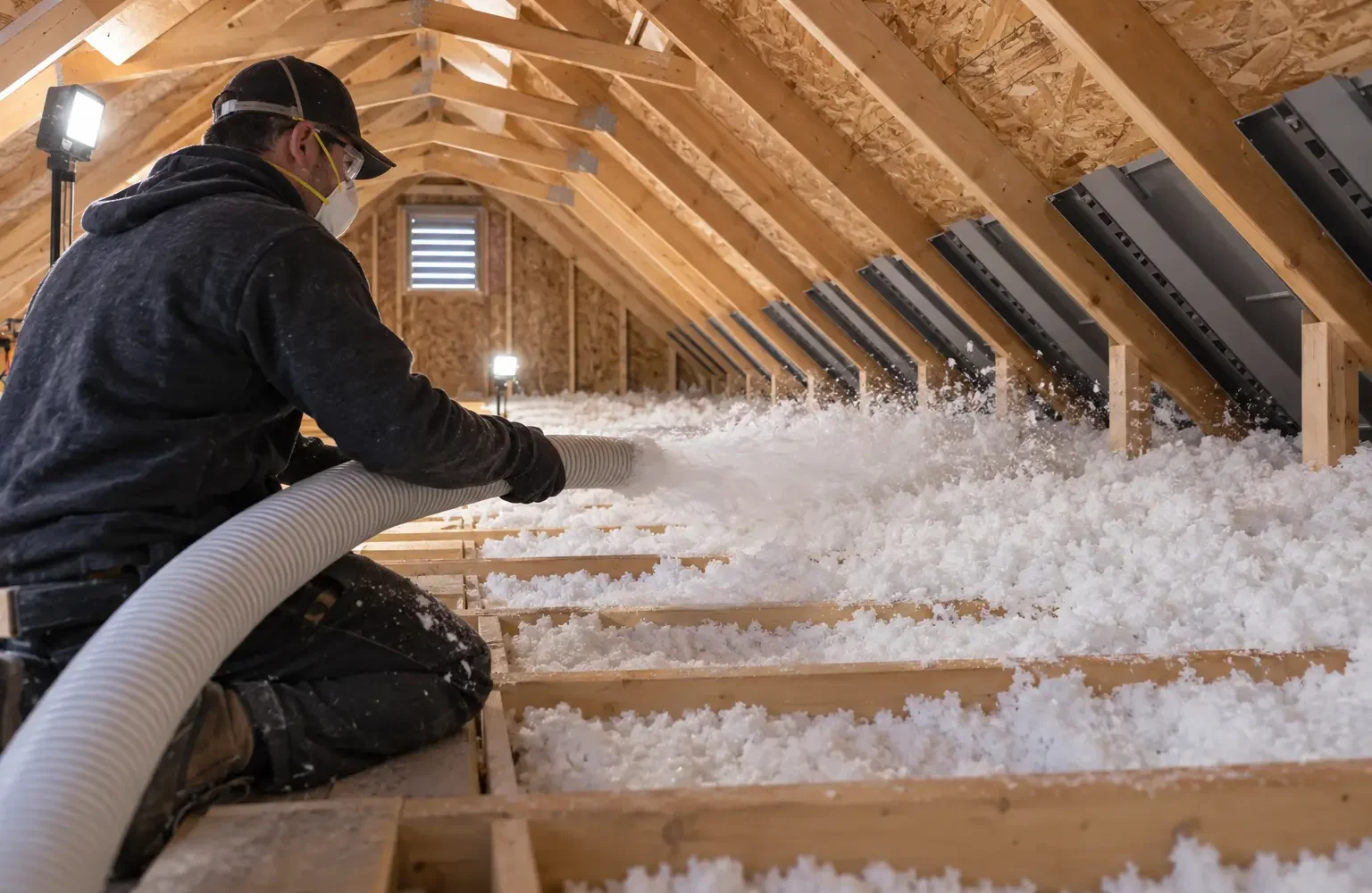
Blown-in insulation is loose-fill material installed with a blowing machine. It can cover irregular attic floors and framing efficiently, provided depth, density, eave airflow, clearances and preparation are controlled.
Start with the assembly
Plan the work around the existing condition
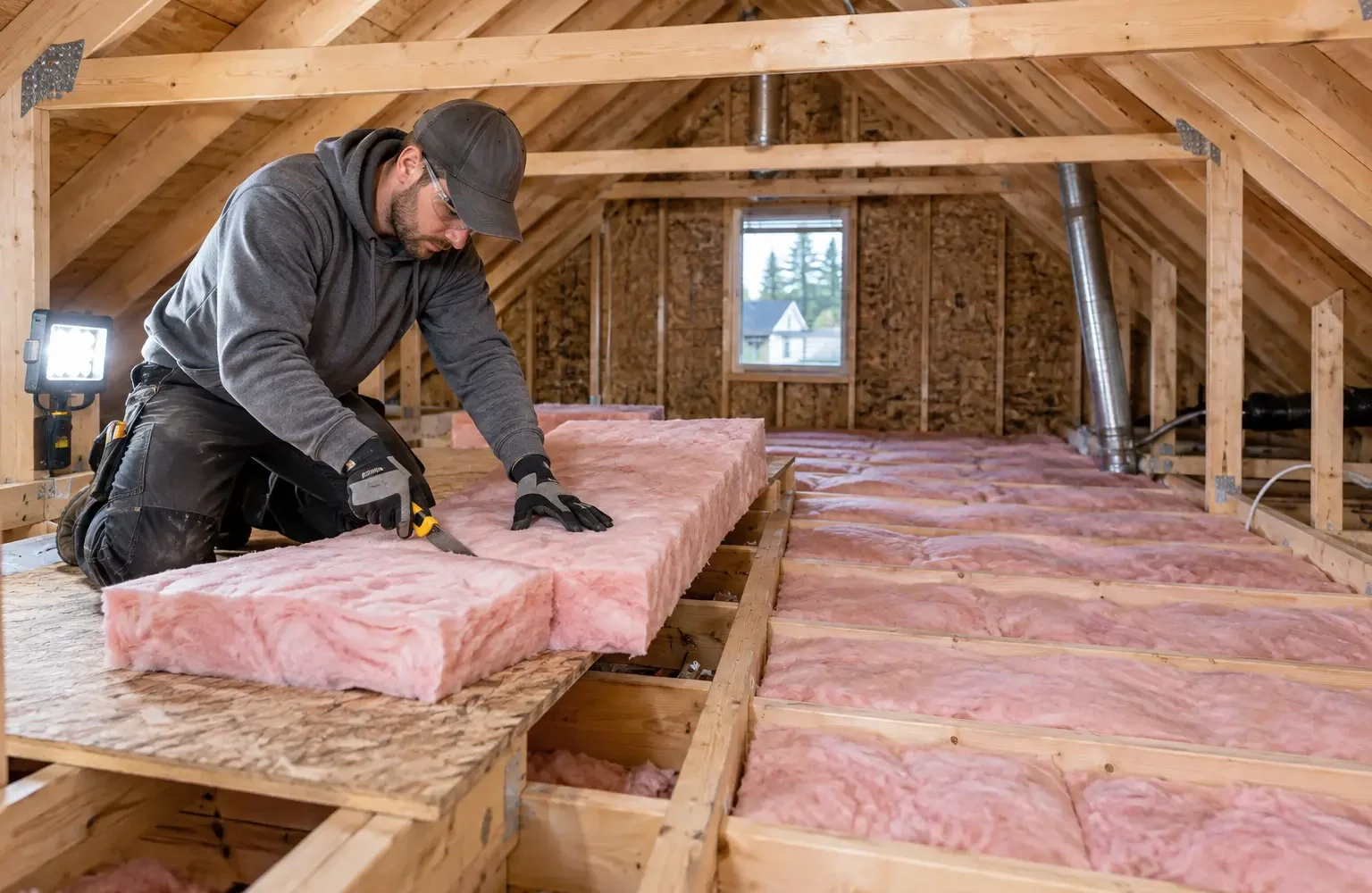
Blown-in describes the installation method, not one single product. Loose-fill fibreglass and cellulose have different properties and installation requirements. The material choice should fit the existing attic, the target thermal value and any compatibility concerns—not a blanket claim that one product is best everywhere.
- Open attic floors with many framing interruptions
- A top-up needs consistent coverage across broad areas
- Existing loose-fill is compatible and suitable to remain
- Hard-to-reach edges need controlled hose placement
Assessment
What should be checked before the scope is set
- Net attic area and target installed depth
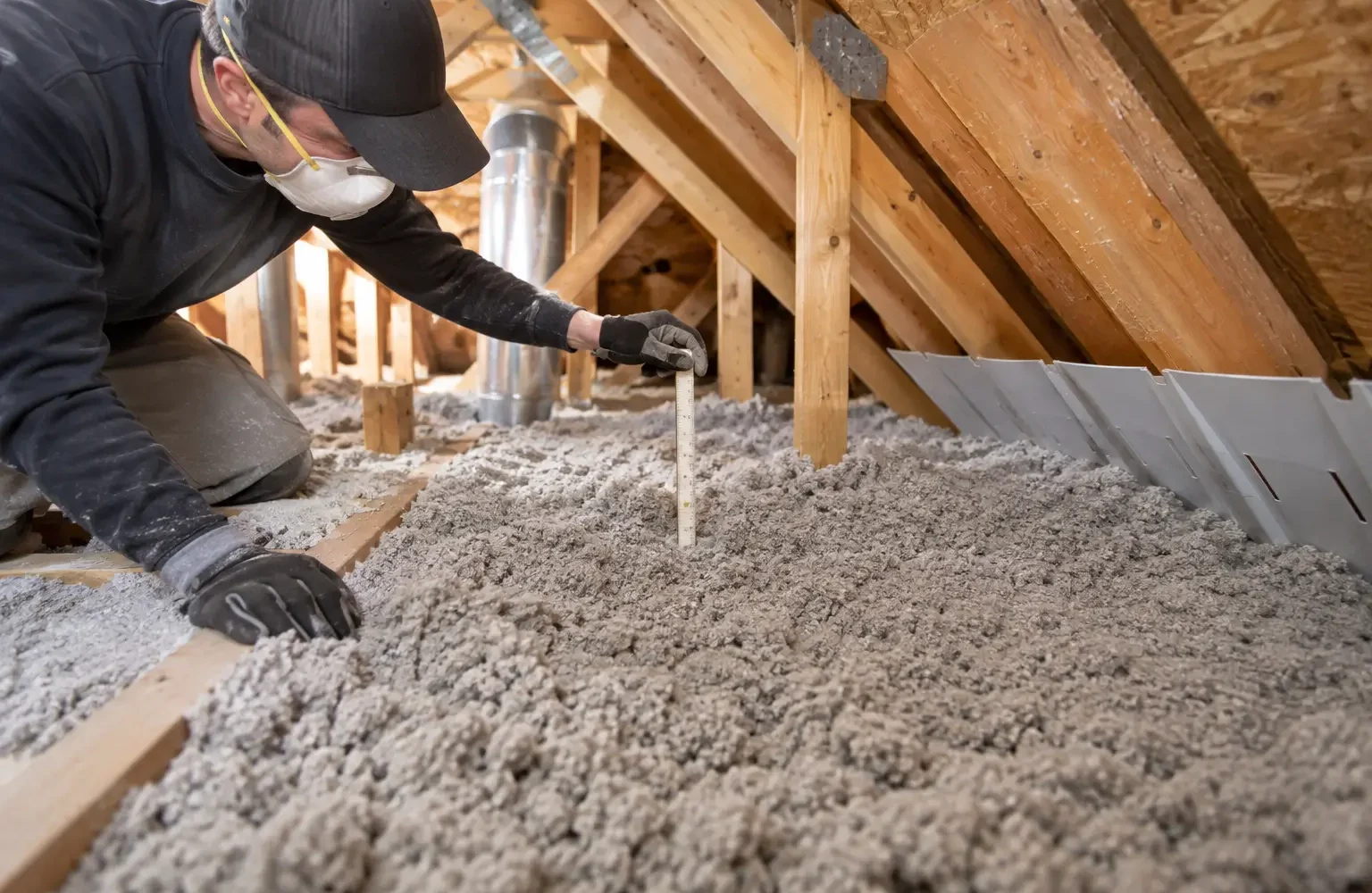
- Material type, bag coverage and settled value
- Baffles, dams, hatch protection and service platforms
- Combustion, electrical and heat-producing clearances
Possible scope
The work should follow the findings
These are common directions, not automatic inclusions. The final scope depends on access, existing materials and the condition found on site.
Loose-fill fibreglass for lightweight broad coverage
Cellulose where its density and characteristics suit the assembly
Depth rulers and documented coverage to support final review
Oakville planning context
How the local housing condition can shape the scope
Loose-fill is common for open attic floors, but Oakville rooflines with low eaves, dormers and additions need controlled placement. Baffles, dams and service paths help preserve the details beneath the final depth.
Important boundary
Loose-fill cannot correct an active leak, unsafe wiring, inadequate exhaust routing or a blocked ventilation strategy. Preparation and safe clearances remain part of the scope.
Questions homeowners ask
Blown-In Attic Insulation FAQs
Is blown-in insulation better than batts?
It is often useful across open attic floors and irregular spaces. Batts can suit accessible framed cavities. Installation quality and assembly design matter more than a universal ranking.
Does blown-in insulation settle?
Products have declared installed and settled performance. Correct density and depth are important to the intended result.
Can you walk on blown-in insulation?
No. Walking outside a proper service platform can compress material and risks stepping through the ceiling.
Related planning