What this can mean
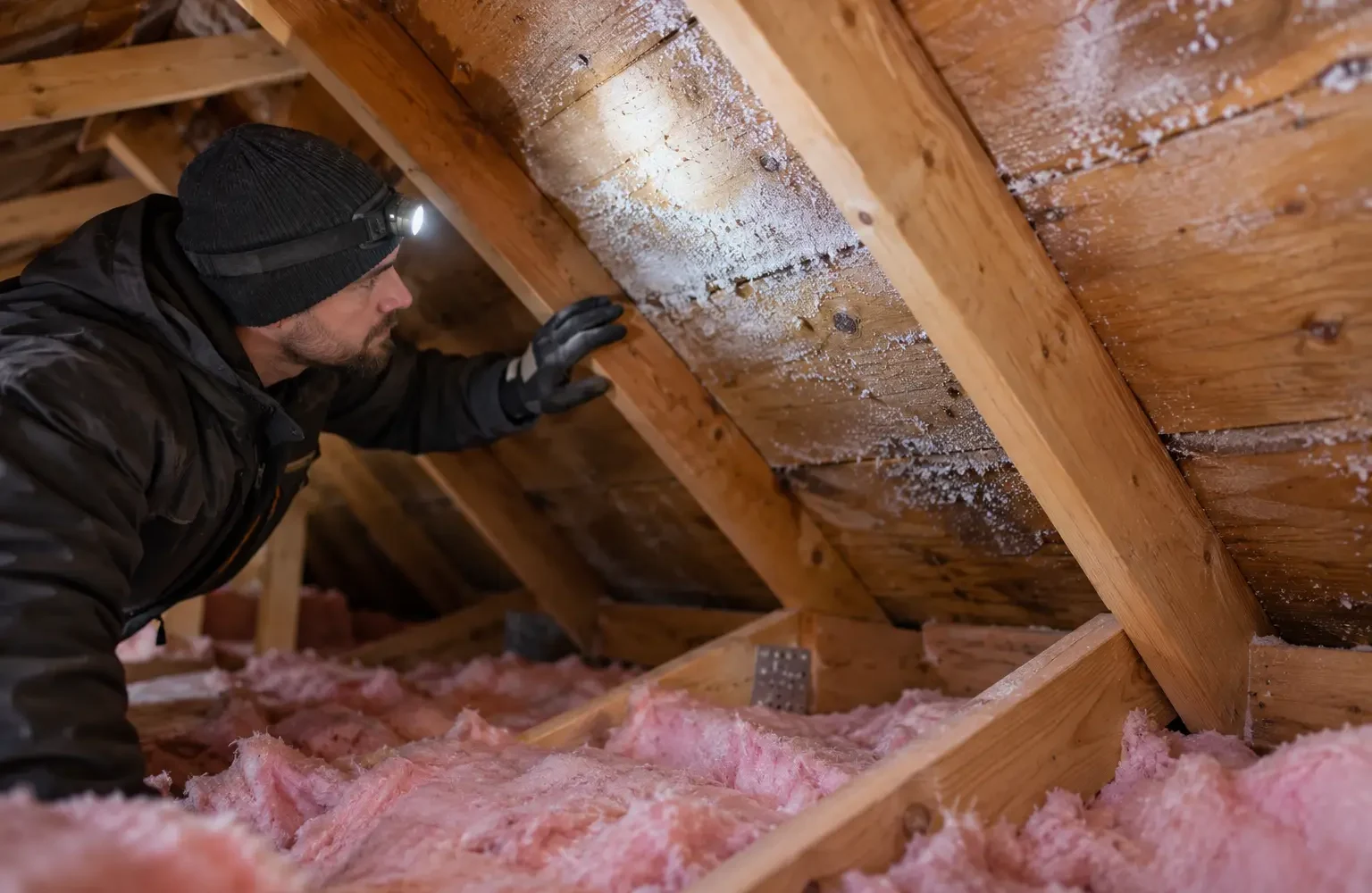
Winter frost forms when moisture reaches a cold surface and freezes. In attics, the moisture may come from indoor air leakage, a disconnected exhaust duct, high indoor humidity or, less commonly, an exterior water source.
Potential contributors
Look beyond a one-cause answer
- Warm moist indoor air leaking through ceiling gaps
- Bathroom or kitchen exhaust entering the attic
- High winter indoor humidity
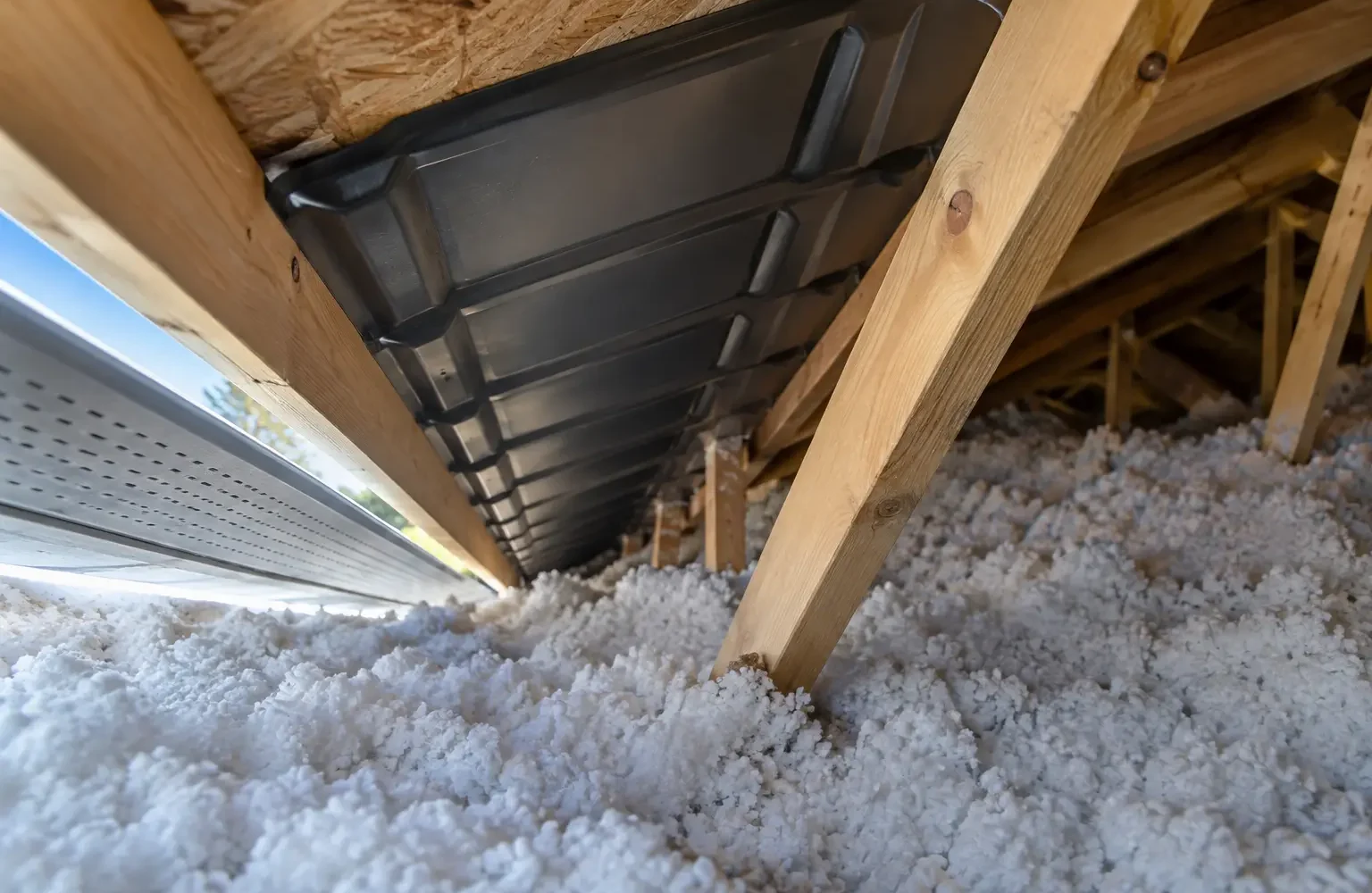
- Blocked intake paths or an unbalanced vent system
- Roof leakage that resembles condensation staining
Useful checks
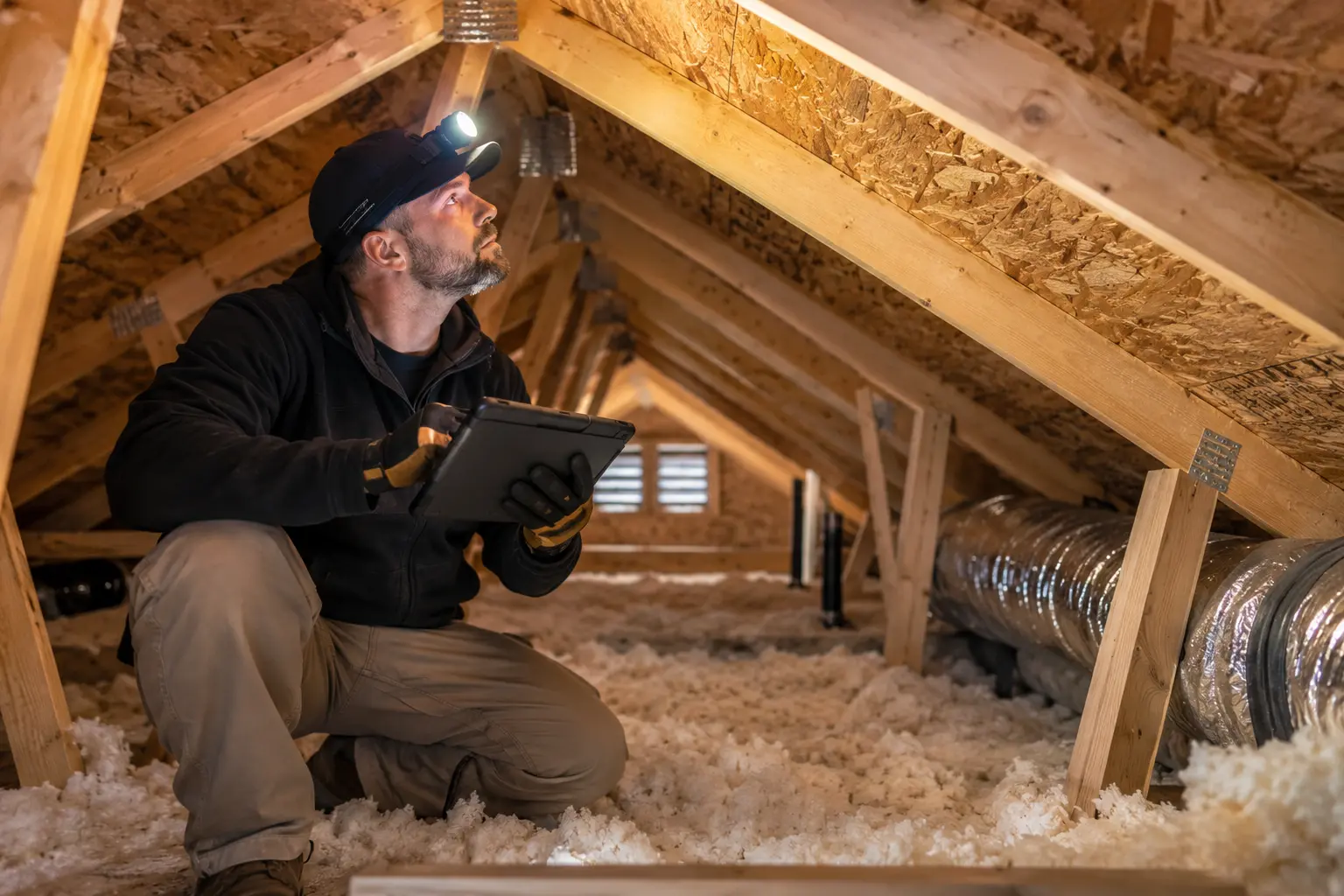
Evidence that narrows the next step
- Map frost and staining patterns
- Check exhaust duct connections and exterior terminations
- Inspect ceiling penetrations beneath affected areas
- Review indoor humidity and ventilation habits
Oakville planning context
Connect the symptom to the home
During cold Oakville weather, moisture that reaches roof sheathing may freeze and disappear before a later inspection. Photographs of the pattern, indoor humidity readings and exhaust-fan use can help preserve useful evidence.
What may happen next
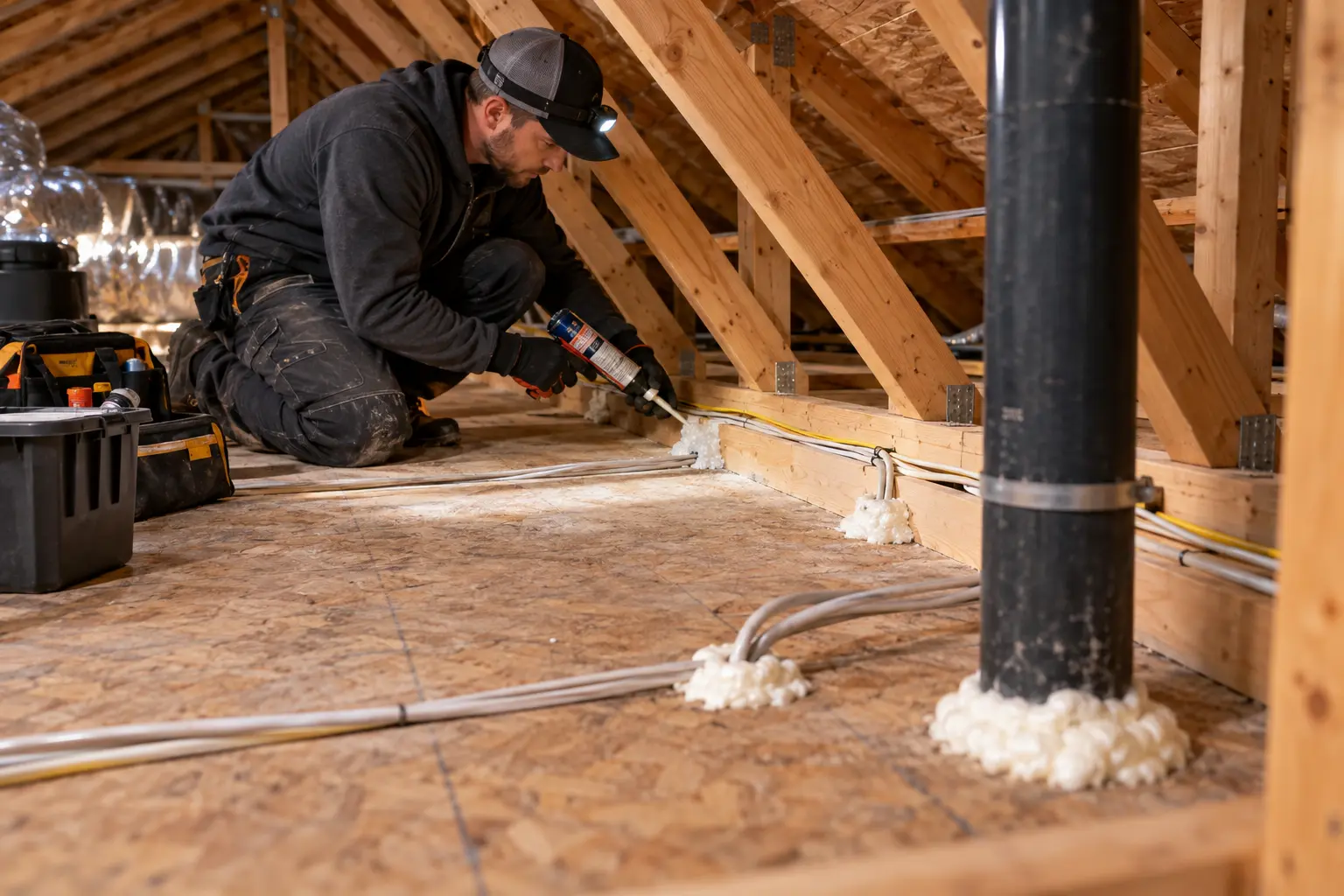
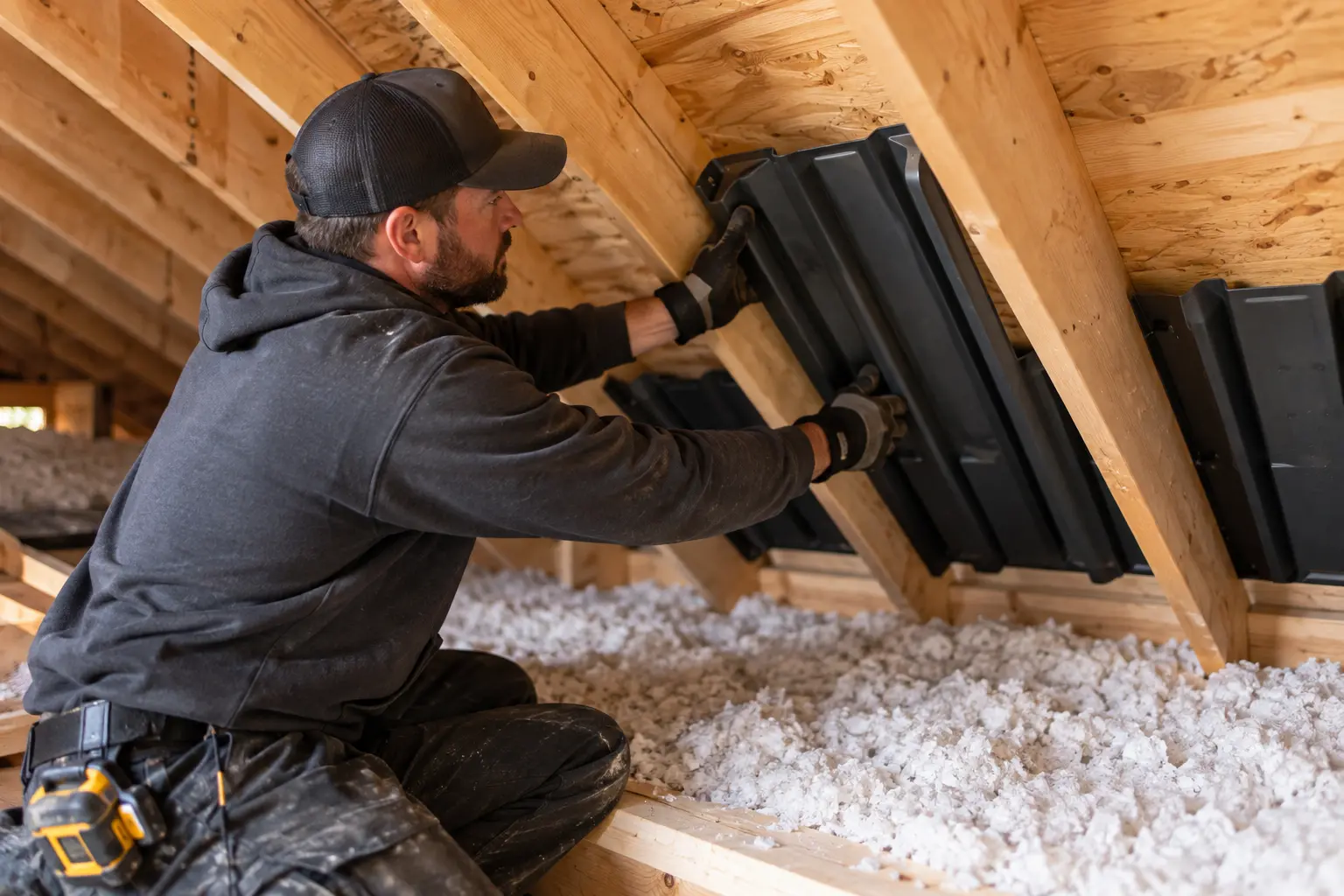
The scope may combine air sealing, exhaust correction, insulation restoration and baffle work. Vent additions alone should not be assumed to solve moisture carried from the house.
Clear answers
Questions about attic condensation & frost
Is a little frost normal?
Any recurring frost deserves attention because meltwater can wet insulation and sheathing.
Will more insulation stop condensation?
Not if moist air continues to leak into the attic or an exhaust duct is disconnected.
Relevant services