What this can mean
Air leakage is the uncontrolled movement of air through gaps in the building enclosure. At the upper ceiling, it can carry heat and indoor moisture into the attic and make insulation less effective around the leakage path.
Potential contributors
Look beyond a one-cause answer
- Open top plates and framing joints
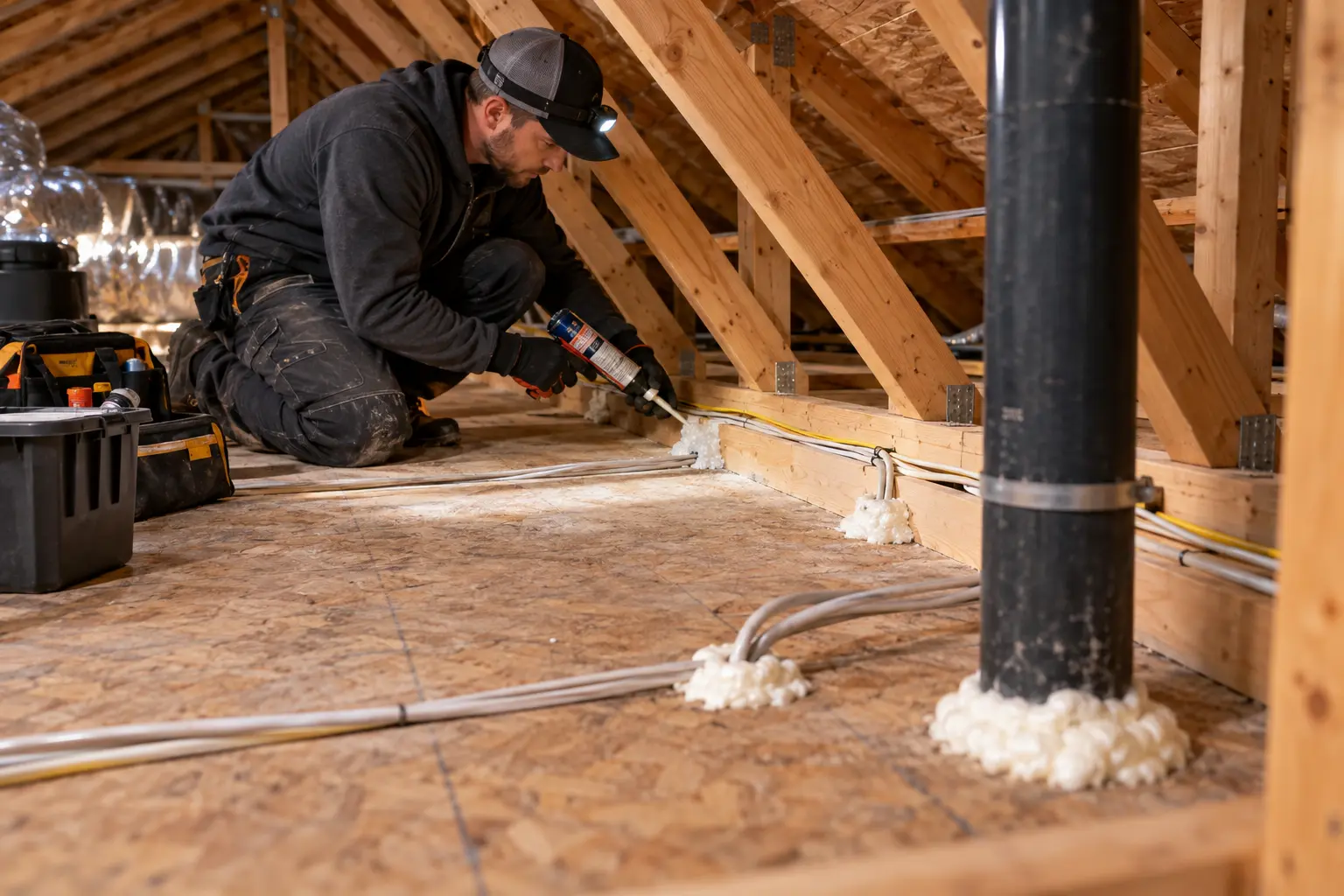
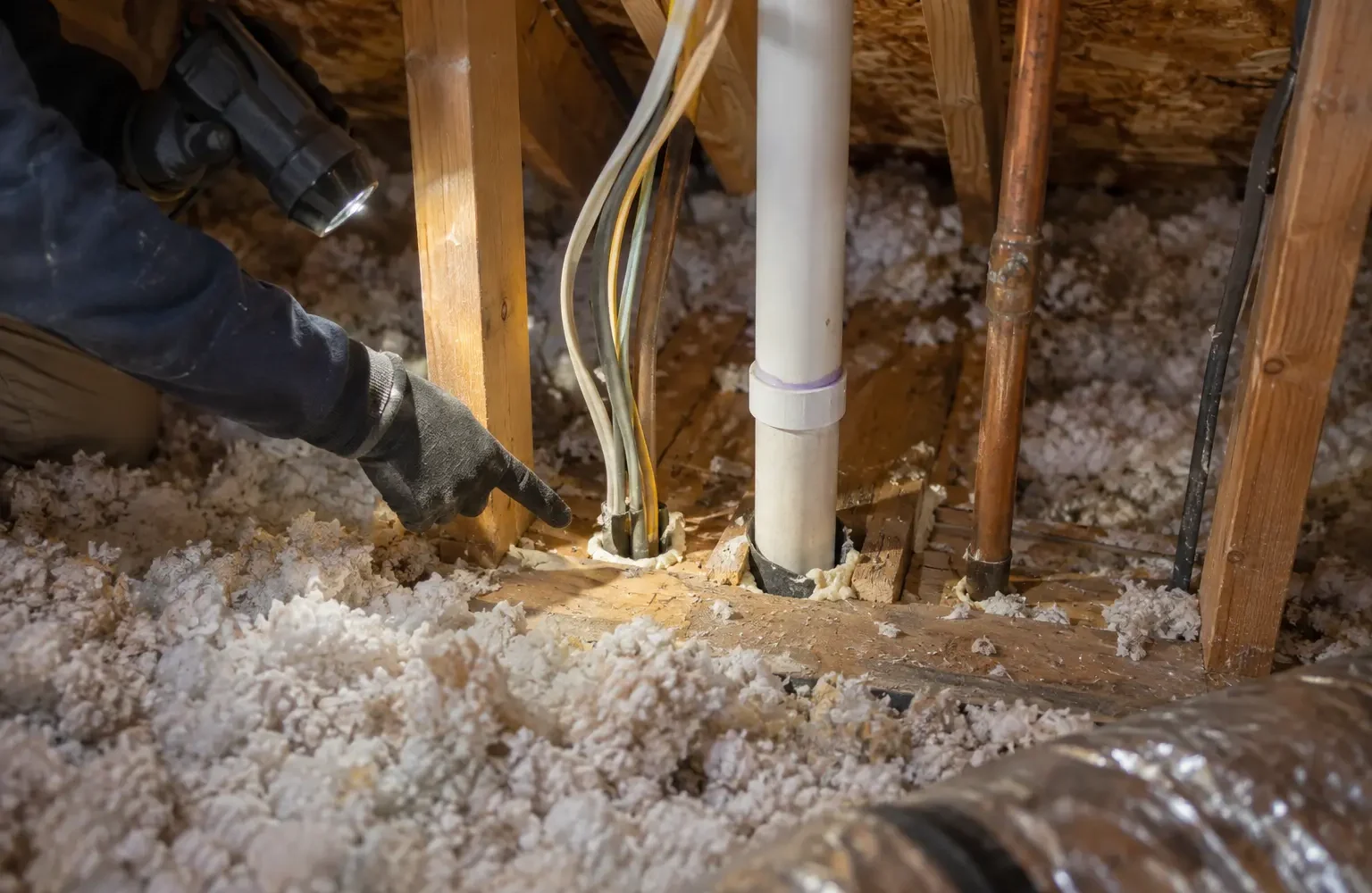
- Wiring, plumbing and duct penetrations
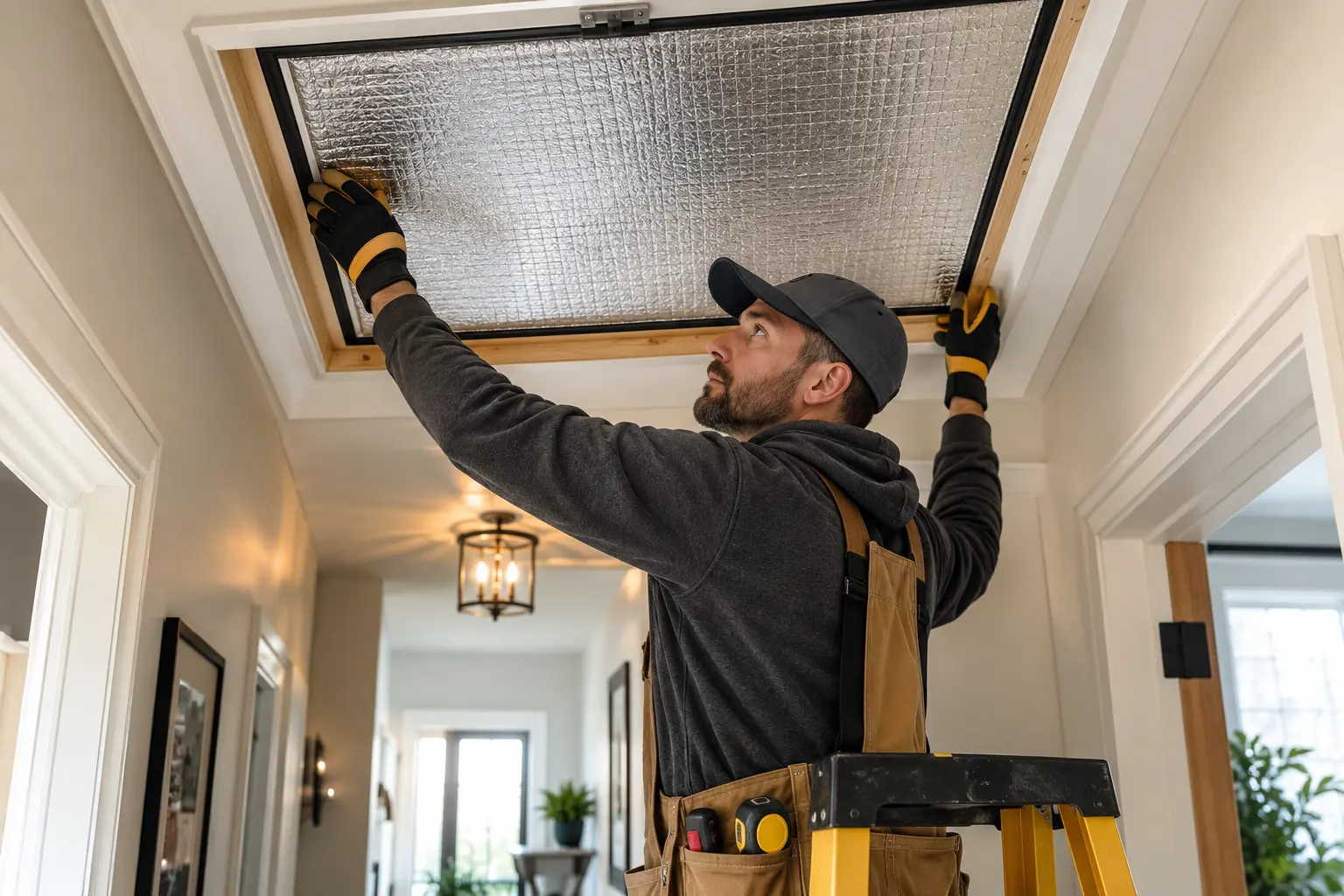
- Leaky attic hatches and pull-down stairs
- Chases around chimneys or dropped ceilings
- Poorly detailed recessed fixtures
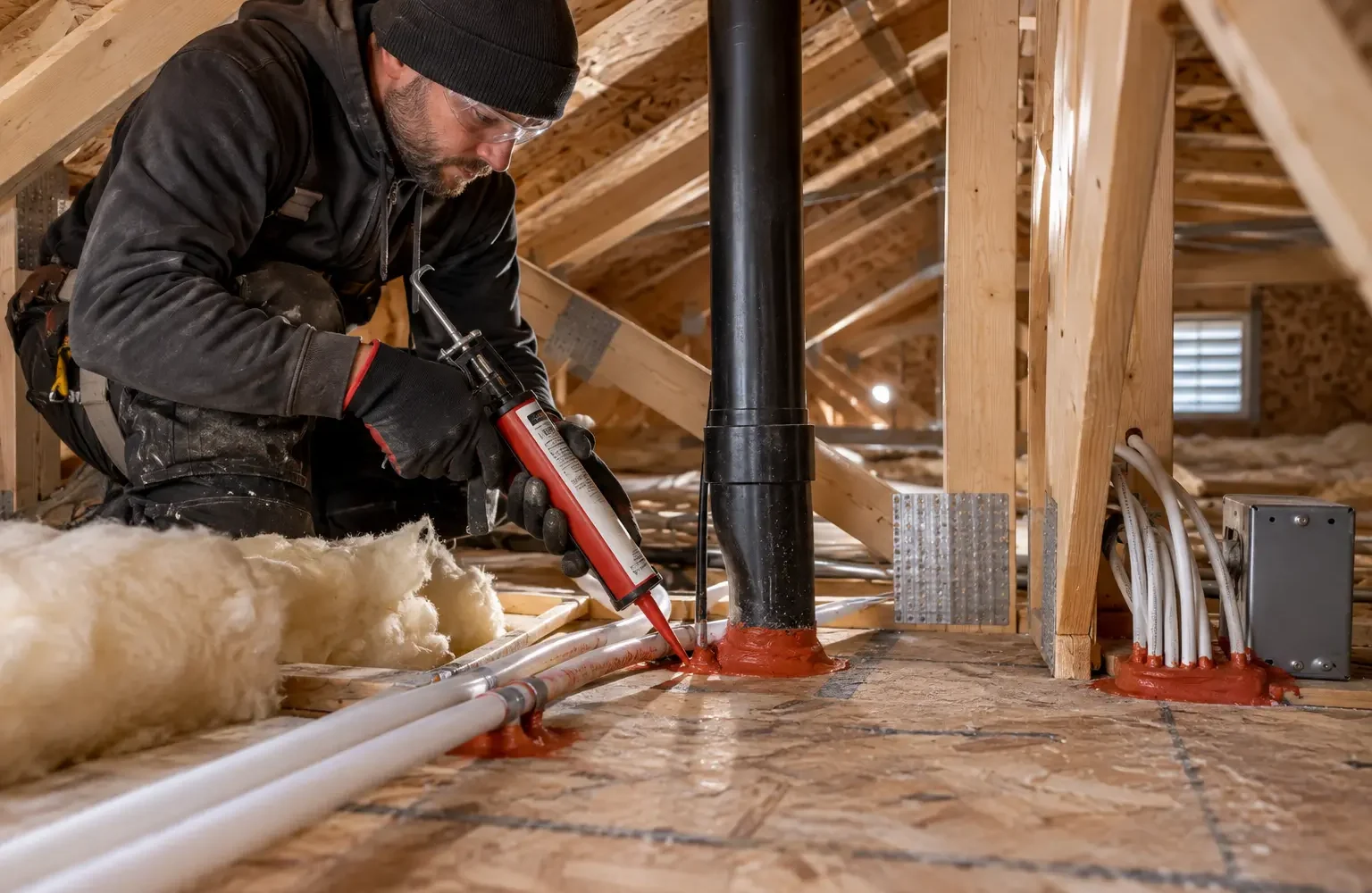
Useful checks
Evidence that narrows the next step
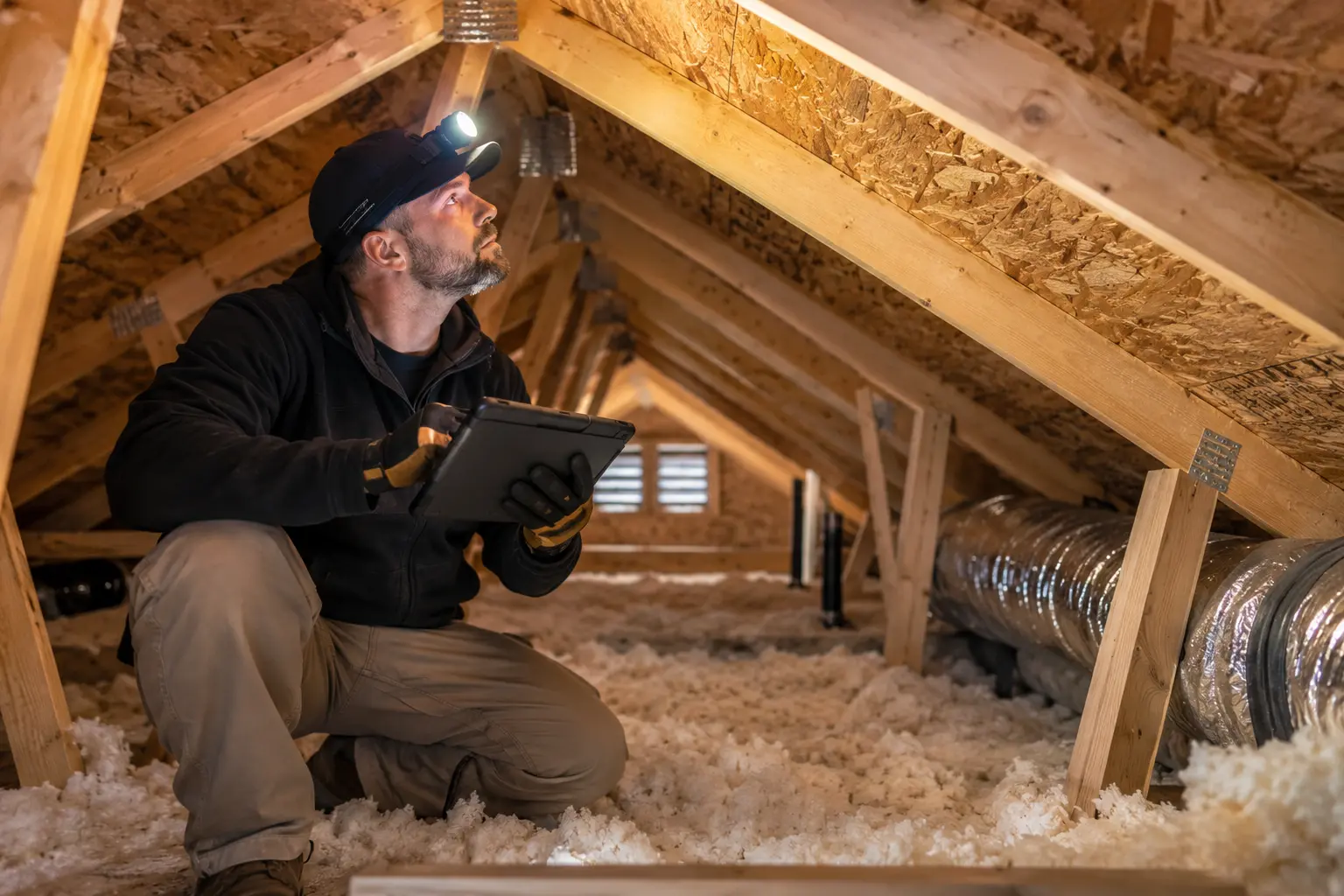
- Inspect accessible penetrations before adding insulation
- Look for dust marks and localized frost patterns
- Confirm required clearances at hot components
- Consider blower-door testing for whole-home leakage data
Oakville planning context
Connect the symptom to the home
Winter stack effect can make upper-level leakage more noticeable. Hatch edges, plumbing chases and ceiling penetrations may contribute, but window, wall and duct leakage can create similar room-level symptoms.
What may happen next
Seal accessible paths with materials suited to each detail, then restore continuous insulation. Large hidden chases or fire-rated conditions may require a more specialized scope.
Clear answers
Questions about attic drafts & air leakage
Can I see every air leak?
No. Some are hidden beneath insulation or finishes. Testing can provide broader evidence.
Is ventilation the same as leakage?
No. Ventilation is intended airflow; leakage is uncontrolled movement through the enclosure.
Relevant services