Start with the symptom
Tell us what you are noticing in the attic
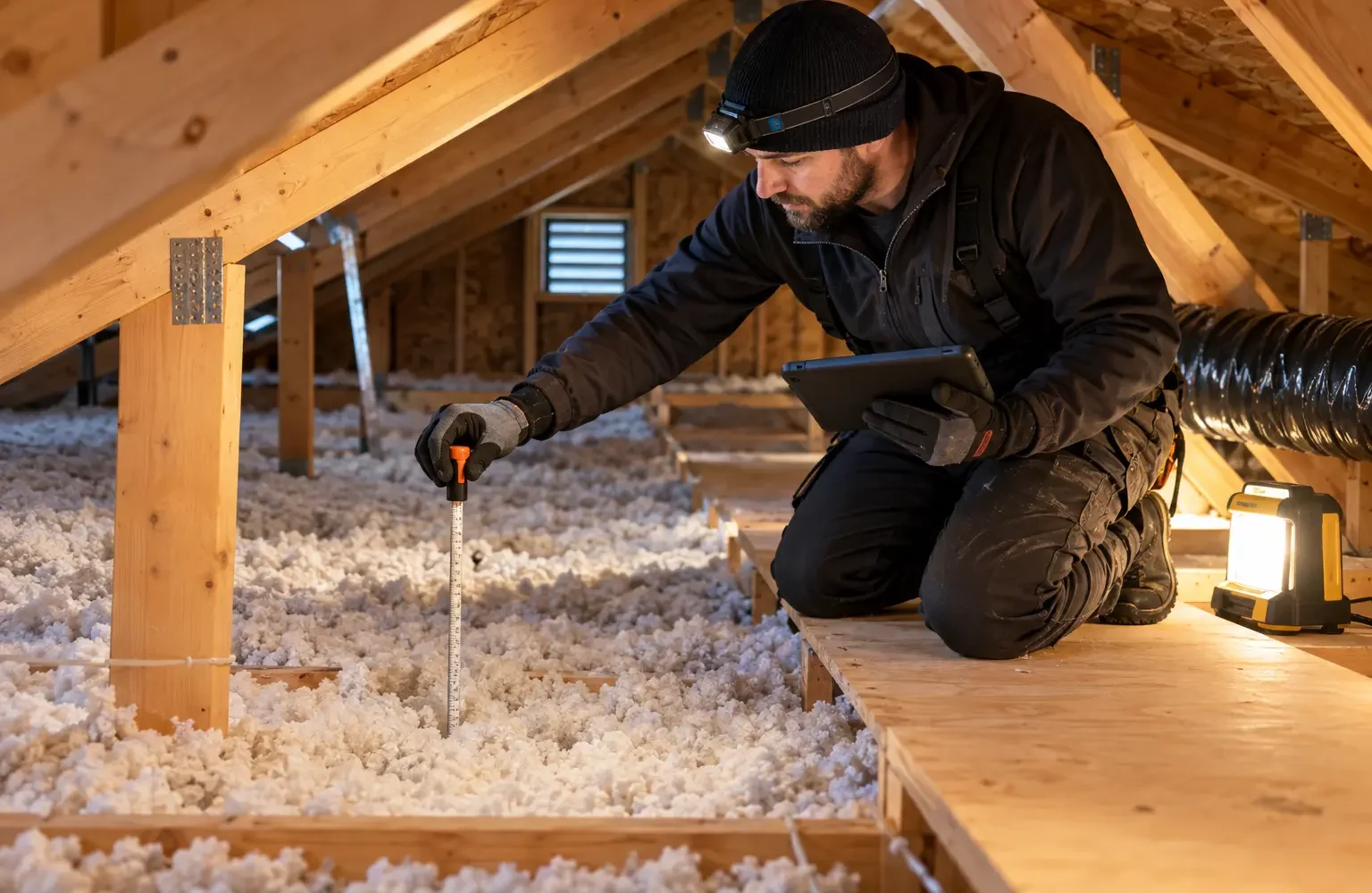
Share the comfort issue, visible attic condition or project you are planning. A useful first conversation separates straightforward insulation needs from conditions that should be investigated before more material is added.
- Hot or cold upper rooms
- Old, thin or uneven insulation
- Air movement near the attic hatch
- Condensation, frost or staining
Attic problems
What are you noticing?
Start with the symptom, then examine the conditions that can contribute to it.
Insulation, air leakage, ducts and solar exposure can overlap.
Old or uneven insulationCondition determines whether a top-up or removal makes sense.
High heating or cooling useReview the attic as one part of the whole enclosure.
Air leaks at the ceilingAccessible ceiling gaps are best addressed before the final insulation layer.
Condensation or frostIndoor humidity, leakage, exhausts and airflow all deserve attention.
Leak-damaged insulationStop the water source before replacing affected material.
Core attic services
Work that follows the assessment
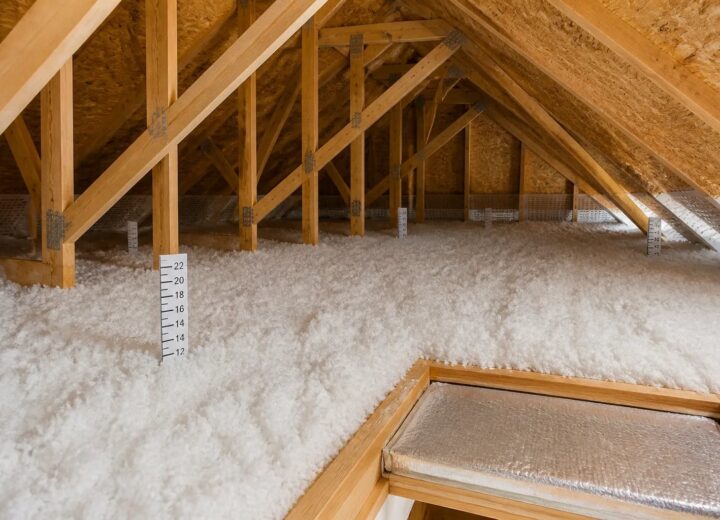
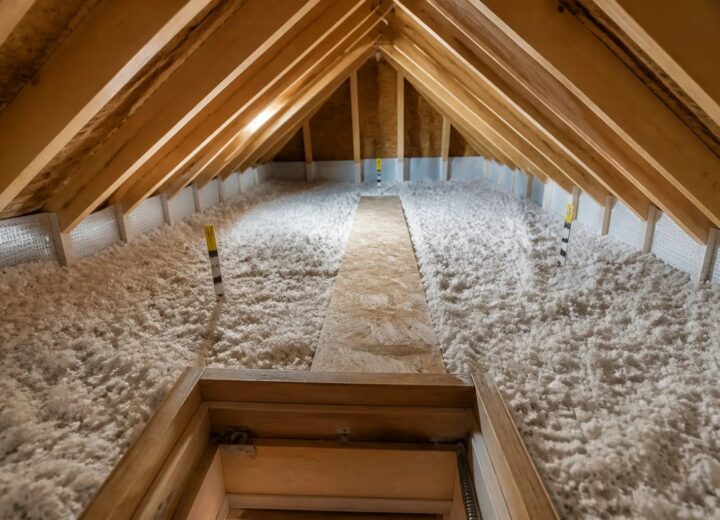
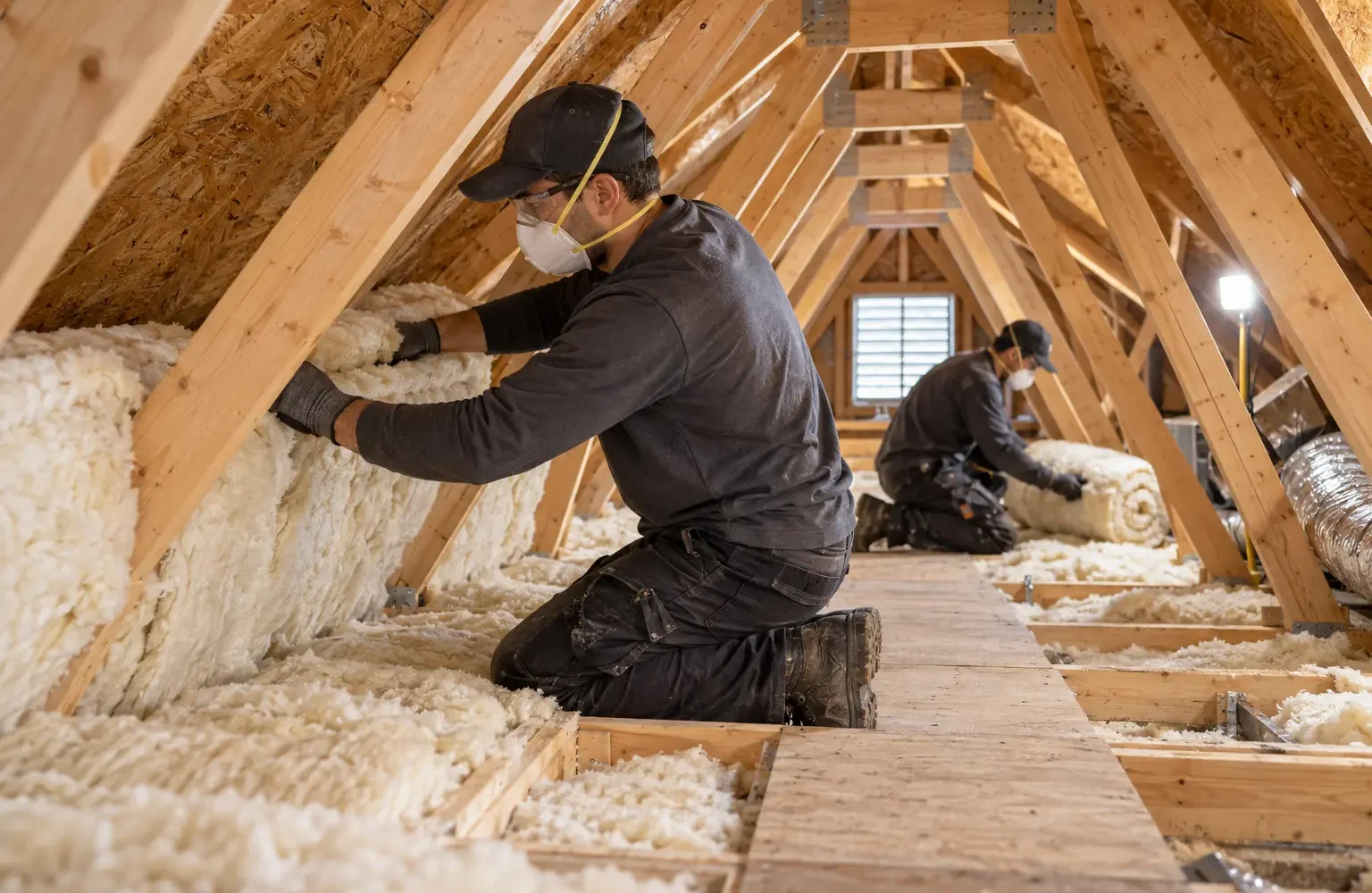 Attic InsulationPlan coverage, preparation and the intended thermal level.
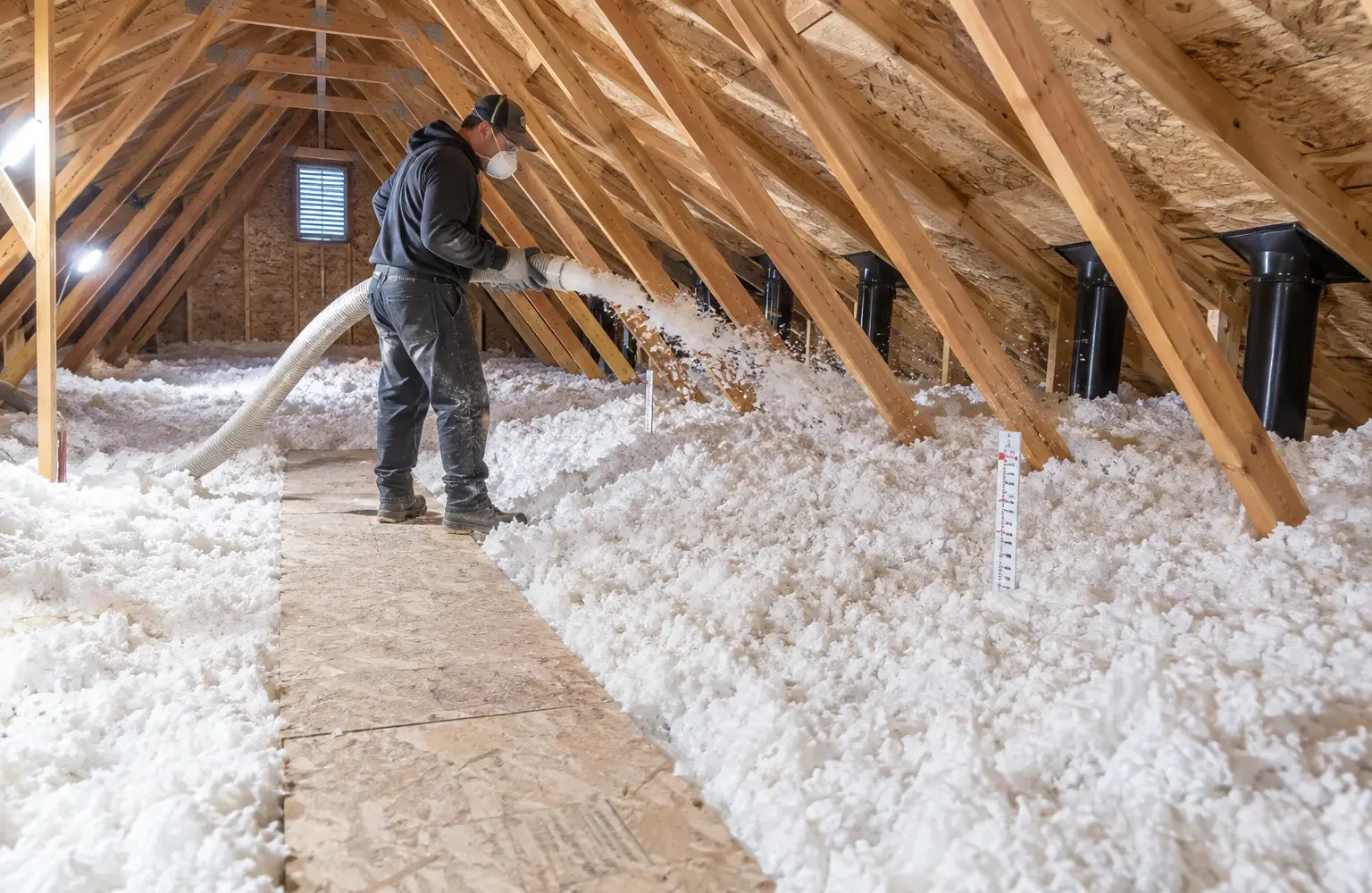 Top-UpsBuild on clean, dry and suitable existing material.
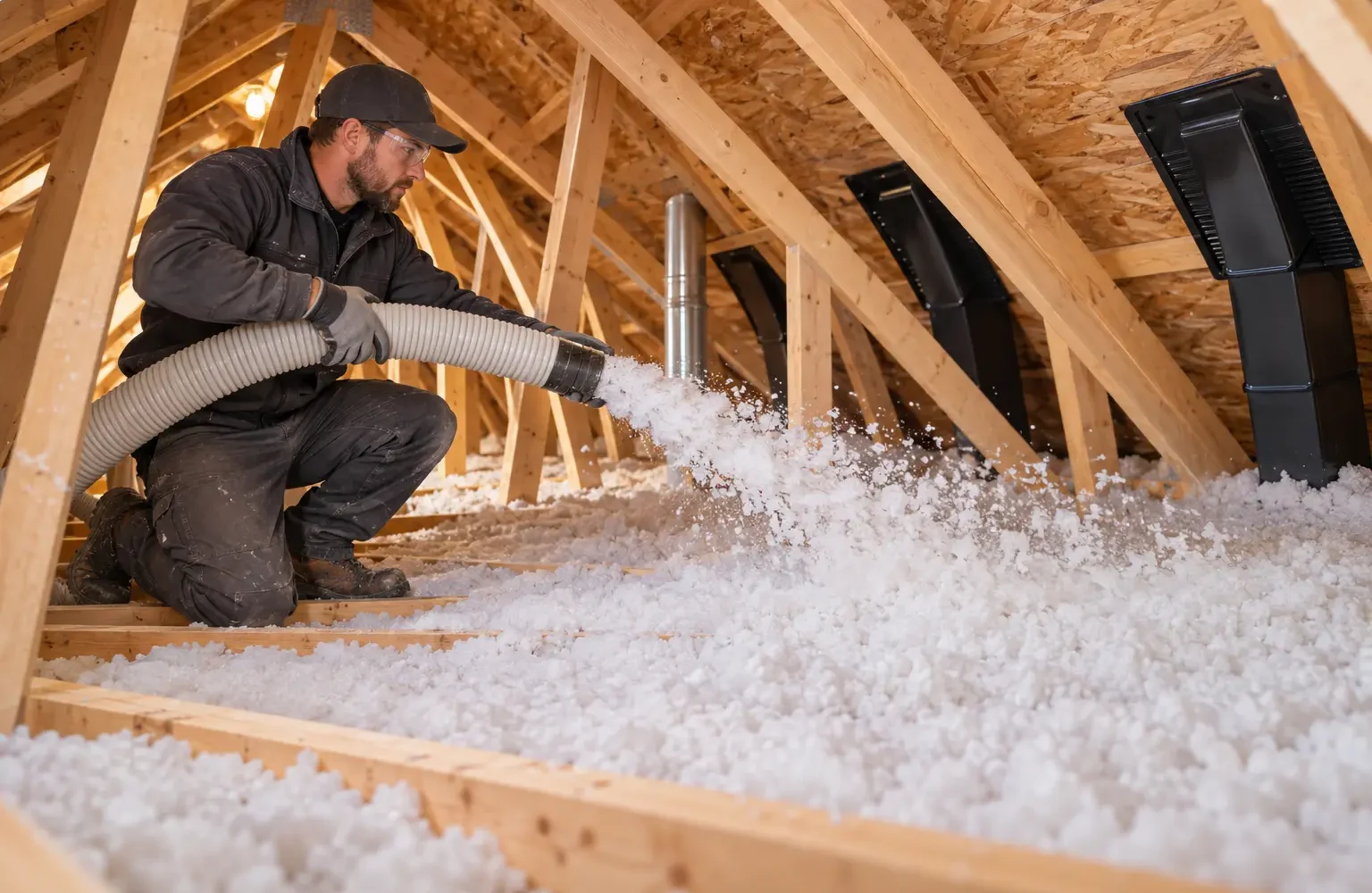
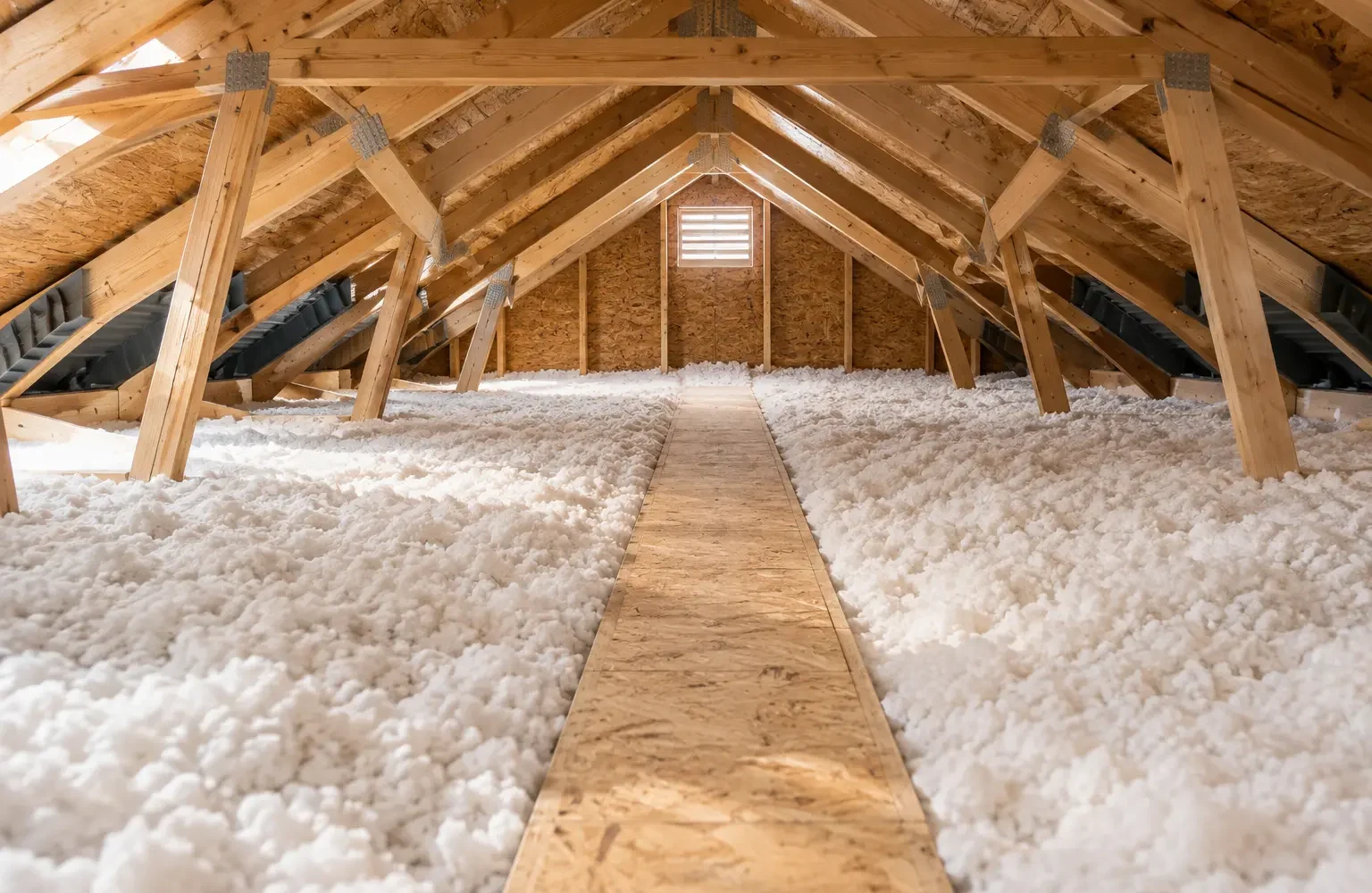
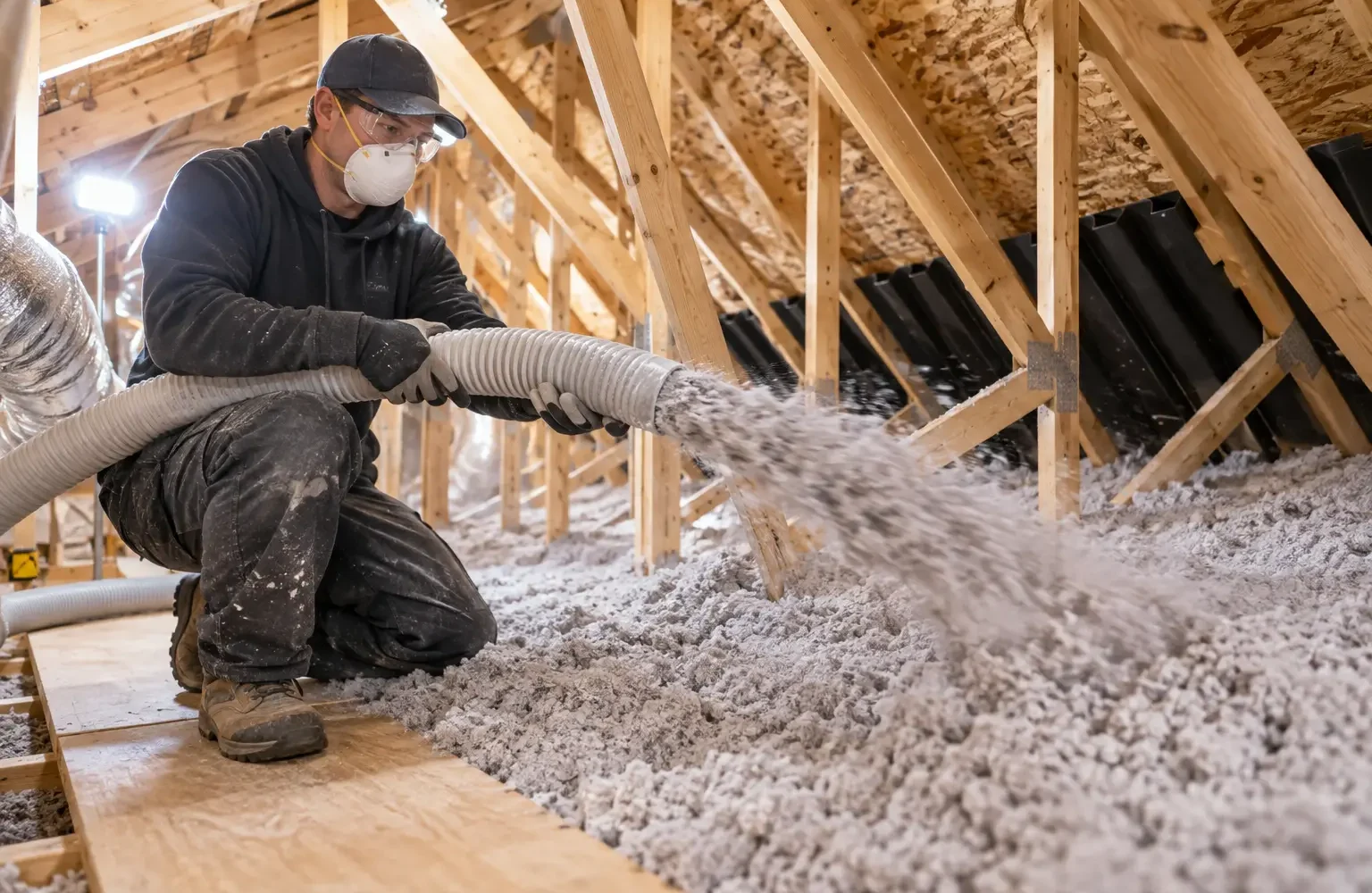 Blown-InDistribute loose-fill across prepared attic floors.
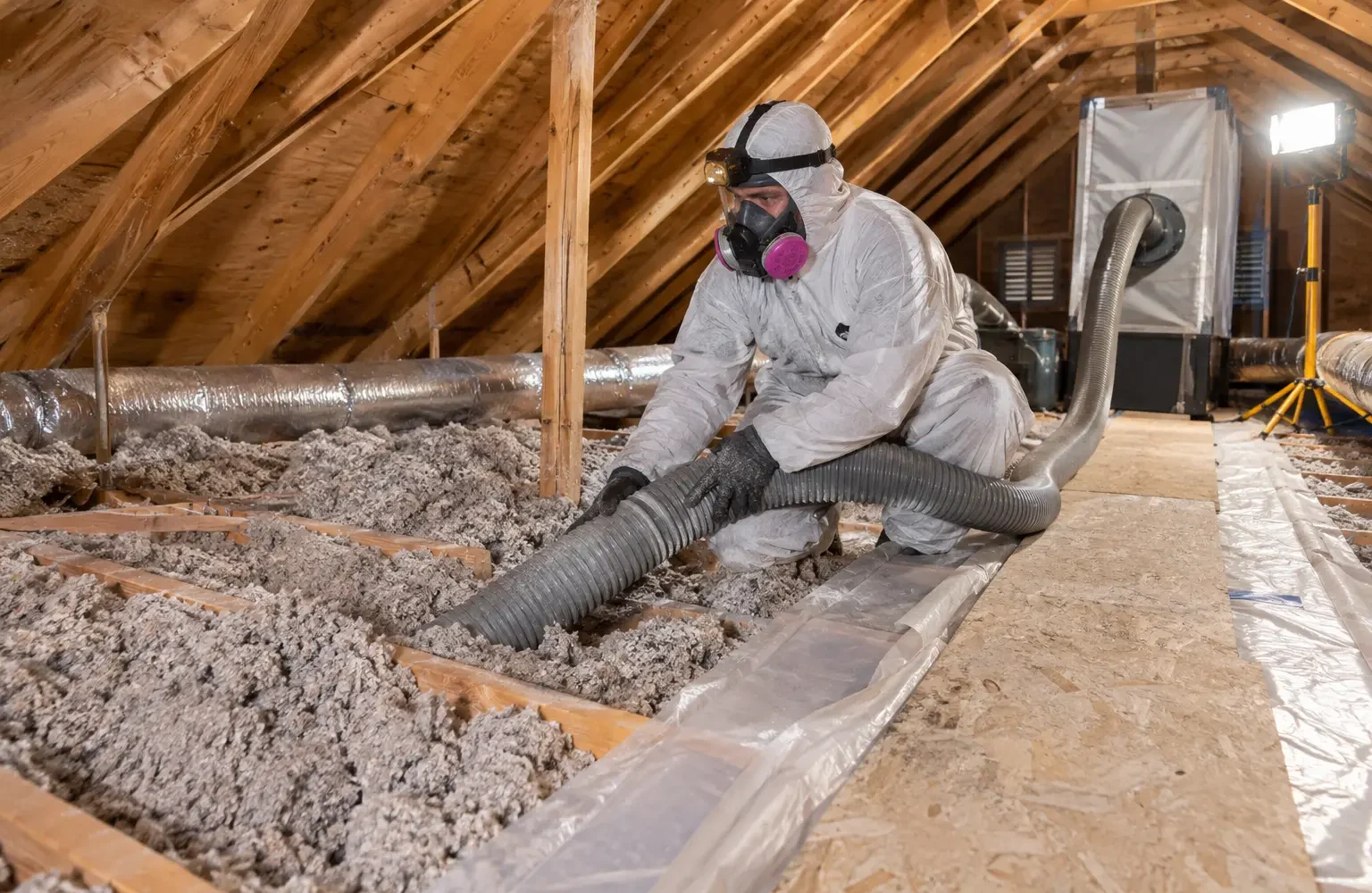 Removal & ReplacementRemove material when its condition requires a reset.
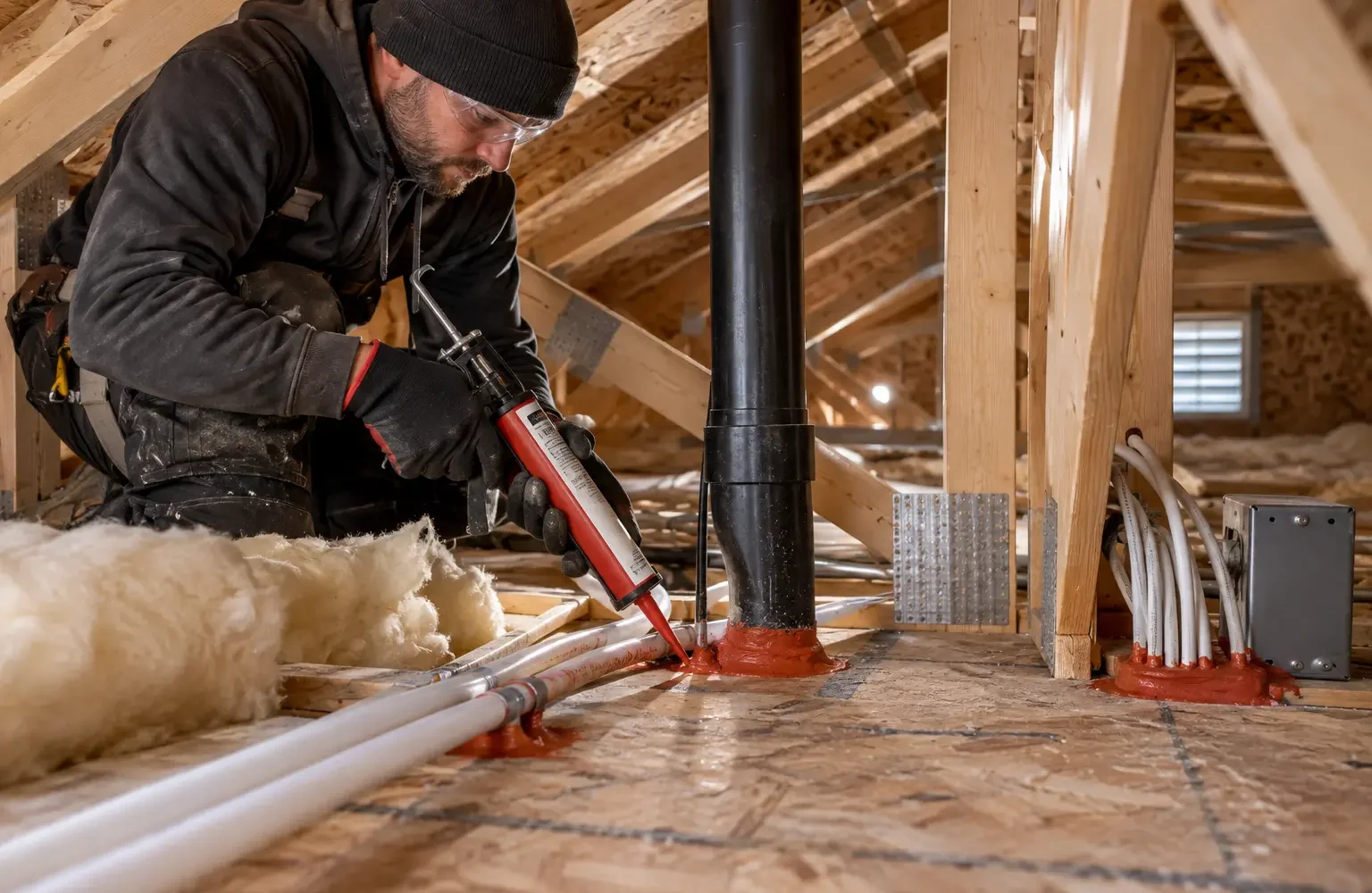
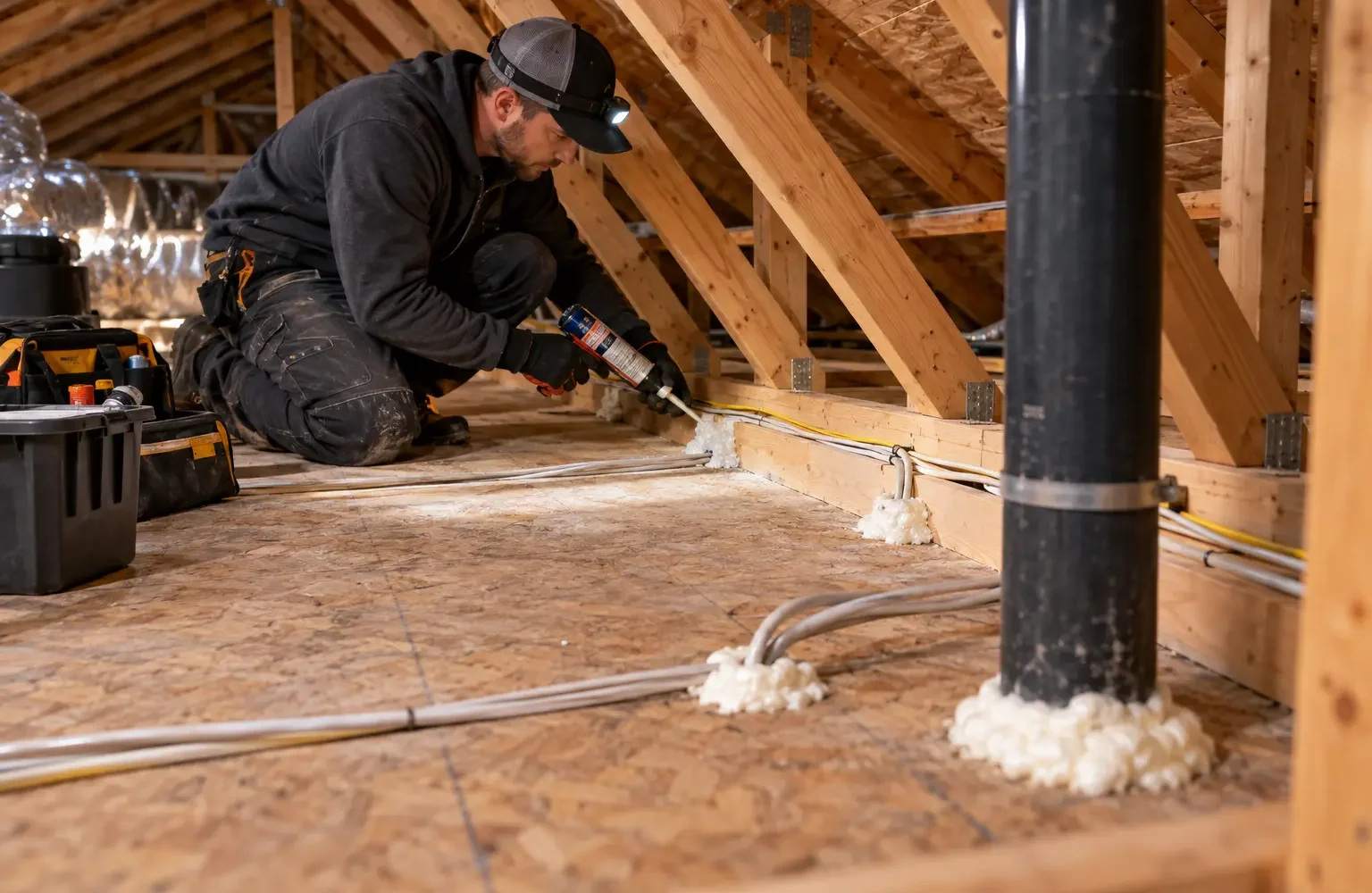 Air SealingControl accessible leakage paths at the ceiling plane.
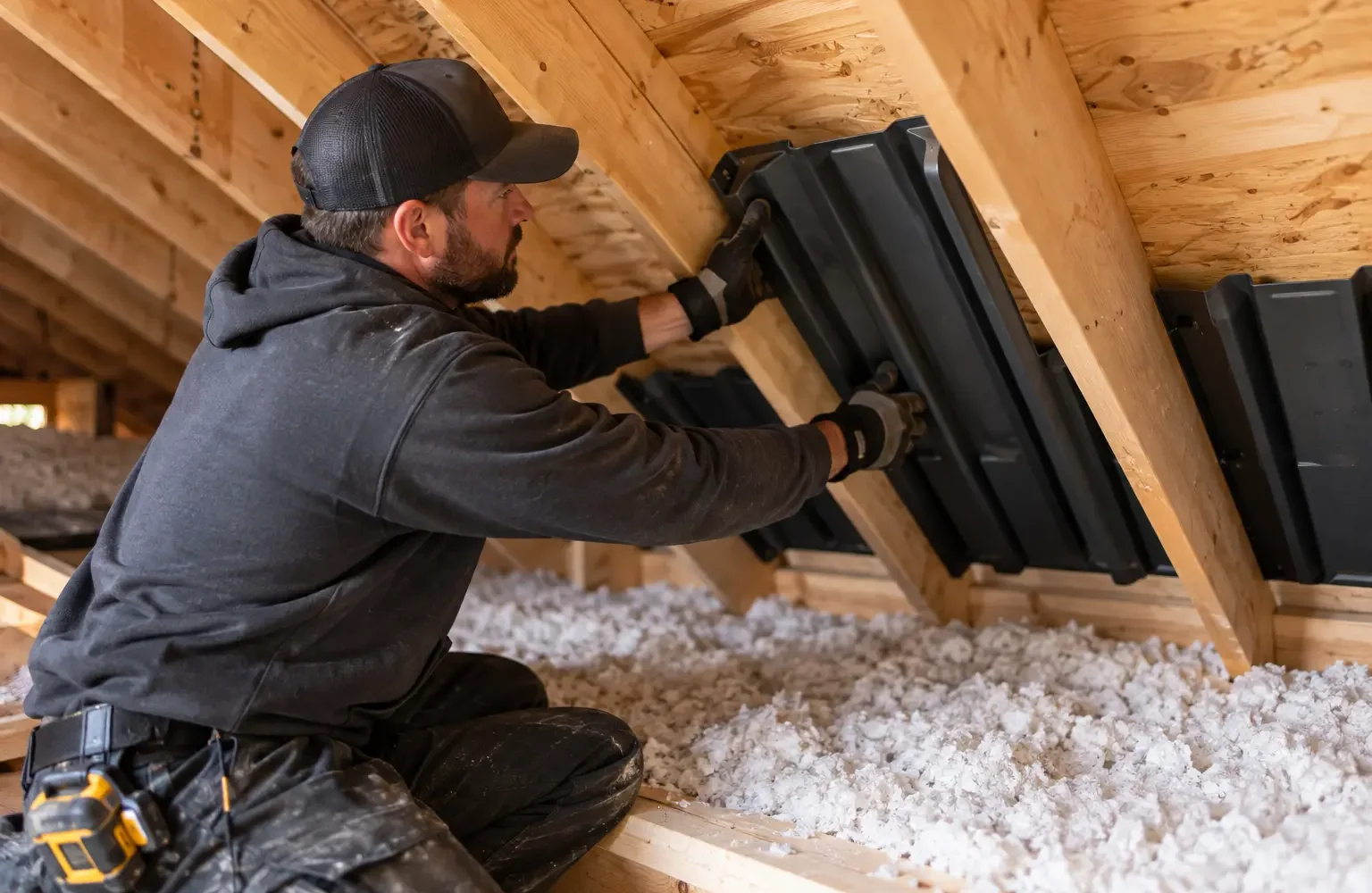 VentilationProtect intended intake and exhaust paths.
A better first question
More insulation is not always the first step
The existing attic condition points to the right sequence.
When existing material is clean, dry and compatible but below the intended level.
When water, contamination or condition means material should not remain.
When accessible ceiling gaps allow uncontrolled air and moisture movement.
When eave paths, baffles or exhaust details need correction.
When the symptom or attic history does not support a clear assumption.
Think in layers
The attic works as an assembly
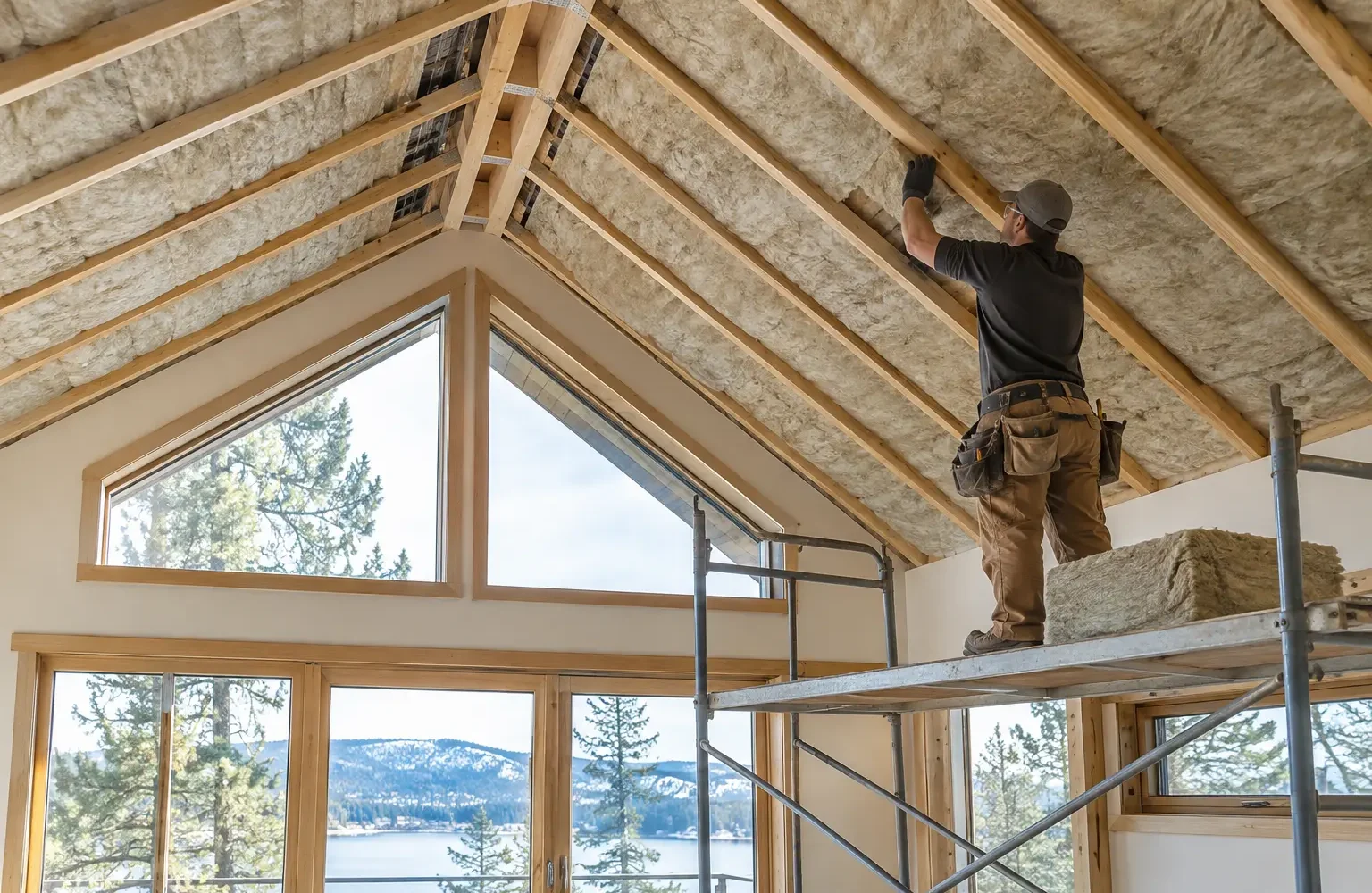
Insulation resists heat flow. Air sealing limits uncontrolled movement from the home. Ventilation preserves intended outdoor airflow in a vented roof. Roof and exhaust systems keep water and household moisture out of the attic.
When those layers are considered together, the scope can solve the condition that is actually present rather than burying it.
Explore attic assessmentsMaterials
Choose for the location and assembly
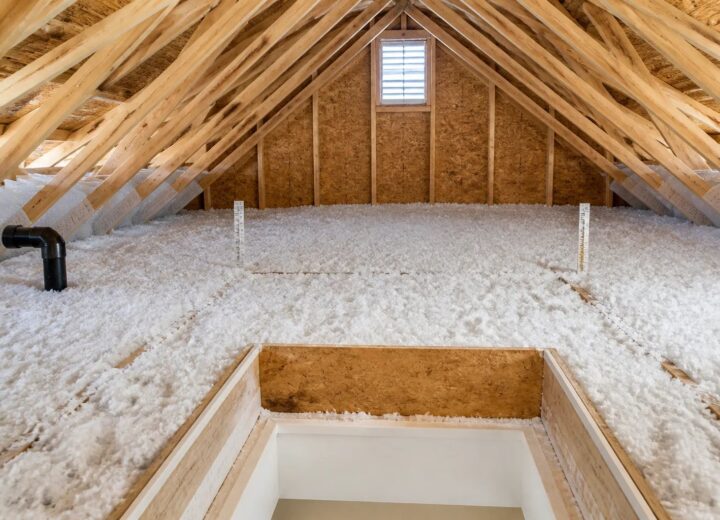
Blown-in fibreglass
Lightweight loose-fill coverage for prepared open attic floors and compatible top-ups.
Fibreglass details →Cellulose
Dense fibre-based loose-fill installed to specified depth and settled performance.
Cellulose details →Batts, rigid and foam
Options for framed cavities, rim joists, walls and specialized assemblies when their properties fit the detail.
Compare services →The process
Five steps from concern to completed scope
Beyond the attic floor
Other insulation areas
Oakville homes
Different rooflines create different attic conditions
Oakville’s housing includes older bungalows, split levels, renovated homes, dormers, additions and newer two-storey properties with rooms above garages. A single home can contain several insulation depths and access conditions.
Local climate brings hot humid summers, cold winters and freeze-thaw weather. That makes the relationship between indoor humidity, air leakage, roof condition and attic ventilation worth reviewing—not just the amount of insulation.
Review current energy-upgrade information →
Attic details
Materials, preparation and finished coverage
Common questions
What Oakville homeowners ask first
Can insulation be added over what is already there?
Often yes, when the existing material is clean, dry, stable and compatible. An assessment should identify exceptions before it is covered.
Will attic insulation fix every hot second floor?
No. It can reduce heat flow when attic coverage is weak, but ducts, windows, air leakage and HVAC balance can also contribute.
What should happen before a rebate project starts?
Use the official program process first. Some routes require a participating contractor; others require an initial energy assessment and two or more upgrades.
Should frost be solved by adding vents?
Not automatically. Indoor humidity, ceiling leakage and exhaust ducts may be the moisture source.
Advice