What this can mean
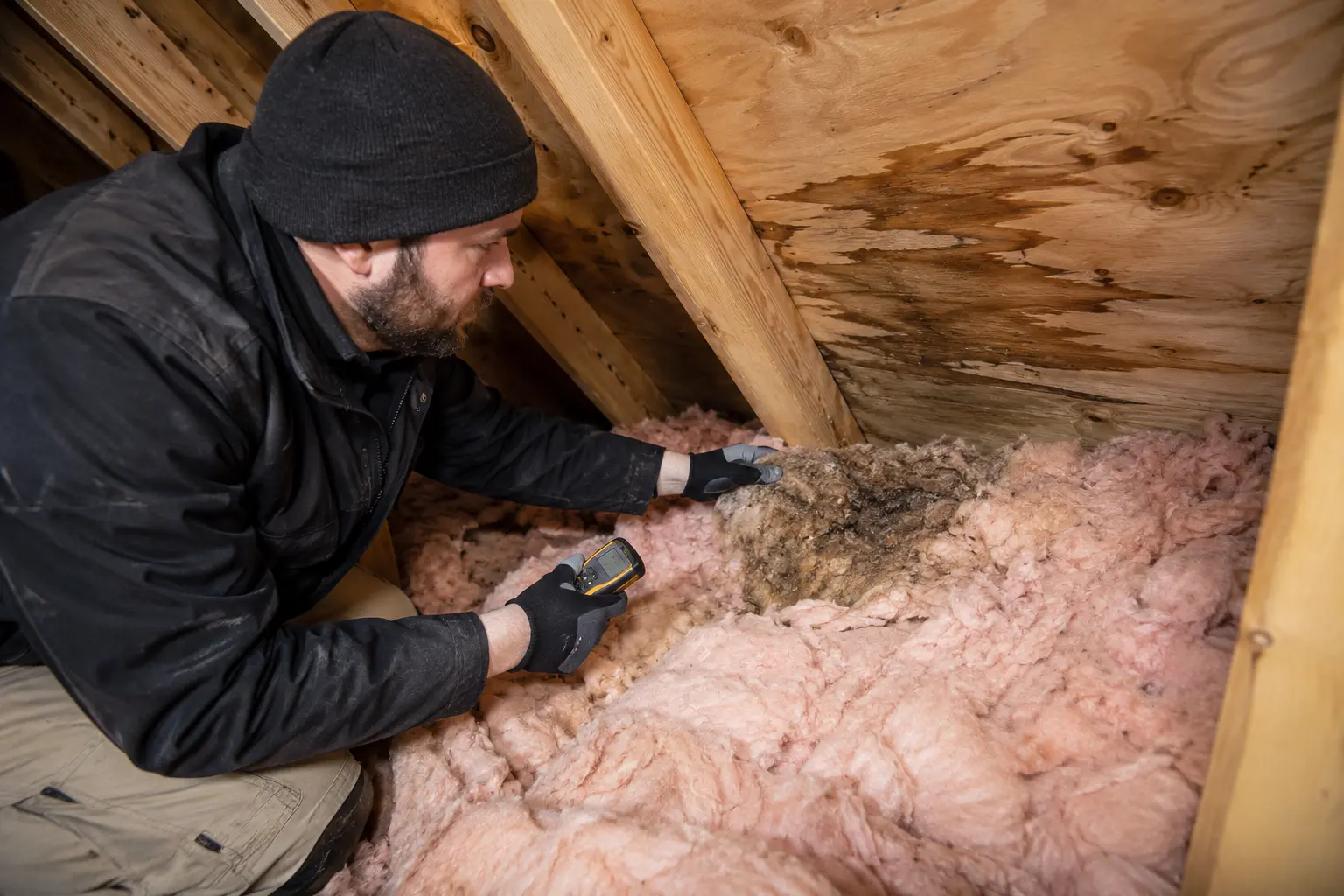
Wet insulation should be treated as evidence, not just debris. The water source must be identified and repaired before affected material is replaced or covered.
Potential contributors
Look beyond a one-cause answer
- Roof covering or flashing leaks
- Condensation dripping from roof sheathing or ducts
- Plumbing leaks passing into the attic
- Wind-driven water at vents or penetrations
- Ice-dam related entry during freeze-thaw weather
Useful checks
Evidence that narrows the next step
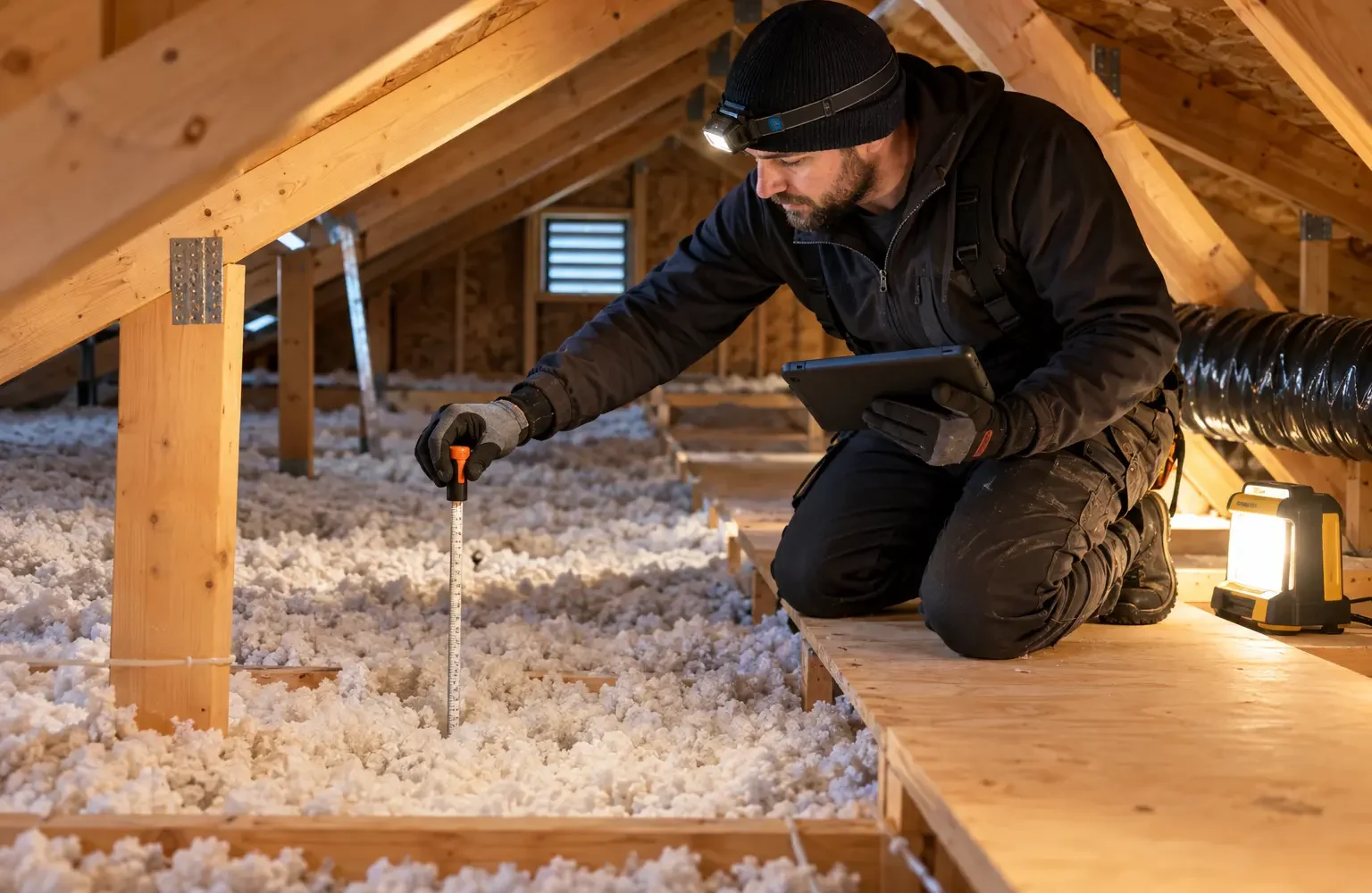
- Trace staining above and below the wet area
- Separate roof leakage from interior condensation
- Assess how far moisture travelled through material
- Check sheathing and framing condition after drying
Oakville planning context
Connect the symptom to the home
Wind-driven rain, snow and freeze-thaw cycles can make an intermittent roof defect difficult to trace. Follow staining across the roof deck and insulation rather than assuming the wettest point sits directly below the entry.
What may happen next
Once the source is corrected, affected insulation can be removed as needed, the area allowed to dry, and clean replacement installed to restore coverage.
Clear answers
Questions about leak-damaged insulation
Can wet insulation dry in place?
Minor dampness may dry under the right conditions, but saturation, contamination and trapped moisture can require removal. The source and material condition govern the decision.
Who fixes the roof?
Roof repairs belong with an appropriate roofing scope before insulation is restored.
Relevant services