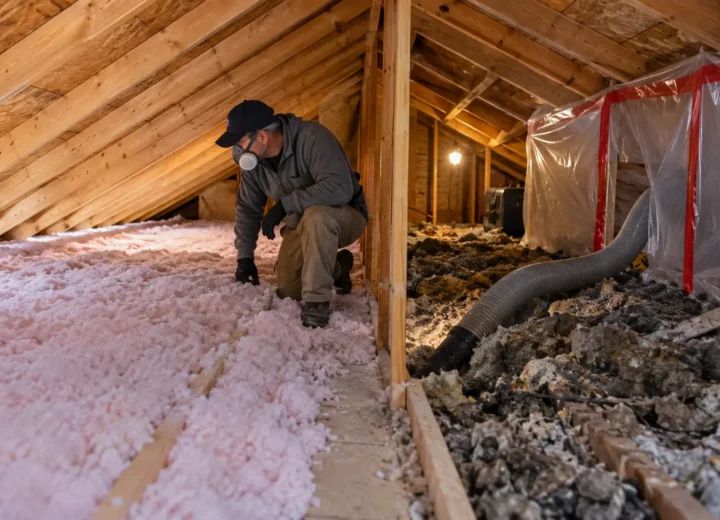
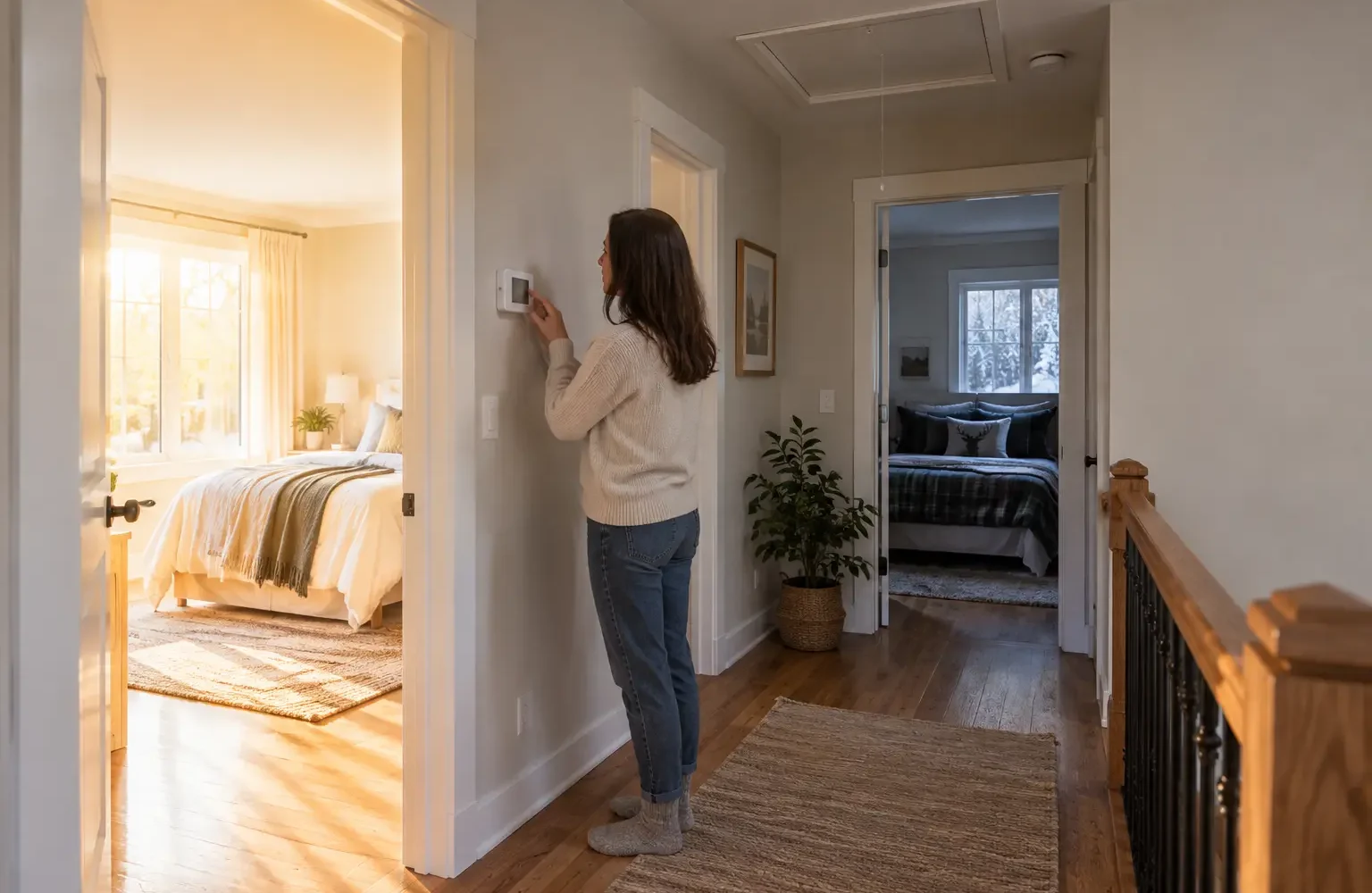
The second floor sits directly beneath the roof and at the top of the home’s natural air movement. That makes attic insulation and ceiling leakage important, but not exclusive, suspects.
1. Thin or uneven attic insulation
Heat moves through areas with the least resistance. A broadly insulated attic can still have weak edges, bare patches, compressed batts or disturbed sections around wiring and ducts. Summer roof temperatures and winter indoor-outdoor differences make those weaknesses noticeable.
2. Air leakage at the upper ceiling
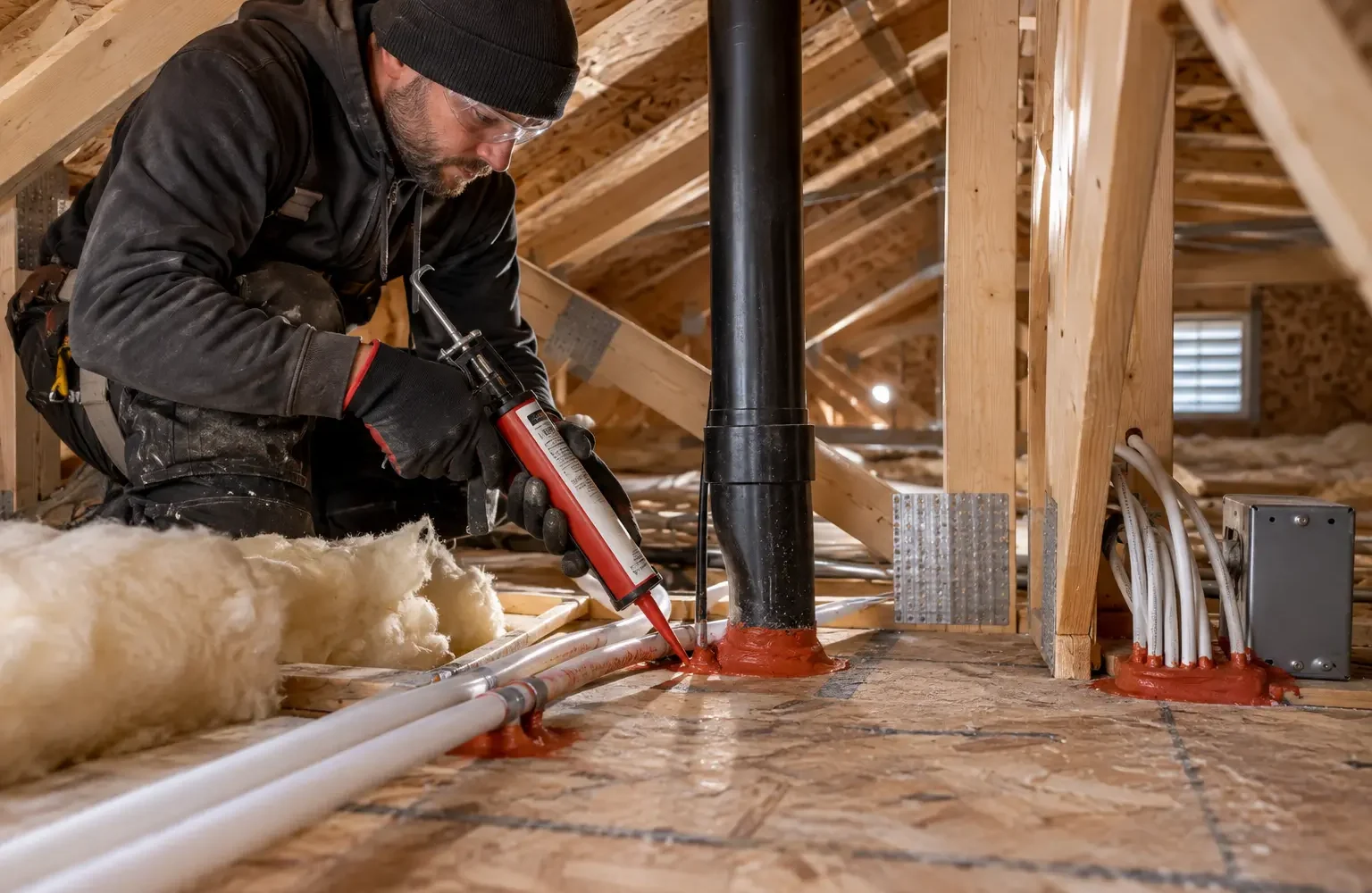
Warm indoor air rises and escapes through top plates, service penetrations, chases and attic hatches. In winter, this carries heat and moisture into the attic. In summer, air leakage can also undermine room comfort and make the cooling system work harder.
3. Duct and airflow limitations
Bedrooms far from the air handler may receive less conditioned air. Ducts passing through a hot attic can gain or lose heat when their insulation or seals are weak. Closed doors, limited returns and balancing issues can create room-to-room differences even when the attic is improved.
4. Windows, walls and solar exposure
A west-facing bedroom with large glass can gain substantial afternoon heat. Kneewalls, dormers and sloped ceilings add exterior surfaces that may have less insulation than the main attic floor.
5. Thermostat location and equipment operation
A main-floor thermostat responds to the temperature where it is installed. The system can satisfy that location before the upper floor catches up. Equipment sizing, cycling and fan operation can change the result.
A practical diagnostic order
- Record which rooms are affected and when.
- Inspect attic depth, edges, transitions and the hatch.
- Check visible duct condition and room airflow.
- Review windows, shading and exterior-wall exposure.
- Use the findings to separate enclosure work from HVAC work.
What insulation can and cannot do
Restoring continuous attic coverage can reduce heat flow. It cannot guarantee equal room temperatures when airflow, windows or other parts of the enclosure remain different.
Start above the rooms that feel different
Map the complaint to the attic geometry and inspect before selecting a top-up.