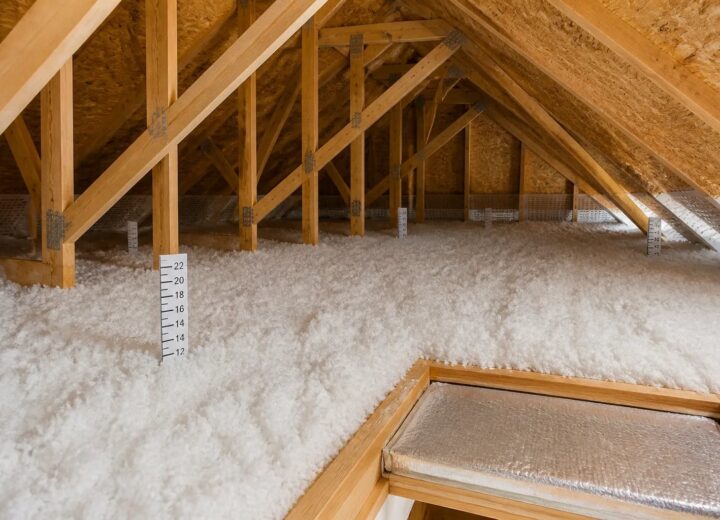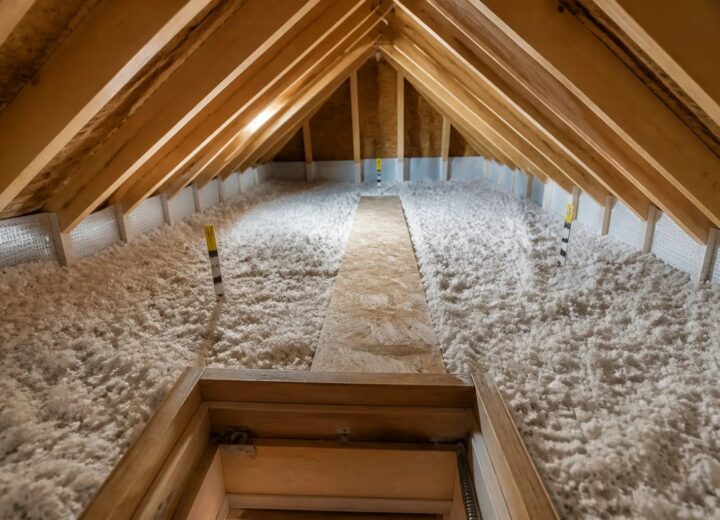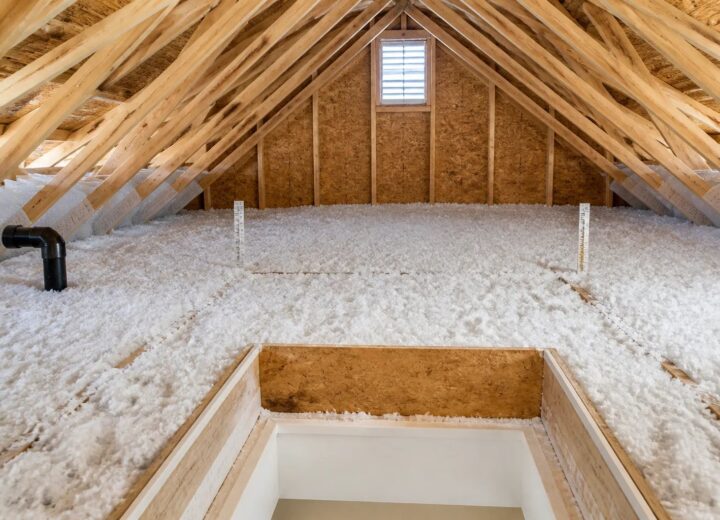
An attic insulation assessment in Oakville should determine the condition of the attic before anyone recommends adding insulation. We review accessible insulation depth and coverage, air-leak paths, ventilation details, moisture clues, attic access, and the different roof areas within the home. The goal is to separate a straightforward insulation top-up from a condition that needs preparation, removal, repair, or another qualified trade first.
This matters because an attic is not one uniform surface. Additions, dormers, rooms over garages, low side attics, and past renovations can leave one home with several insulation depths and access conditions. A single measurement near the hatch cannot show the full picture.
Why an assessment starts with the problem you have noticed
Before looking at insulation, we start with the concern that brought you to the attic. A hot second-floor bedroom, a cold hallway near the hatch, uneven temperatures between rooms, visible frost, roof-deck staining, or old insulation that looks thin can each point to different contributing conditions.
Insulation can reduce heat flow through the ceiling plane, but it is not the only factor that affects comfort. Air leakage, ducts, solar exposure, windows, HVAC balance, roof water entry, and indoor humidity can overlap with an attic-related symptom. Recording when and where the issue occurs helps keep the scope tied to visible evidence instead of a default amount of material.
For example, insulation that is shallow but clean and dry may support a top-up. Moisture-stained material requires a different conversation: the water source needs to be understood and corrected before affected insulation is covered or replaced. Our attic inspections and assessments are intended to clarify those distinctions before work is planned.
What we examine during an attic insulation assessment in Oakville
A useful attic review looks at how the visible attic assembly is working, not only how much insulation is present. We assess accessible areas and document limitations where a low slope, blocked route, fragile finish, or other condition prevents safe inspection.
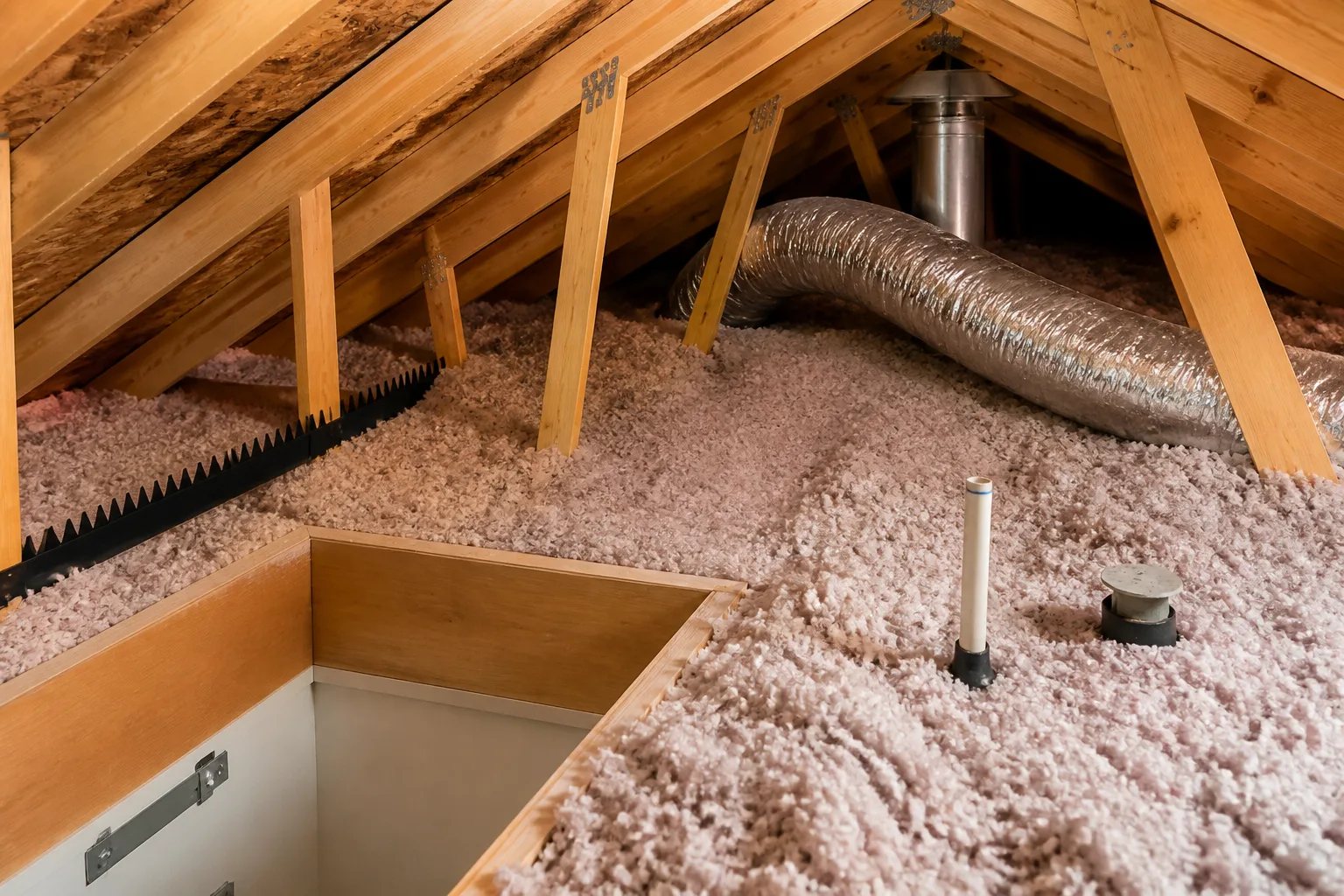
- Existing insulation: visible material type, depth range, coverage consistency, settling, compression, and areas disturbed by storage, wiring, or previous work.
- Attic zones: main attic areas, additions, dormers, side attics, garage ceilings, and other accessible sections that may have different conditions.
- Air leakage clues: accessible openings around wiring, plumbing, framing, attic hatches, and other ceiling penetrations.
- Moisture evidence: active dampness, staining, frost patterns, roof-deck clues, and insulation that is matted or affected by a past event.
- Ventilation and eaves: visible baffles, intended soffit airflow paths, roof vents, and whether future insulation depth could interfere with those details.
- Exhausts and access: visible exhaust ducts, hatch condition, service routes, equipment access, and areas that need to remain clear.
Visible clues can narrow the next step, but they do not turn an attic inspection into a roof certification, structural engineering report, hazardous-material survey, mould assessment, or pest inspection. If a condition falls outside ordinary insulation work, the appropriate specialist needs to assess it.
Why measuring several attic zones is more useful than one average depth
Insulation often varies across an attic. Loose-fill can settle over time, wind can disturb material near unprotected eaves, and trades may move insulation to reach wiring or ducts. Batts can be compressed under storage boards or leave gaps around framing. A high pile in one location can also hide low coverage nearby.
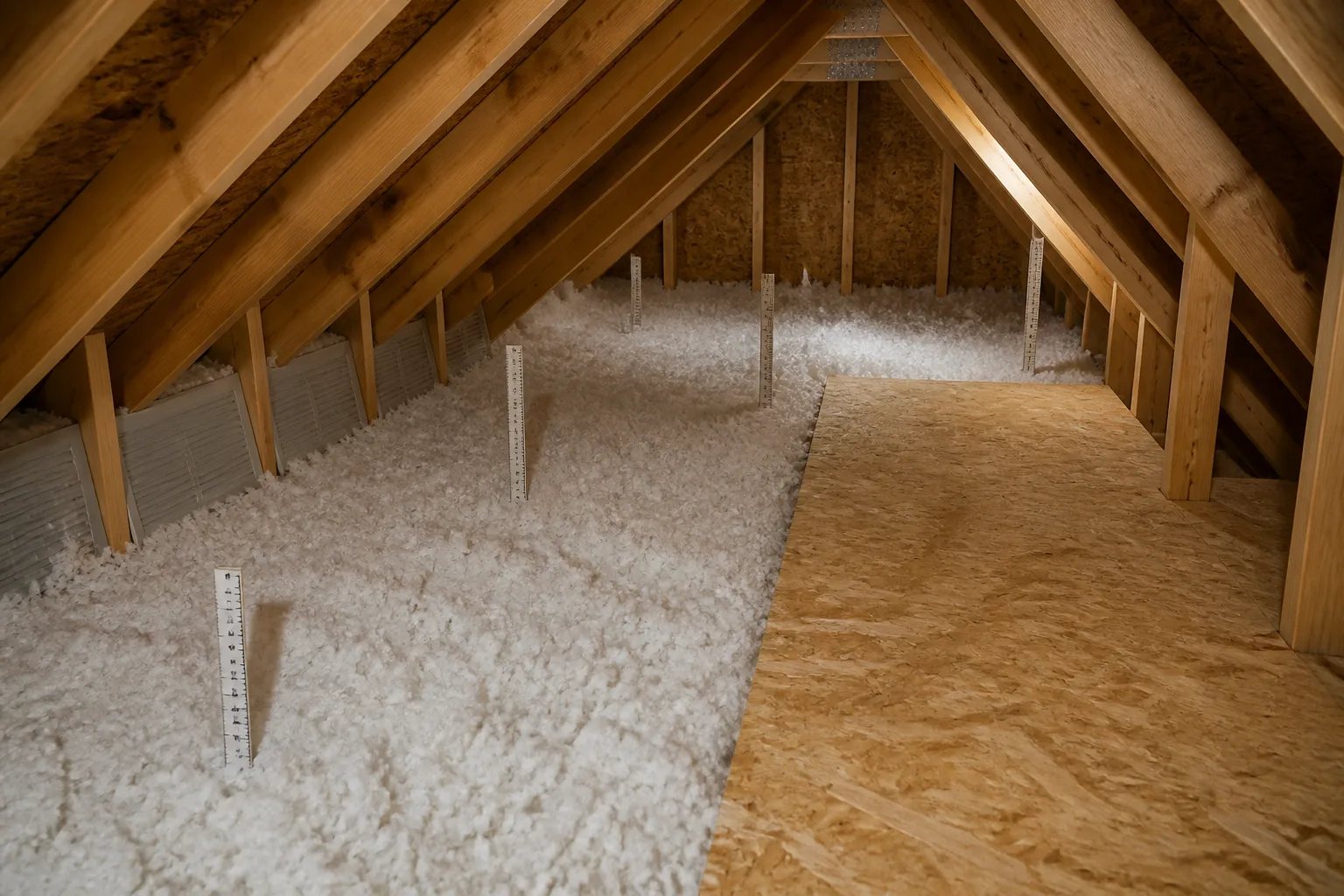
We measure accessible areas separately rather than treating the attic as one average. This is especially useful in Oakville homes with roofline changes, renovations, or an attached garage. The main attic may be suitable for a top-up while a low addition has a separate access limitation or needs a different scope.
Older insulation is not automatically ineffective just because of its age. Its condition, distribution, dryness, stability, and compatibility with proposed work are more useful decision points. Clean, dry, compatible material can often continue contributing thermal resistance beneath a planned top-up. Learn more about when existing material may support an attic insulation top-up.
How assessment findings change the recommended sequence
The right sequence depends on what the attic reveals. More insulation is often the final layer of a plan, not the first action.
| Observed condition | Planning direction |
|---|---|
| Clean, dry, shallow insulation with generally consistent coverage | Document the starting level, complete appropriate preparation, and consider a compatible top-up. |
| Localized bare, compressed, or disturbed areas | Identify why the coverage changed, level or refit accessible material as appropriate, then plan continuous coverage. |
| Accessible ceiling gaps or a poorly sealed hatch | Consider air sealing before deeper insulation makes the ceiling plane harder to reach. |
| Insufficient eave protection for a deeper insulation layer | Address baffles, dams, or other protective details needed to preserve intended airflow and protected areas. |
| Wet, contaminated, or suspect insulation | Pause ordinary insulation work, identify the source or condition, and define specialist or removal boundaries before replacement. |
Important boundary
Do not cover a condition that still needs investigation
Active leaks, suspect materials, significant contamination, unsafe electrical components, structural damage, and disconnected exhaust ducts should be resolved or assessed by the appropriate qualified professional before new insulation is installed.
Accessible air sealing is generally considered before loose-fill or other insulation hides the attic floor. Air leakage at ceiling penetrations can carry warm indoor air and moisture into the attic, particularly during cold weather. That is different from intended attic ventilation: ventilation is a planned outdoor airflow path, while leakage is uncontrolled movement through gaps in the building enclosure. Our attic air sealing service addresses accessible attic-side leakage as part of a condition-based scope.
What to share before your assessment
You do not need to diagnose the attic before contacting us. A few details can make the assessment more focused and help connect attic observations to the problem below.
Before the visit
Helpful information to gather before an attic assessment
Bring together what you know about the home and the symptom. You do not need perfect records for this information to be useful.
- Which rooms feel unusually hot, cold, drafty, or inconsistent, and when the issue is most noticeable.
- Any roof leaks, plumbing leaks, condensation, frost, pest activity, or staining you have seen.
- Renovations, additions, electrical work, or attic storage changes that may have disturbed insulation.
- Photos of intermittent frost, stains, or water patterns before they change or dry.
- Any energy assessment, insulation record, or program document already available.
- Clear access beneath the attic hatch so the accessible attic can be reviewed safely.
Photos can be particularly useful when frost, condensation, or water appears only during certain weather conditions. A later inspection may show staining but not the original pattern. If you have an energy report or are considering an incentive program, bring it into the conversation early. Program eligibility and required sequencing are separate from the building-condition decision, and requirements can change.
What a useful attic assessment record should give you
The assessment should leave you with a clear basis for the next decision, not a vague instruction to add insulation. We focus on documenting the visible starting condition, the areas included or excluded, and the sequence that follows from the findings.
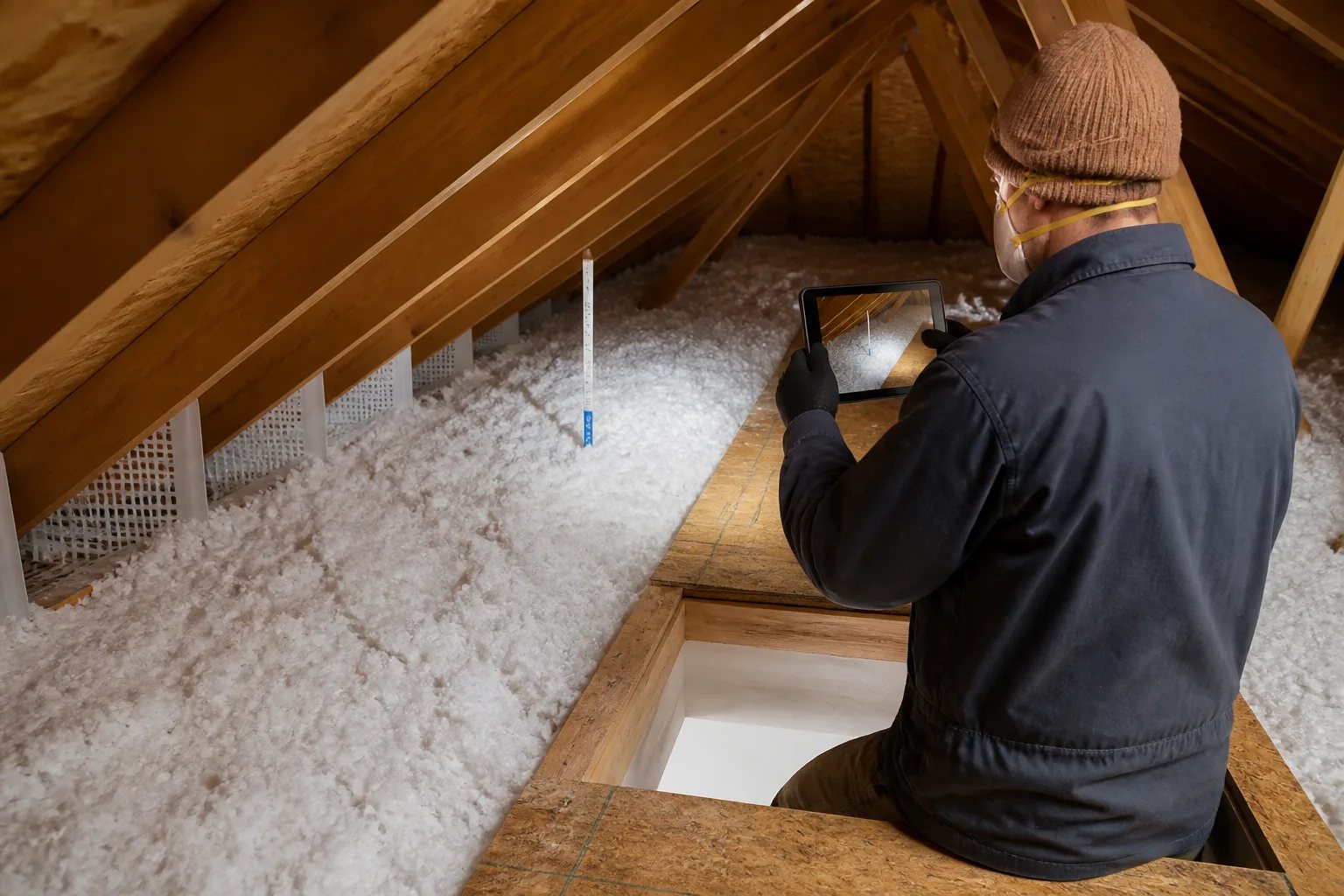
A practical written scope should identify:
- the accessible attic zones reviewed and any zones that could not be safely assessed;
- the existing insulation that can remain, needs localized correction, or may require removal;
- preparation items such as accessible air sealing, hatch work, baffles, dams, or levelling;
- the planned insulation material or performance basis and intended coverage where installation is appropriate;
- details that must remain protected, including eaves, clearances, exhaust routing, and service access; and
- conditions that require a roofer, electrician, HVAC contractor, environmental professional, or another qualified specialist.
This level of detail makes it easier to compare insulation proposals. It also prevents a known problem from being buried beneath a new layer. Where the attic is suitable for loose-fill coverage, our blown-in attic insulation information explains why edge details, depth references, material coverage, baffles, and service routes matter as much as the open centre of the attic.
When an assessment should lead to a pause rather than an insulation quote
Some findings should be addressed before ordinary insulation work continues. Active water entry, disconnected exhaust ducts, unsafe electrical components, significant mould, animal waste, structural damage, or unknown vermiculite-like material are not routine top-up details. The responsible step is to define the condition and involve the appropriate qualified service before new insulation conceals the area.
Even when the attic itself looks serviceable, a room-level comfort complaint may need investigation beyond the attic. Windows, exterior walls, rim joists, duct performance, and HVAC distribution can create similar symptoms. An honest assessment identifies what the accessible attic work can reasonably influence and what remains uncertain.
For homeowners deciding whether to proceed with a top-up, replacement, air sealing, or a separate repair first, the most useful answer comes from the attic’s actual condition. That is the purpose of an assessment: to turn visible evidence into a focused, understandable next step.
Helpful answers
Frequently Asked Questions
Start With the Attic Condition
Tell us about the rooms or attic conditions that concern you so we can help define the right next step.