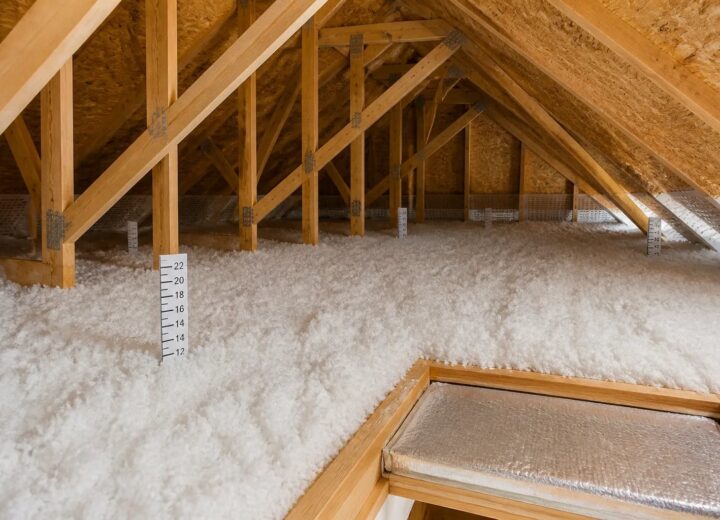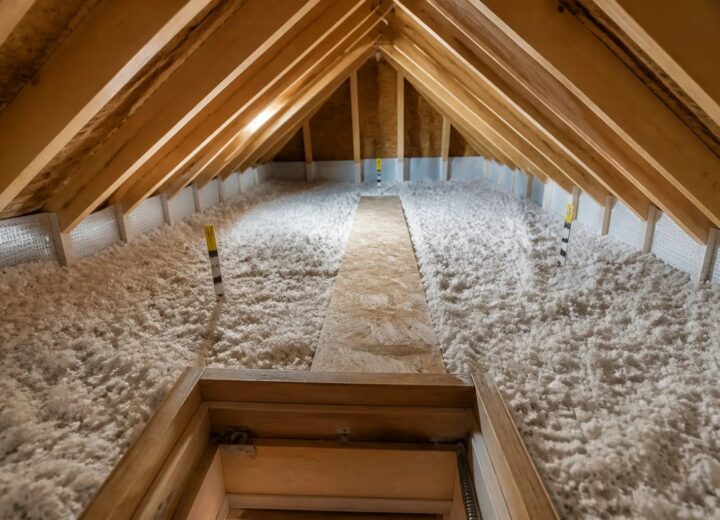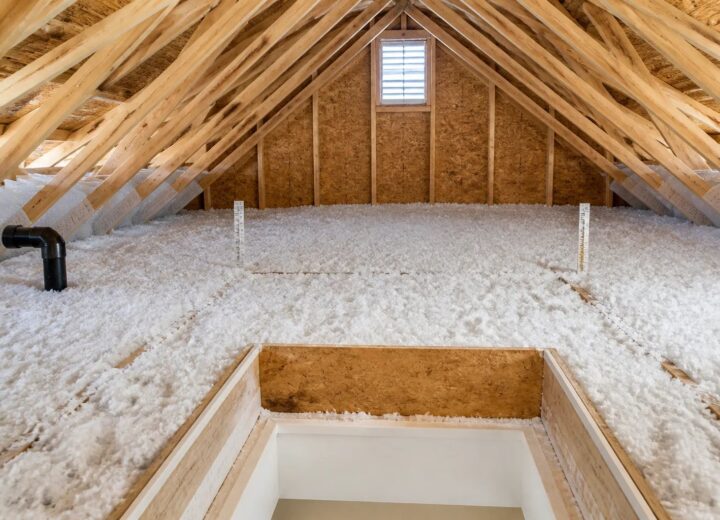
Direct answer: Choose an attic insulation top-up when the material already in place is dry, clean, stable and compatible but too shallow or uneven. Choose targeted or full removal when water, contamination, unknown material, widespread damage or required access means the existing layer cannot responsibly remain. Age alone does not decide.
Top-up versus removal: the core difference
An attic insulation top-up builds on material that can stay. The existing layer continues contributing thermal resistance, accessible preparation is completed and compatible insulation is added to create a more continuous final level. This normally involves less disturbance, disposal and labour.
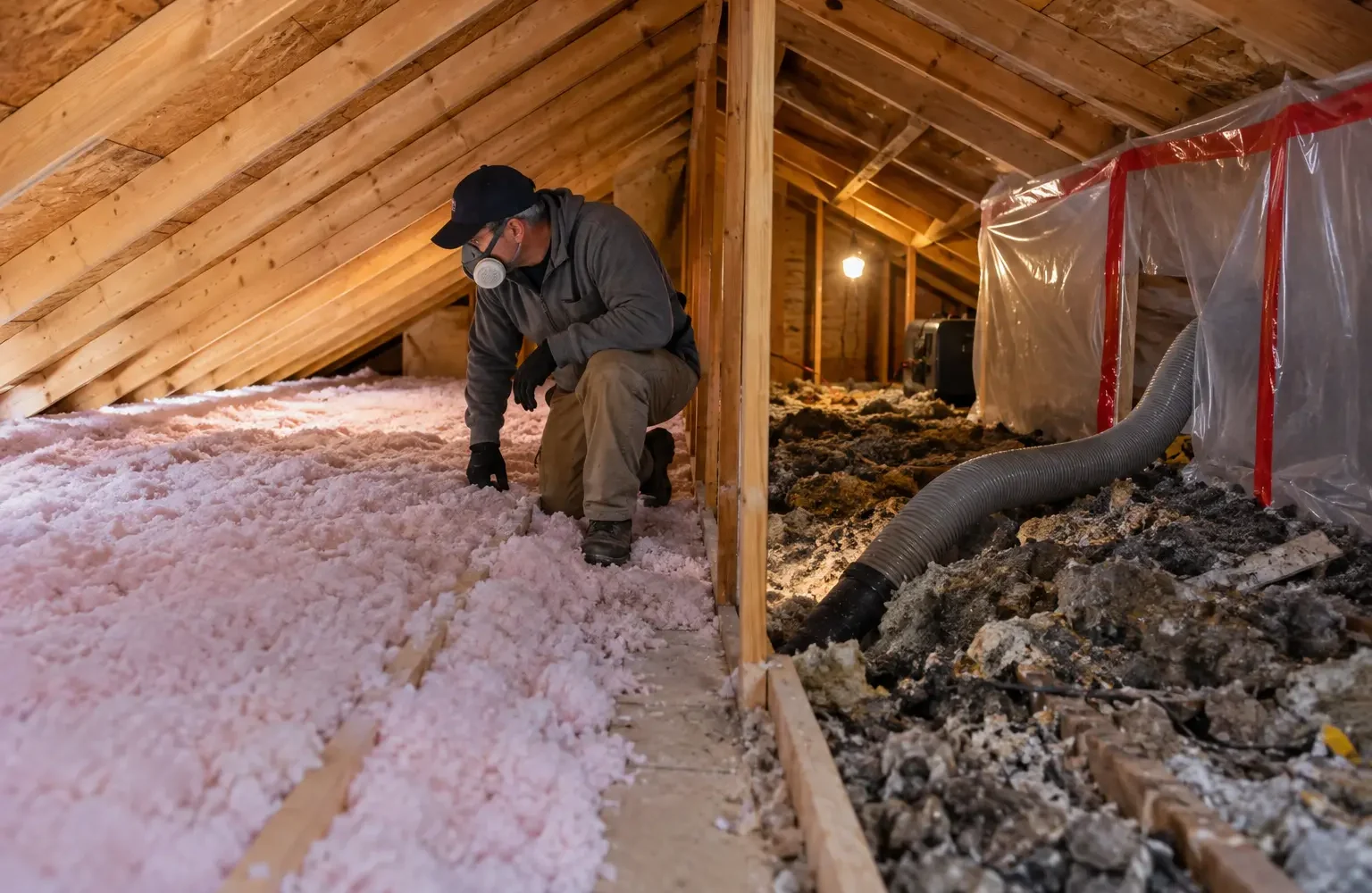
Insulation removal takes out some or all of the existing layer. It is not automatically an upgrade; it is a preparation method. Removal creates access to the ceiling plane, eliminates material that should not remain and allows the attic to be rebuilt after the source condition is corrected.
The most important question is therefore not “Which service is better?” It is “What is the material’s condition, and what work must happen beneath it?” A clean twenty-year-old layer may be suitable to keep. A new layer soaked by a roof leak may not be.
When an attic top-up is usually appropriate
A top-up is commonly considered when several conditions are true:
- The existing insulation is identifiable, dry and reasonably clean.
- There is no unresolved roof, plumbing or condensation source.
- The material is stable enough to remain and compatible with the proposed addition.
- The primary weakness is shallow, settled or locally disturbed coverage.
- Necessary air sealing, baffle and hatch work is accessible before the final layer.
- Required clearances and service routes can be maintained.
Normal settlement can reduce the visible depth of loose-fill. Previous electrical work can leave trenches or bare patches. Storage boards can compress batts, and wind at the eaves can shift lightweight fibres. These are not all reasons to discard the whole attic. Localized levelling, repairs and a planned top-up can restore continuity.
Compatibility is broader than product branding. The installer should consider material type, added weight, product coverage, available eave height, ceiling support and how the new layer will interact with the old. Loose-fill fibreglass and cellulose use different installed densities and coverage charts. The scope should name the selected product and final installed condition.
Preparation still matters in a clean attic
“No removal” does not mean “blow material immediately.” Deep insulation makes the ceiling plane difficult to reach. Before adding it, inspect and address accessible leakage at top plates, wiring, plumbing, fan housings, chases and the attic hatch. Extend baffles or dams so the planned depth does not block soffit airflow. Confirm bathroom and kitchen exhausts terminate outdoors.
A raised service platform may need modification before the top-up. Boards laid on joists will compress the new material and encourage unsafe walking. The hatch curb should contain loose-fill while preserving practical access. Heat-producing fixtures, chimneys, flues and equipment require their specified clearances.
When removal and replacement is more responsible
Removal becomes appropriate when the existing layer cannot remain safely or when broader corrective work needs access. Typical conditions include:
- Insulation saturated or matted by a roof or plumbing leak
- Widespread animal waste, nesting, debris or other contamination
- Significant moisture damage or recurring frost melt
- Unknown material that requires assessment before disturbance
- Mixed or severely displaced layers that prevent a reliable scope
- Extensive ceiling-plane work that cannot be completed through targeted access
- Fire, smoke or other damage that has affected the material
Removal should have a documented reason. “Old,” “dirty-looking” or “not our preferred brand” is not enough. Fibrous insulation naturally collects some dust over time. The decision depends on whether it can continue performing and whether leaving it prevents necessary work.
Targeted removal can be different from a full clean-out
A repaired roof leak may have damaged one bay or corner while surrounding insulation remains dry and clean. If the affected boundary can be traced and accessed, targeted removal can reduce waste and cost. The exposed sheathing, framing and ceiling need to dry before replacement.
A full clean-out may be reasonable when damage is widespread, contamination is difficult to isolate, materials are heavily mixed, or the project requires access across the whole ceiling plane. The proposal should explain why a broad area is necessary and how unexpected conditions will be handled.
Unknown material is a stop condition
Vermiculite-like granules or suspected asbestos-containing materials should not be tested, vacuumed or moved as ordinary insulation. Significant mould and animal waste also require appropriate assessment and controls. A routine insulation crew should recognize the boundary rather than bury it.
What an attic inspection should check before the decision
1. Material identification
Record loose-fill, batts and every visible layer. Look beneath the surface only when it is safe and appropriate. Additions may contain different material from the main attic. Unknown granules require caution.
2. Moisture and roof evidence
Look for active wetness, staining, rusted fasteners, frost patterns, compressed or crusted fibre and sheathing changes. Ask when roof work occurred and whether bath fans have ever discharged into the attic. A dry inspection can still show evidence of a past event.
3. Contamination
Animal tunnels, droppings, nesting and odour can indicate pest activity. The extent and type influence whether targeted or specialist remediation is needed. Do not disturb material simply to get a better photograph.
4. Coverage and depth
Measure several zones. Note bare exterior plates, low eaves, displaced material, compressed storage areas and separate roof assemblies. The average beside the hatch is not enough.
5. Air, exhaust and ventilation details
Review accessible ceiling penetrations, the hatch, baffles, soffit paths, upper vents and mechanical exhausts. These details determine the preparation required before either a top-up or replacement layer.
6. Access and clearances
Identify safe work routes, low-clearance areas, electrical components, chimneys, fixtures and equipment. Some cavities cannot be inspected without opening finishes; that limitation belongs in the quote.
Top-up versus removal decision table
| Observed attic condition | Likely direction | Why |
|---|---|---|
| Clean, dry, compatible insulation that is shallow | Top-up | The existing layer can continue contributing after preparation. |
| Small disturbed zones after wiring work | Restore and top up | Localized levelling can correct continuity without unnecessary disposal. |
| Localized wet area after a confirmed, repaired leak | Targeted removal | Damaged material can be removed while suitable surrounding material remains. |
| Widespread wet, contaminated or fire-damaged material | Broad removal | The existing layer cannot be relied on or responsibly covered. |
| Extensive air-sealing access needed | Partial or broad removal | The ceiling plane must be exposed enough to complete the agreed work. |
| Vermiculite-like or other suspect material | Stop and assess | Ordinary disturbance can create a health and liability risk. |
| Attic already dry, continuous and near the intended level | Possibly no major work | Another part of the home may be the more useful priority. |
How cost, time and disruption differ
A top-up usually costs less because it avoids vacuuming, bagging, transport and disposal. Preparation and new material are still required. The price varies with attic area, target depth, access, baffle work, air sealing and product.
Removal adds containment, labour and disposal. It may also reveal new tasks: wet sheathing, open chases, damaged ducts or unsafe wiring. A proposal should define how concealed discoveries are documented and approved rather than building an unlimited allowance into vague wording.
Disruption depends on the route from the attic to the exterior. Both projects should include interior protection and cleanup. A clean top-up may be relatively contained; removal of dusty or contaminated material demands a different control plan. Ask how the hose or bags will travel, how the hatch area is protected and what final cleaning is included.
Environmental and practical trade-offs
Keeping serviceable insulation avoids disposal and preserves the energy already used to produce it. Removing unsuitable material can be necessary to protect the assembly and occupants. Sustainability does not mean leaving damaged fibre, and “fresh start” does not justify discarding useful material. The condition-based decision balances both.
Access is another trade-off. Removal offers the best view of the ceiling plane and can improve air-sealing quality. Targeted access may achieve the important details with less disturbance. The quote should show which approach is being used and why.
A responsible work sequence for either path
- Document: photograph material, depth, moisture evidence, exhausts, baffles and inaccessible zones.
- Stop unsafe work: refer suspect materials, electrical hazards, active leaks or significant contamination to the appropriate qualified party.
- Correct the source: repair roofing, reconnect exhausts, address pests or resolve the condition that damaged the attic.
- Remove as needed: use targeted or broad removal according to the documented boundary.
- Prepare: complete accessible air sealing, baffle, dam, hatch and service-route work.
- Install: add compatible insulation to the specified coverage while maintaining clearances.
- Verify: review edges, depth markers, access and ventilation; retain photographs and project records.
How Oakville housing affects the choice
Oakville’s bungalows, split levels, dormered homes and additions can contain several insulation histories. A main attic may have dry cellulose, while a low rear addition has compressed batts. A garage bonus room can be separate from both. The right decision can differ by zone within one home.
Freeze-thaw events and wind-driven storms can create intermittent roof entry. Winter indoor moisture can create frost that melts later. Tell the inspector when the evidence appeared and preserve photographs. A dry September visit may not reconstruct a February frost pattern without that record.
Questions to ask before approving the quote
- What exact condition supports keeping or removing the material?
- Is the proposed removal targeted or full, and what defines its boundary?
- How will suspect material or an unexpected condition stop the work?
- What repairs must another contractor complete first?
- Which air-sealing, baffle, dam and hatch items are included?
- What new product and installed depth or assembly is specified?
- How will final coverage, low eaves and excluded zones be documented?
- If a rebate applies, who confirms the sequence and eligibility?
Top-up and removal FAQs
Does old insulation always need to be removed?
No. Dry, clean and stable material can continue contributing thermal resistance. Condition, compatibility and access determine whether it stays.
Can new insulation be added over fibreglass batts?
Often it can when batts are dry, properly fitted and free of contamination. Gaps and compression should be corrected, and the upper material should create continuous coverage.
Can one wet area be removed?
Sometimes. The source must be repaired, the affected boundary understood and the exposed assembly dried. Widespread water or contamination may justify a larger scope.
Will removal eliminate every attic odour?
Not necessarily. Odour can come from pests, moisture, wood, ductwork or materials outside the removed layer. The source needs to be identified.
Is removal necessary for air sealing?
Not always. Accessible leaks can be reached through localized movement or removal. Extensive ceiling-plane sealing may require broader exposure.
Which option qualifies for a rebate?
Programs generally define eligible installed measures and sequencing; preparation or removal may be treated differently. Confirm with the official administrator before work.
Choose the scope from attic evidence
Document material, moisture, access and the reason for every removal or preparation item before the final layer is installed.
Explore attic inspections