Direct answer
Cellulose is a fibre-based loose-fill insulation commonly used on attic floors. It can form consistent coverage around framing, but it must be installed to the specified density and depth while maintaining clearances and airflow paths.
Start with the assembly
Plan the work around the existing condition
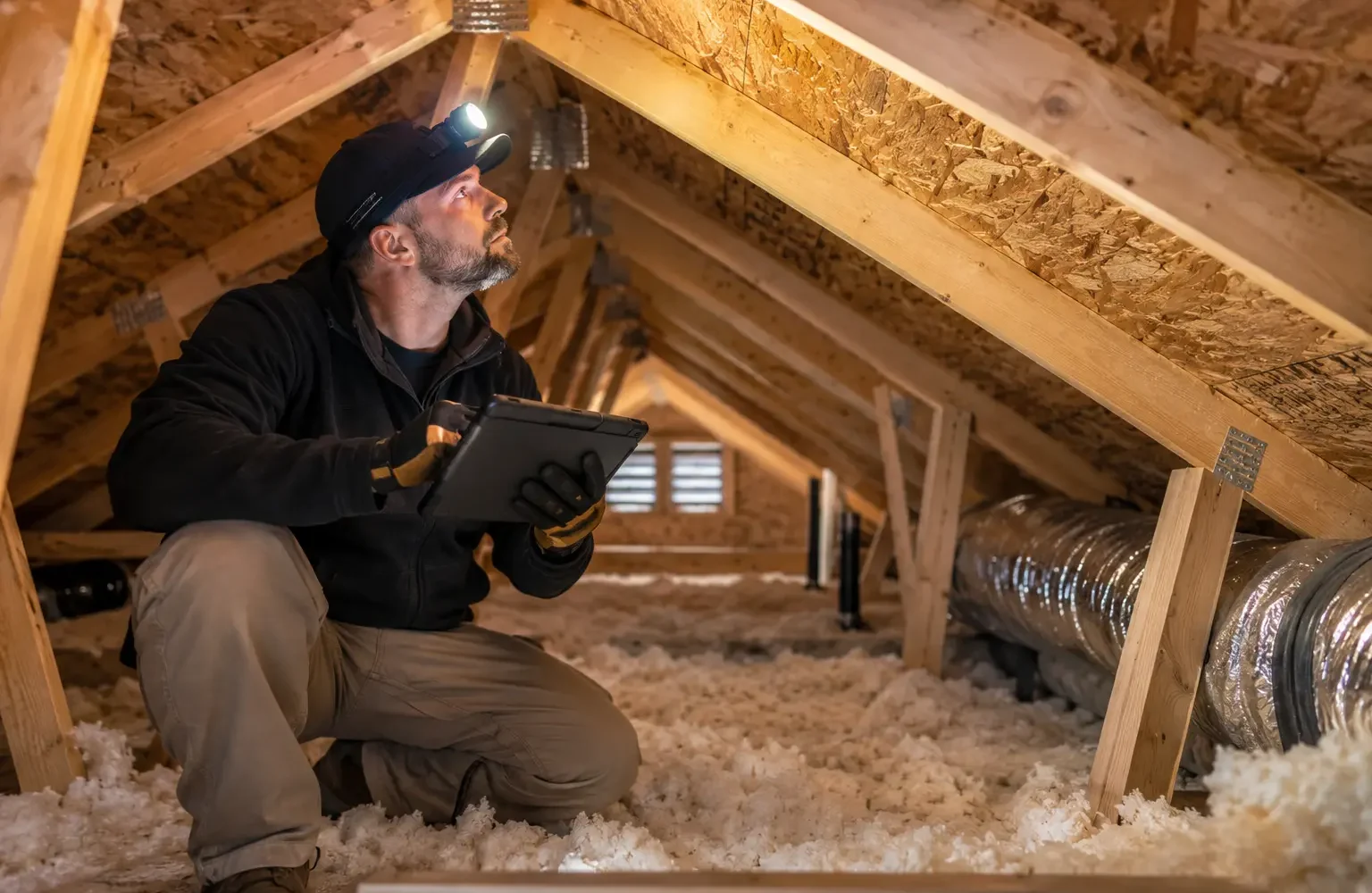
Material weight, settled thickness and compatibility deserve attention, particularly in older attics. The attic should be reviewed for ceiling condition, wiring, recessed fixtures, chimneys, ventilation and any moisture evidence before cellulose is added.
- Prepared open attic floors
- Top-ups where the existing system is compatible
- Irregular framing that benefits from loose-fill placement
- Projects where specified settled depth can be documented
Assessment
What should be checked before the scope is set
- Existing insulation and ceiling support
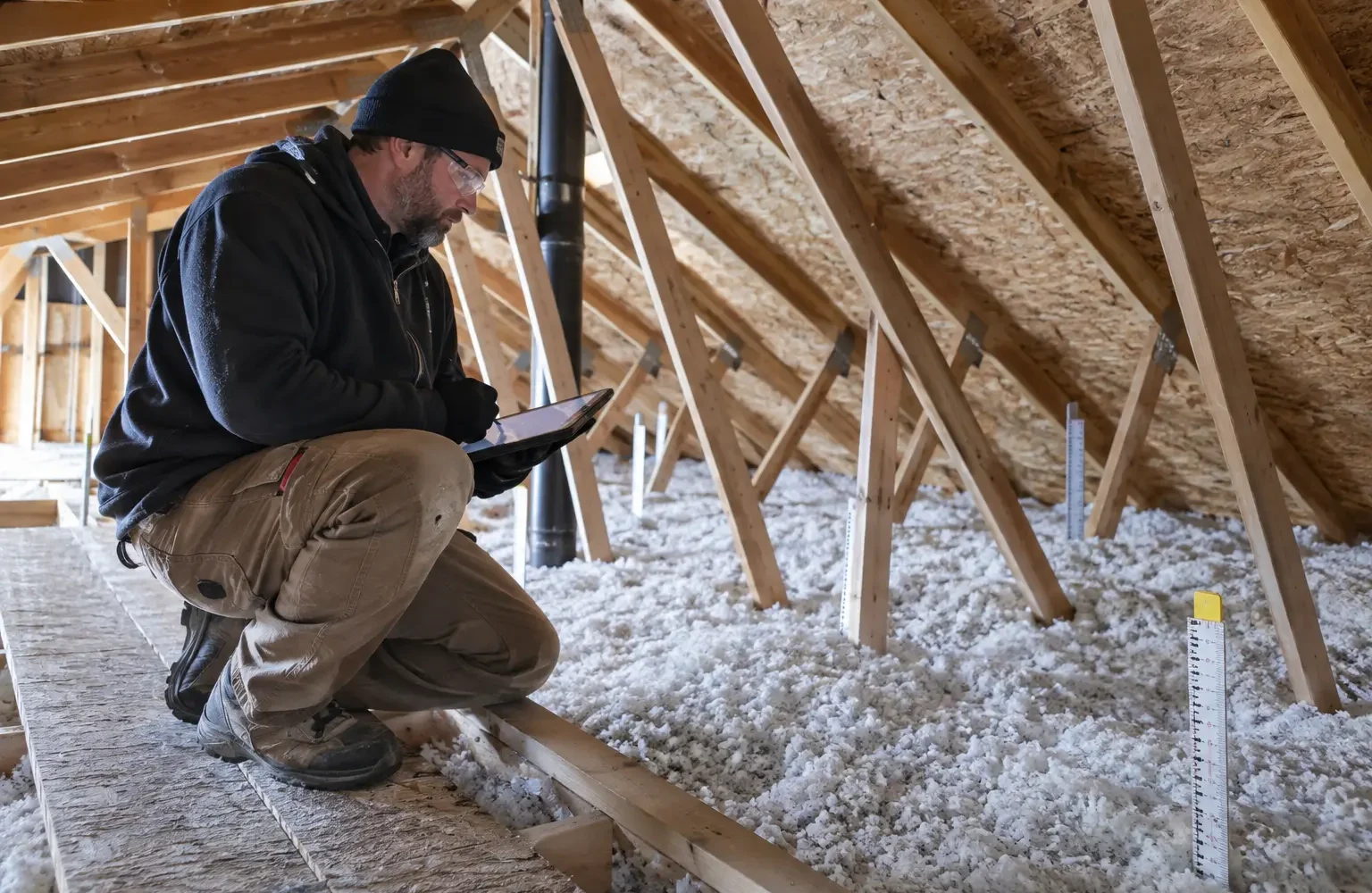
- Target settled R-value and installed depth
- Heat-source and electrical clearances
- Baffles, dams and access requirements
Possible scope
The work should follow the findings
These are common directions, not automatic inclusions. The final scope depends on access, existing materials and the condition found on site.
Full loose-fill coverage after preparation
Localized levelling before a broader installation
Retained service routes around attic equipment
Cellulose planning
Installed density, settled depth and attic capacity all matter
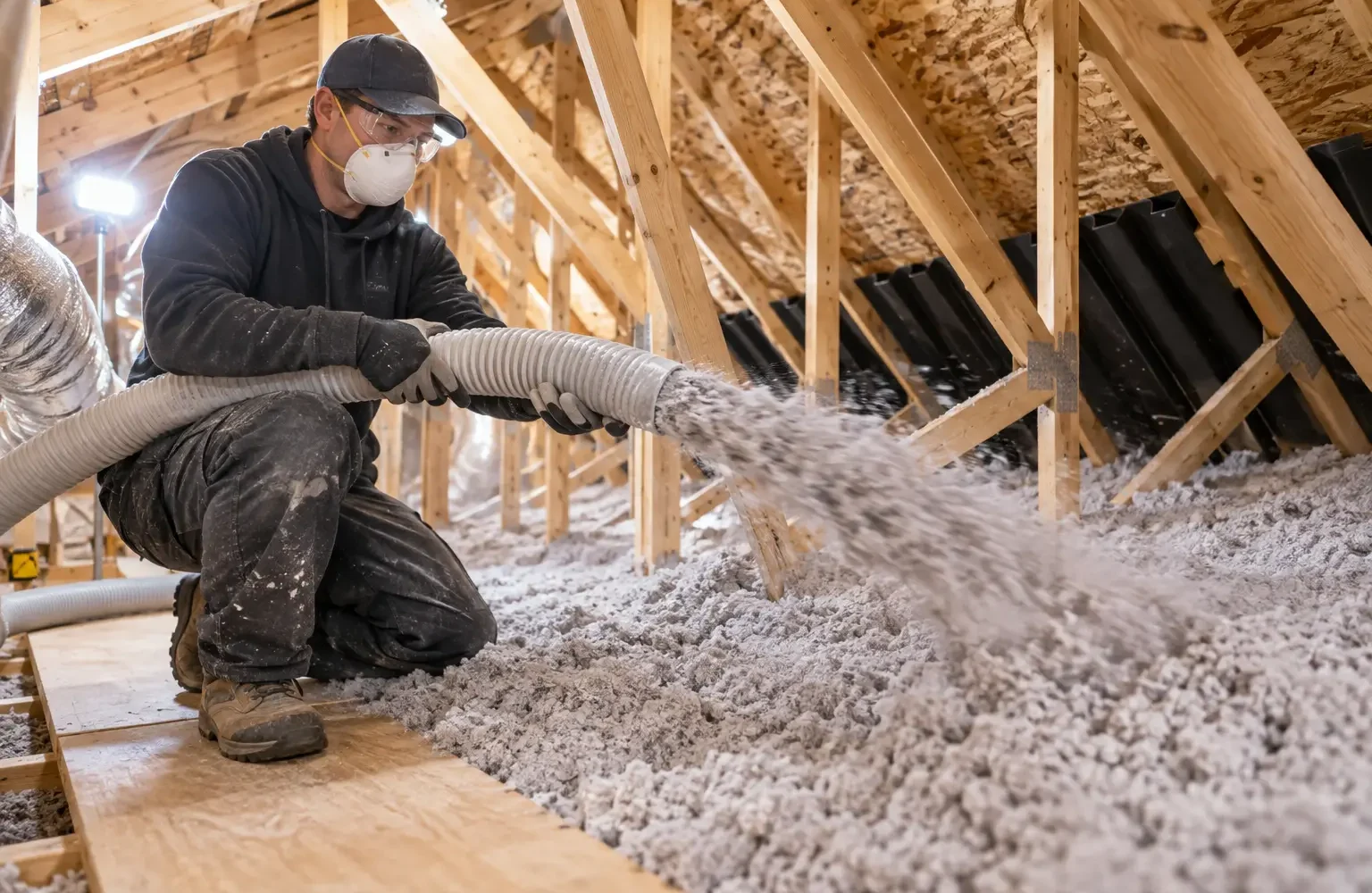
Cellulose is commonly produced from recycled fibre treated for fire and pest resistance. In an attic it can form dense, continuous loose-fill coverage around framing. A proper plan uses the manufacturer’s coverage information and accounts for settlement rather than treating every visible inch as equal.
Review what supports the material
Cellulose has different weight characteristics from lightweight loose-fill fibreglass. Before a large quantity is added, the ceiling condition, existing layers and any signs of sagging or damage deserve attention. Older plaster, multiple ceiling finishes or uncertain repairs may justify further review. The installer also needs enough physical height at the eaves to reach the target without blocking the ventilation route.
Existing insulation can sometimes remain, but mixed layers should be documented. Wet, contaminated or suspect material requires a different decision before it is covered.
Use the product chart, not a generic depth promise
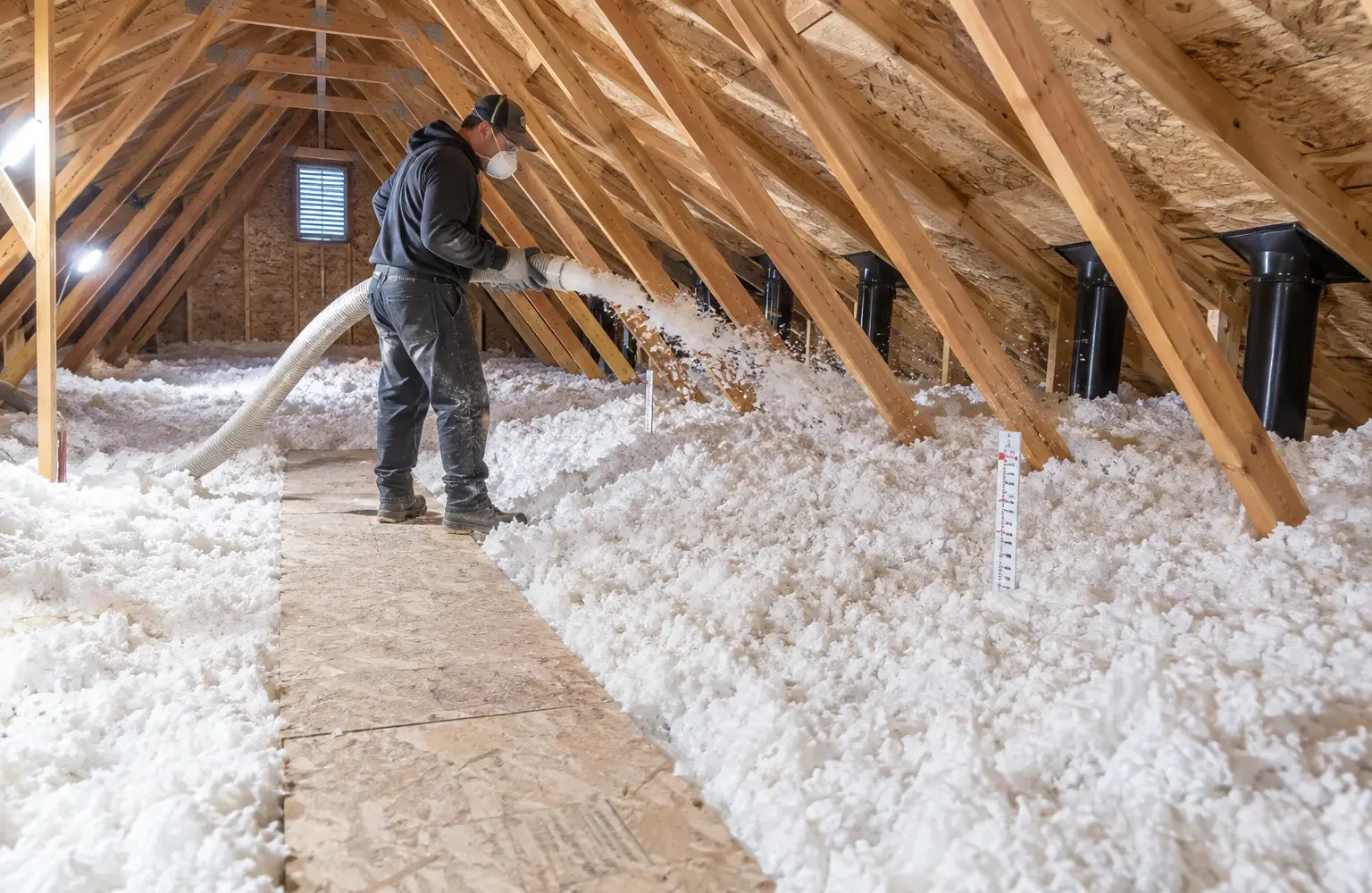
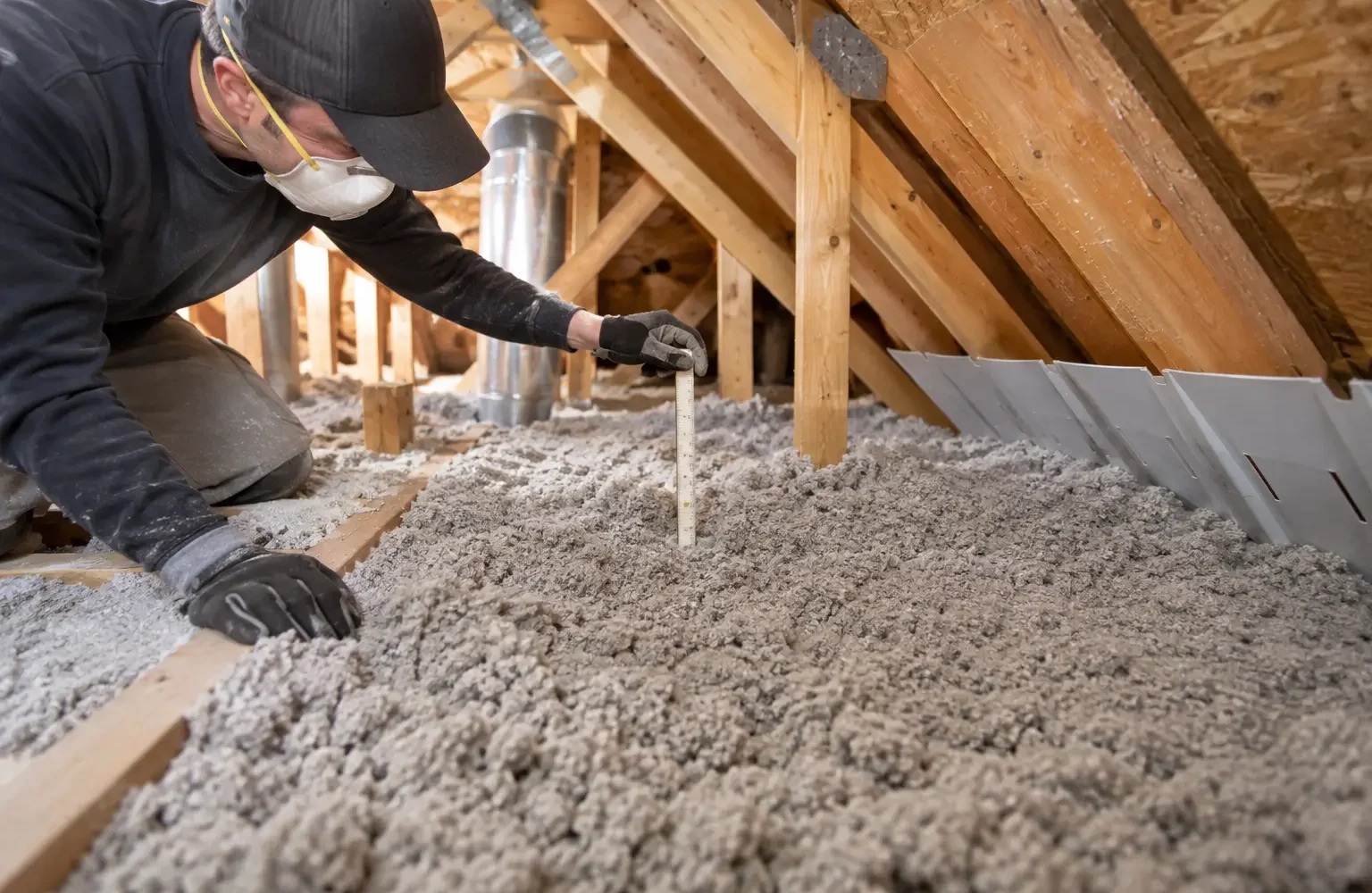
Cellulose packaging relates net coverage, bag count, installed thickness and settled thickness. The proposal should identify the performance basis and the work area. During installation, density that is too low can lead to unexpected settling; excess material or uncontrolled placement can overload details and obscure access.
Depth markers, bag count and photographs provide complementary evidence. None replaces attention at low eaves, hatches, chimneys, fixtures and mechanical equipment.
Before installation
Prepare the attic floor and perimeter
- Seal accessible leakage: use appropriate products at penetrations before they disappear below the final layer.
- Protect ventilation: extend or add baffles and dams so the intended soffit path remains clear.
- Maintain clearances: identify heat-producing fixtures, chimneys, flues and equipment with project-specific requirements.
- Plan access: raise required platforms or service routes above the intended insulation rather than compressing it later.
Practical use
Where cellulose helps—and what it does not solve
Cellulose can be an effective choice for an open, prepared attic where broad coverage is the objective. Its density can reduce air movement through the insulation, but the material is not a substitute for deliberate ceiling-plane air sealing. It also cannot repair a roof, connect an exhaust duct or make an unsafe electrical condition acceptable.
Moisture history matters. Cellulose can hold water, and a roof or condensation source should be corrected before installation. If existing fibre is already wet, the evaluation should consider the affected area, drying, material condition and whether the roof deck has been damaged.
For an Oakville homeowner comparing cellulose with fibreglass, useful questions include product name, installed and settled depth, total net area, expected bag count, preparation, dust controls and final documentation. Those answers are more informative than a broad claim that one fibre always outperforms another.
Written scope standard
Make the cellulose insulation proposal verifiable
The proposal should identify every included work area, the existing material that will remain or be removed, required preparation, the new product or assembly, access protection and important exclusions. If an attic or cavity cannot be inspected safely, that limitation should be written rather than absorbed into a broad whole-home claim.
Before covering the work, record the details that will disappear: air-control preparation, baffles or blocking, service penetrations, material fit and any repaired area. Finished photographs should show edges and transitions in multiple locations as well as the easy centre view. Product records, depth or coverage information and authorized changes belong with the final invoice.
If the exposed condition differs from the estimate, work should pause at the affected area long enough to document the change. The homeowner should receive a clear description of the finding, the proposed response, cost and schedule effect before added work is authorized. This prevents a necessary correction from becoming an open-ended allowance and preserves a record for future roof, electrical or renovation work.
The completion review should also identify homeowner follow-up: items another trade must address, conditions worth monitoring and safe access limitations. Warranty language belongs in the project agreement, while routine maintenance and exclusions should be explained in plain language. A clean handoff is part of installation quality because it tells the next person what is beneath the finished surface.
Performance expectations should stay connected to the treated assembly. Insulation can reduce heat flow and appropriate sealing can reduce uncontrolled air movement, but exact comfort, energy use and moisture outcomes also depend on weather, equipment, windows, other enclosure areas and household operation.
Oakville planning context
How the local housing condition can shape the scope
Before cellulose is added in an Oakville attic, the ceiling support, existing layers, roof moisture evidence and available eave height deserve review. Specified installed and settled depth should be clear in the scope.
Important boundary
Cellulose is not a substitute for repairing leaks or correcting exhaust and ventilation defects. Suspected hazardous material should be assessed by the appropriate specialist before disturbance.
Questions homeowners ask
Cellulose Insulation FAQs
Does cellulose settle?
Yes. Installation specifications account for settled performance, so installed depth and density matter.
Can cellulose be installed over fibreglass?
Some mixed-material top-ups are possible, but condition, compatibility, weight and the project specification should be reviewed first.
Is cellulose fireproof?
Products are treated for fire resistance, but no insulation should be described as making an attic fireproof. Required clearances still apply.
Related planning