What this can mean
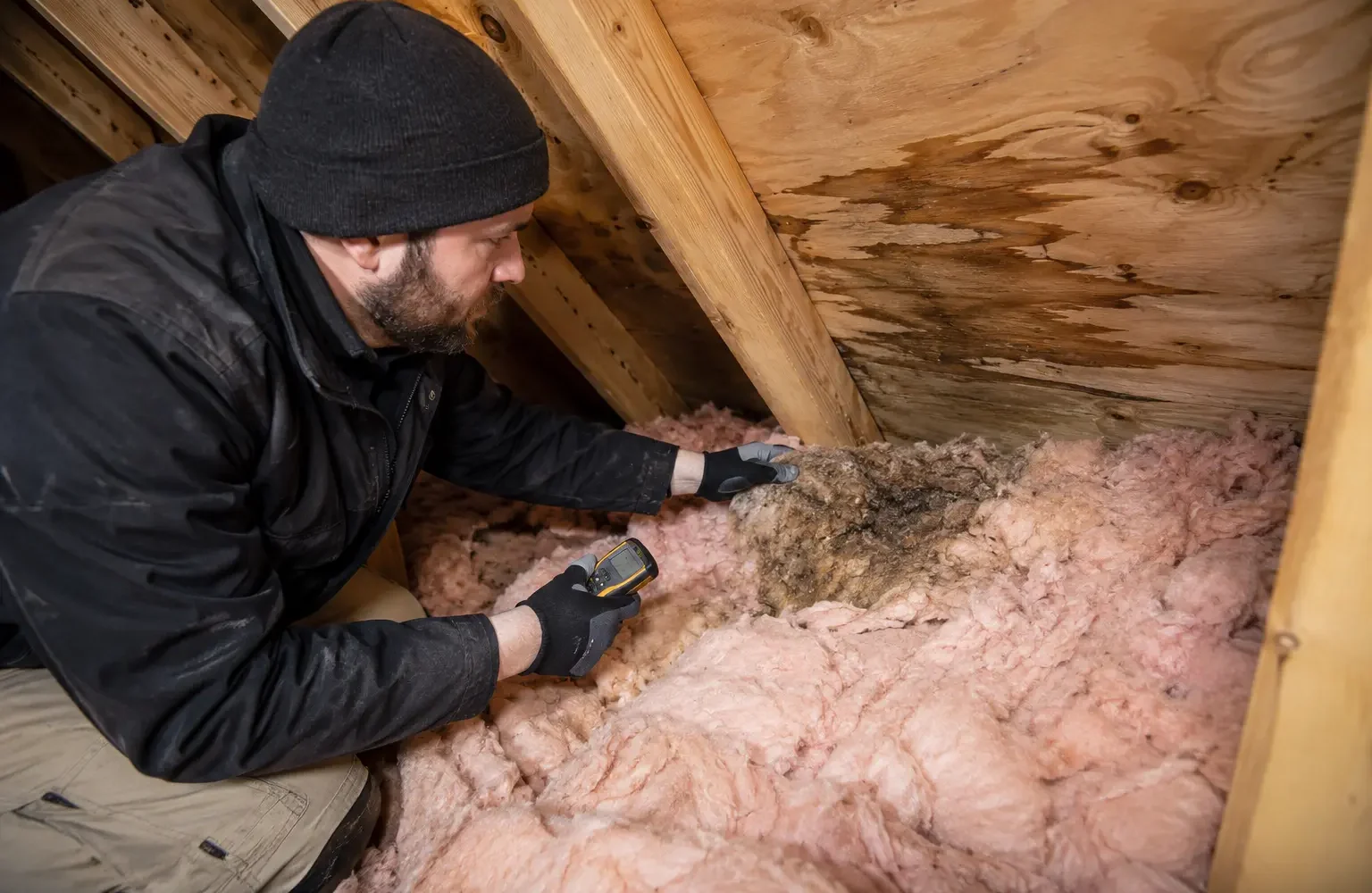
Wet insulation should be treated as evidence, not just debris. The water source must be identified and repaired before affected material is replaced or covered.
Potential contributors
Look beyond a one-cause answer
- Roof covering or flashing leaks
- Condensation dripping from roof sheathing or ducts
- Plumbing leaks passing into the attic
- Wind-driven water at vents or penetrations
- Ice-dam related entry during freeze-thaw weather
Useful checks
Evidence that narrows the next step
- Trace staining above and below the wet area
- Separate roof leakage from interior condensation
- Assess how far moisture travelled through material
- Check sheathing and framing condition after drying
Water before material
Repair the source and confirm drying before deciding what stays
Wet insulation is evidence, not the original cause. Water may come through roofing or flashing, condense from indoor air, leak from plumbing or enter through an exterior vent. Replacement should wait until that path is understood and corrected.
Trace the affected area
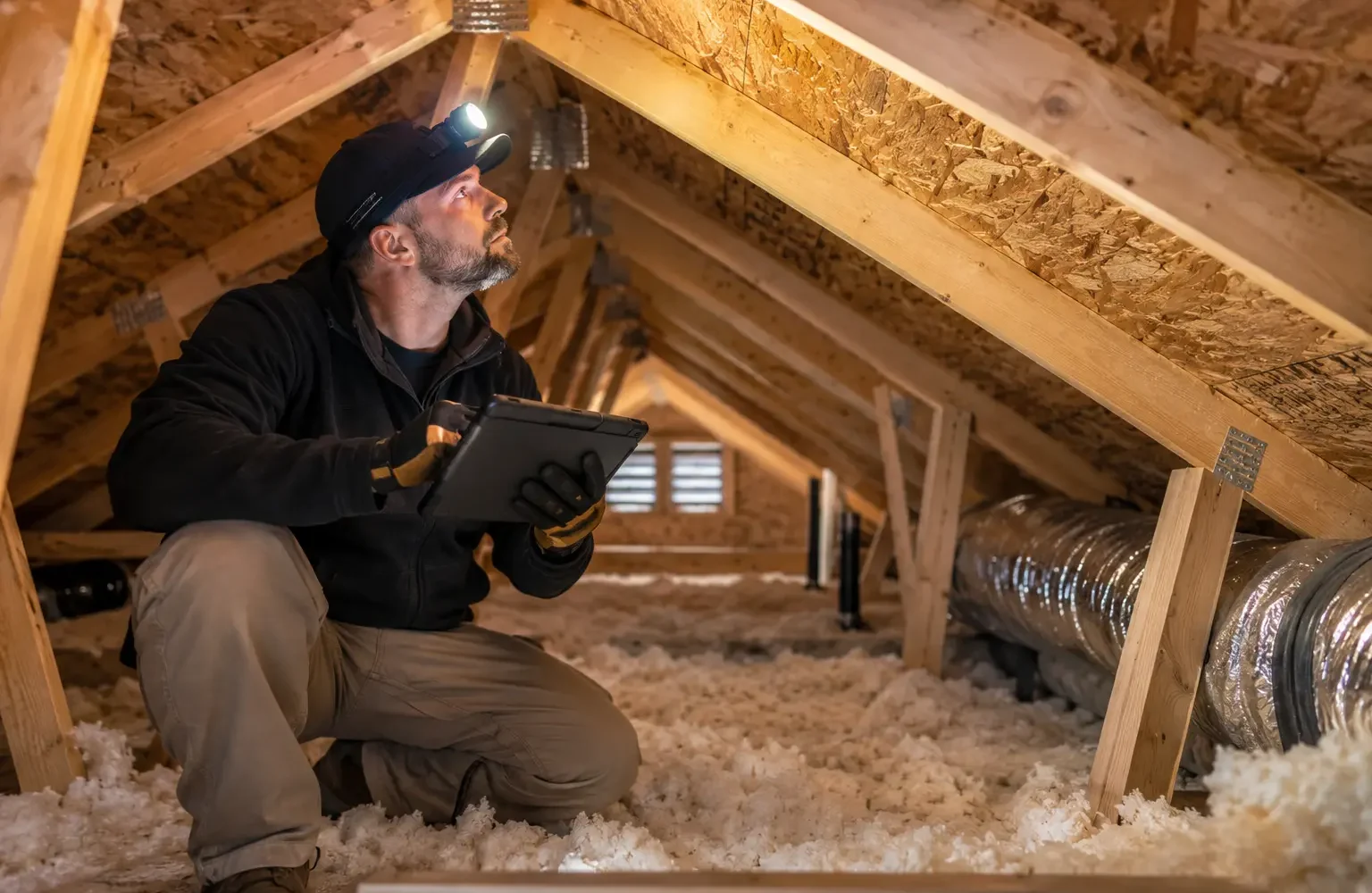
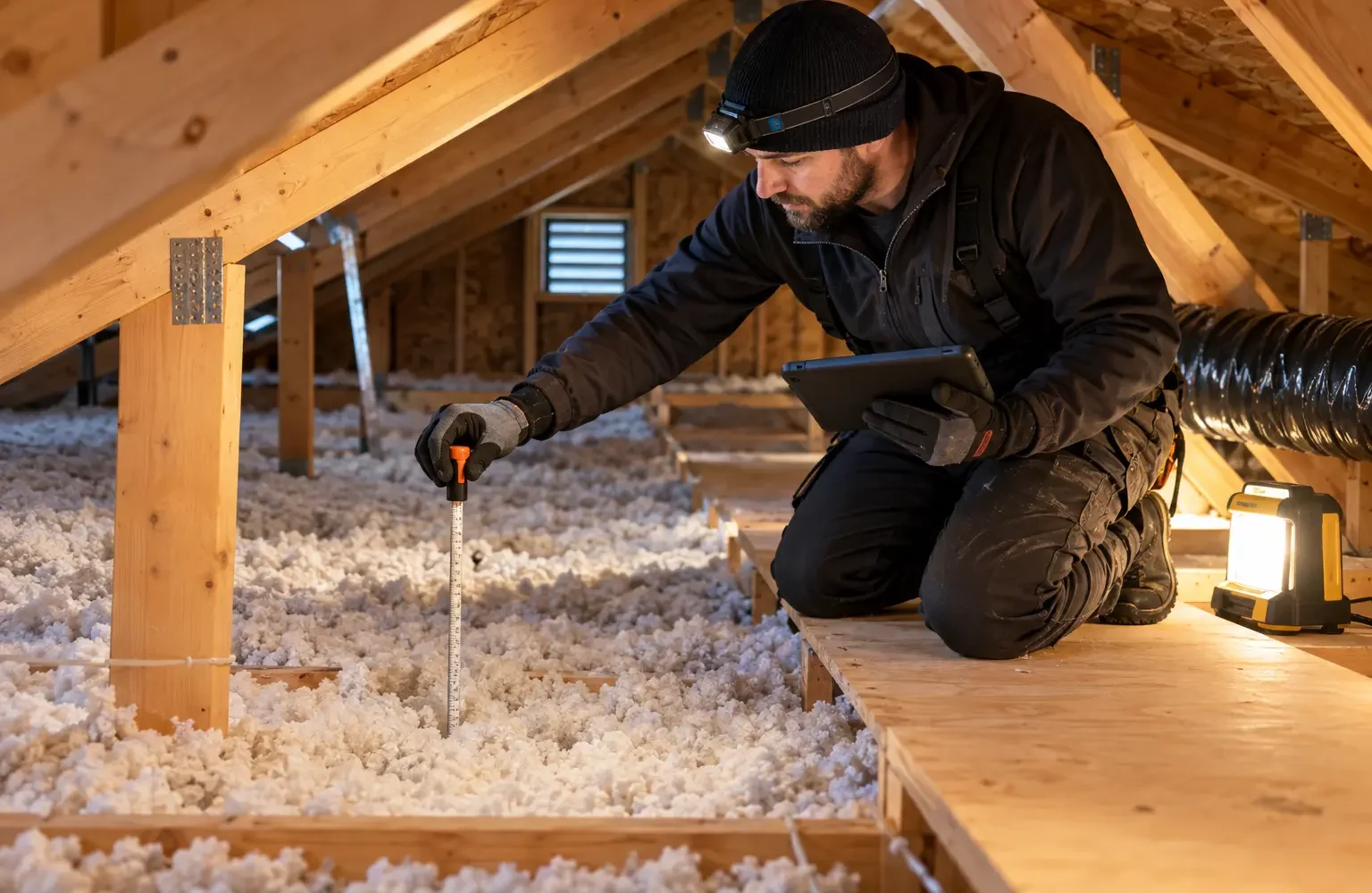
Water can run along roof sheathing, rafters, truss webs, pipes or vapour-control layers before it reaches insulation. Photograph staining from the highest visible point to the lowest. Check whether the material is wet now, matted from a past event or dry with residual marks.
Localized damage may support targeted removal. A large, repeated or uncertain event can justify broader access and specialist review.
Assess more than the insulation
Roof sheathing, wood framing, drywall, fasteners and electrical components may also be affected. Mould growth, rot, structural damage and electrical hazards are outside ordinary insulation replacement and need the appropriate qualified service.
Drying time depends on materials, weather and ventilation. New insulation should not trap moisture against surfaces that have not returned to a suitable condition.
Recovery sequence
Six steps from discovery to restored coverage
- Stop active water and protect the interior.
- Document the pattern before disturbing materials.
- Identify the likely source and involve the appropriate roofing, plumbing or building specialist.
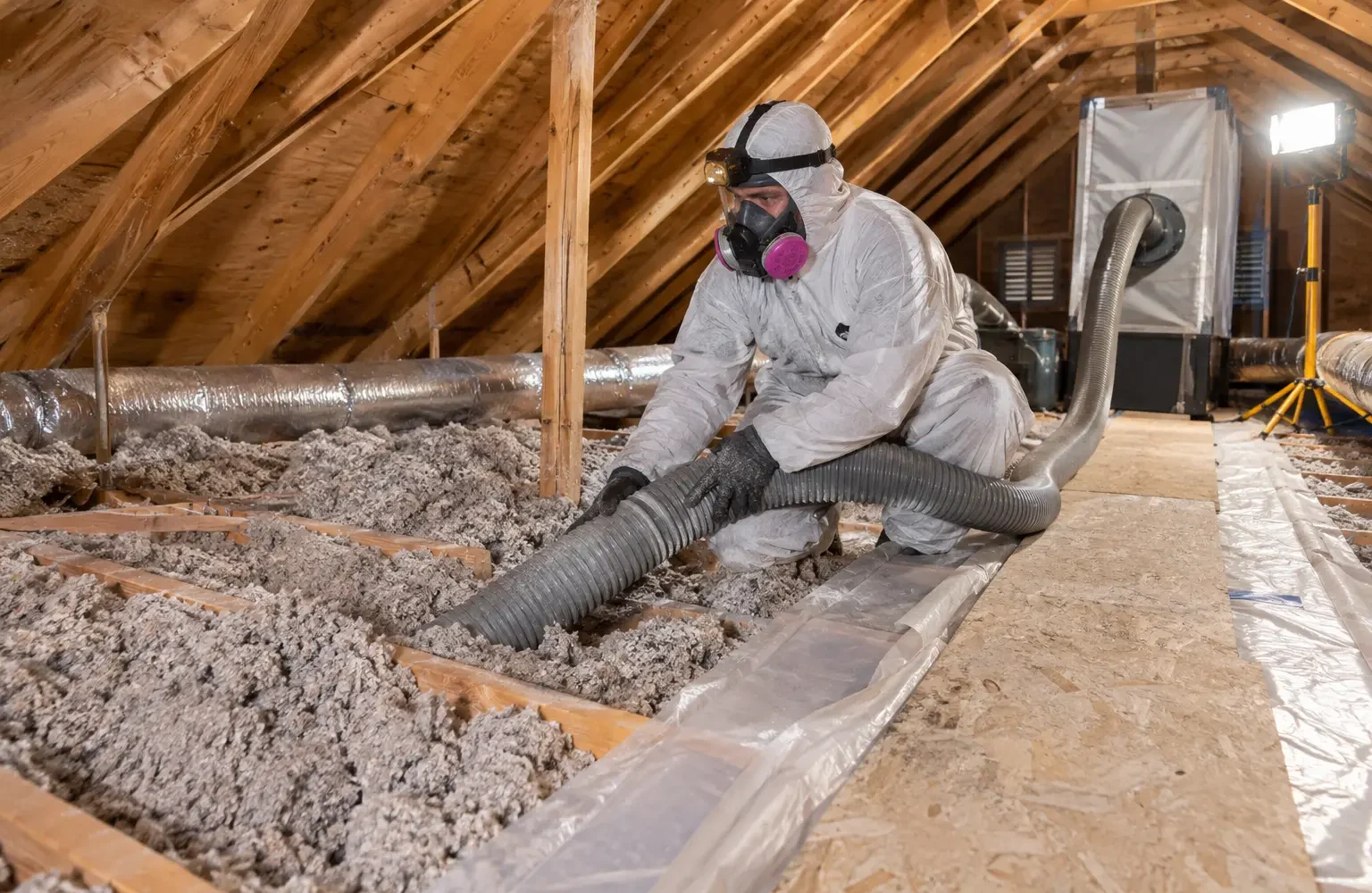
- Remove material that is saturated, damaged or required for access.
- Dry and verify the exposed assembly; complete approved repairs and preparation.
- Replace insulation to a continuous level and retain photographs of the restored area.
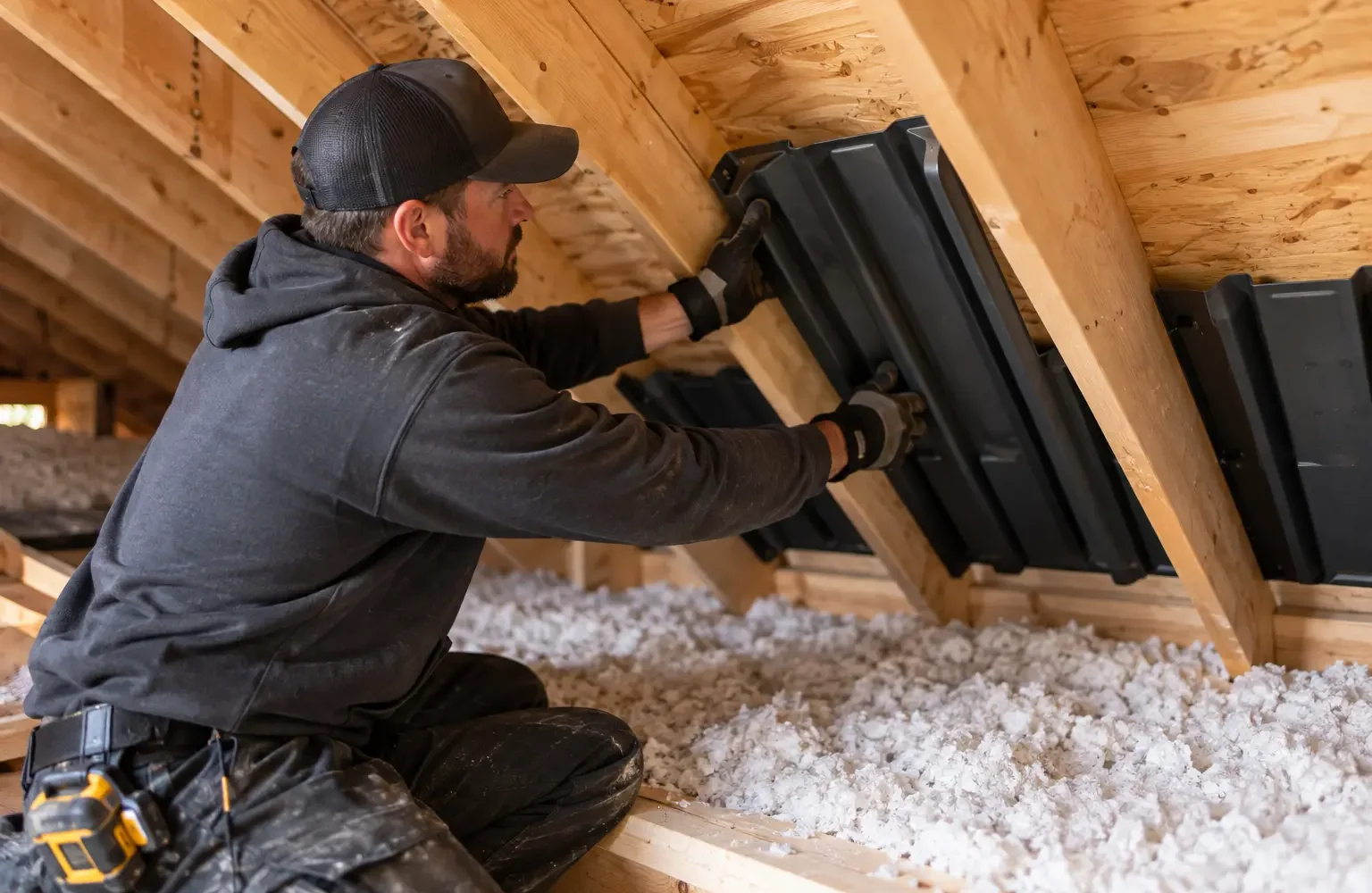
If a leak occurs after recent insulation work, preserve documentation from both projects. The location of depth markers, baffles and previous photographs can help distinguish new damage from an older stain.
Do not diagnose from colour alone
Dark material may be dust, old staining or microbial growth; clean-looking material can still be damp. Visual appearance is one part of the assessment. In Oakville’s freeze-thaw climate, intermittent roof entry may appear only under certain wind, snow and temperature conditions.
Document the symptom
Create a record that can be compared after the work
Photograph the location and pattern before weather or repairs change it. Record the affected rooms, time of day, outdoor conditions, indoor humidity when relevant, equipment operation and recent roof or renovation history. These observations help separate an attic finding from window, HVAC, roofing or household factors.
Ask the written scope to name the finding it is intended to address, the areas included, preparation, material or repair approach and any cause that remains outside the insulation contractor’s role. If another qualified trade must act first, that sequence should be explicit. This keeps a symptom page from turning into a default product recommendation.
After corrective work, repeat the same observations under reasonably similar conditions. A useful review looks for a change in the original symptom and confirms that the completed scope preserved access, clearances, exhaust routing and intended ventilation. Record any area that remained concealed or inaccessible so a future inspection does not mistake absence of evidence for proof of condition.
Results should be described in terms the treated assembly can influence. Exact room temperatures, energy bills, humidity and roof behaviour still depend on weather, equipment, windows, other enclosure areas and household operation. It does not replace specialist testing where the original condition falls outside ordinary insulation work.
Oakville planning context
Connect the symptom to the home
Wind-driven rain, snow and freeze-thaw cycles can make an intermittent roof defect difficult to trace. Follow staining across the roof deck and insulation rather than assuming the wettest point sits directly below the entry.
What may happen next
Once the source is corrected, affected insulation can be removed as needed, the area allowed to dry, and clean replacement installed to restore coverage.
Clear answers
Questions about leak-damaged insulation
Can wet insulation dry in place?
Minor dampness may dry under the right conditions, but saturation, contamination and trapped moisture can require removal. The source and material condition govern the decision.
Who fixes the roof?
Roof repairs belong with an appropriate roofing scope before insulation is restored.
Relevant services