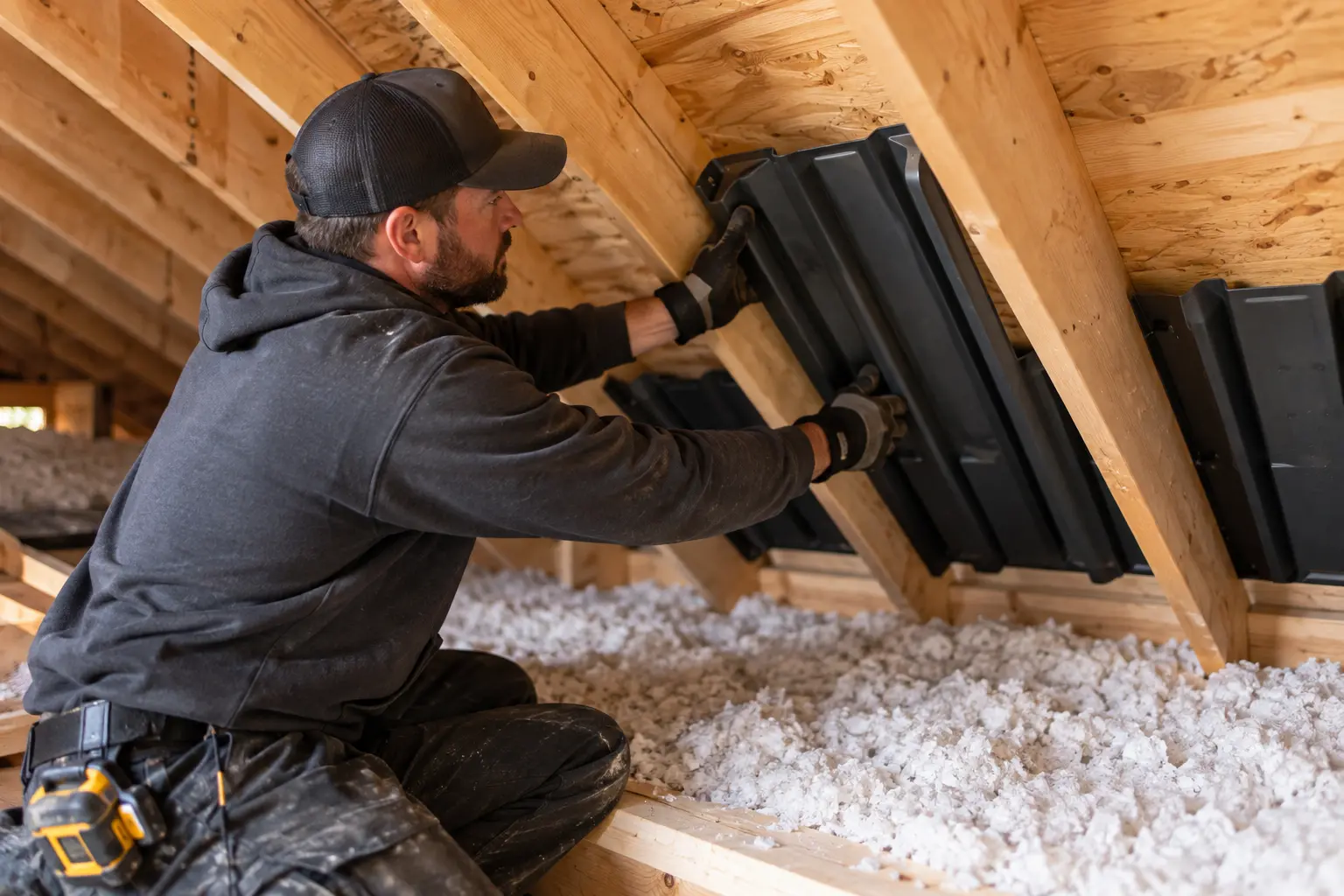
Direct answer
In a vented attic, outside air should have a clear intended route from intake vents toward exhaust vents. Insulation must not block the eaves, and bath or kitchen exhaust ducts must not discharge into the attic.
Start with the assembly
Plan the work around the existing condition
Adding roof vents without understanding intake, exhaust and air leakage can miss the real issue. Ventilation is one part of moisture control. Indoor humidity, ceiling leakage, roof leaks and disconnected exhaust ducts can produce similar symptoms and should be considered together.
- Loose-fill is crowding or blocking soffit areas
- Baffles are missing, crushed or too short
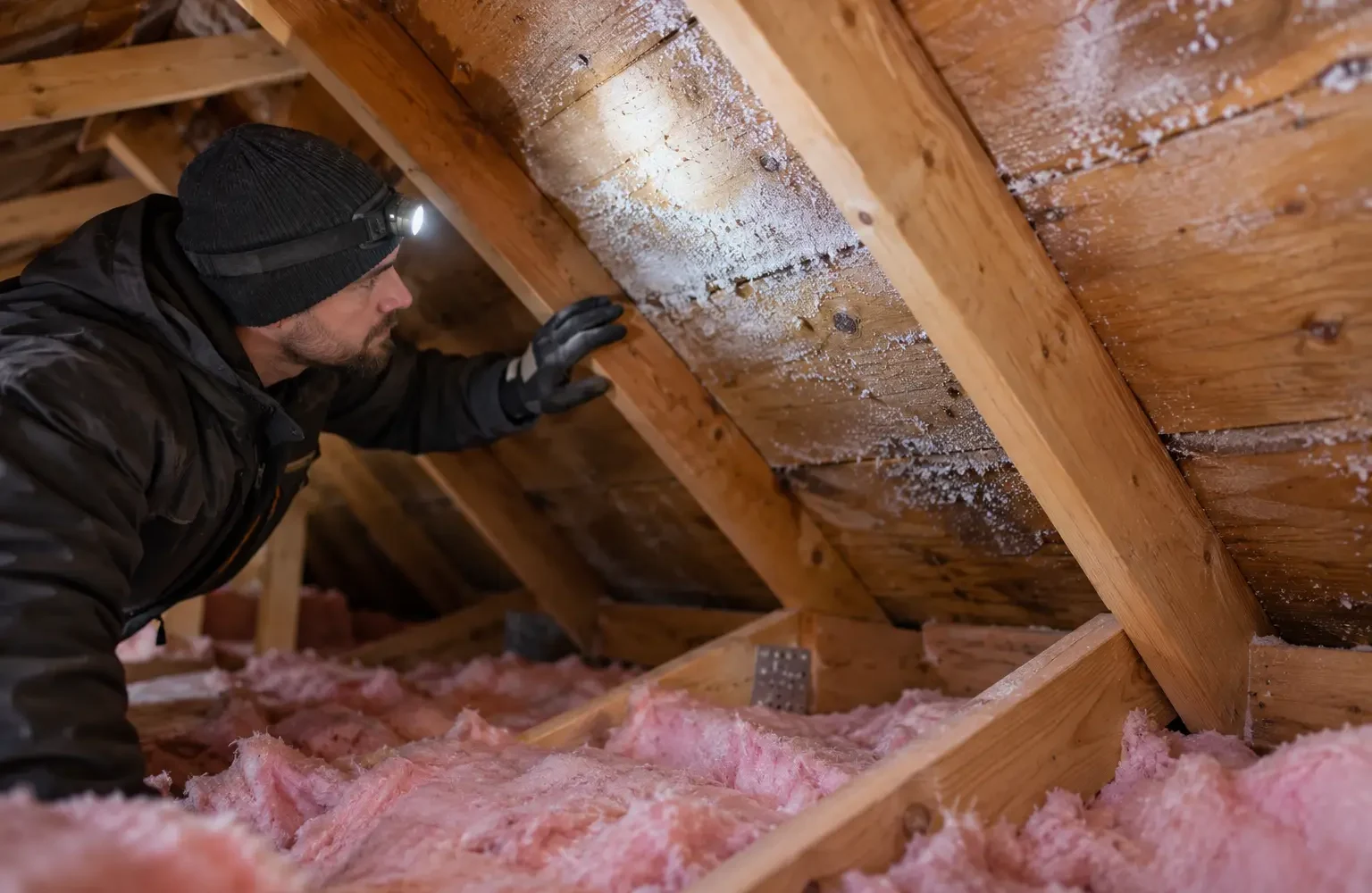
- Frost or condensation appears on roof sheathing
- A top-up will increase depth near the eaves
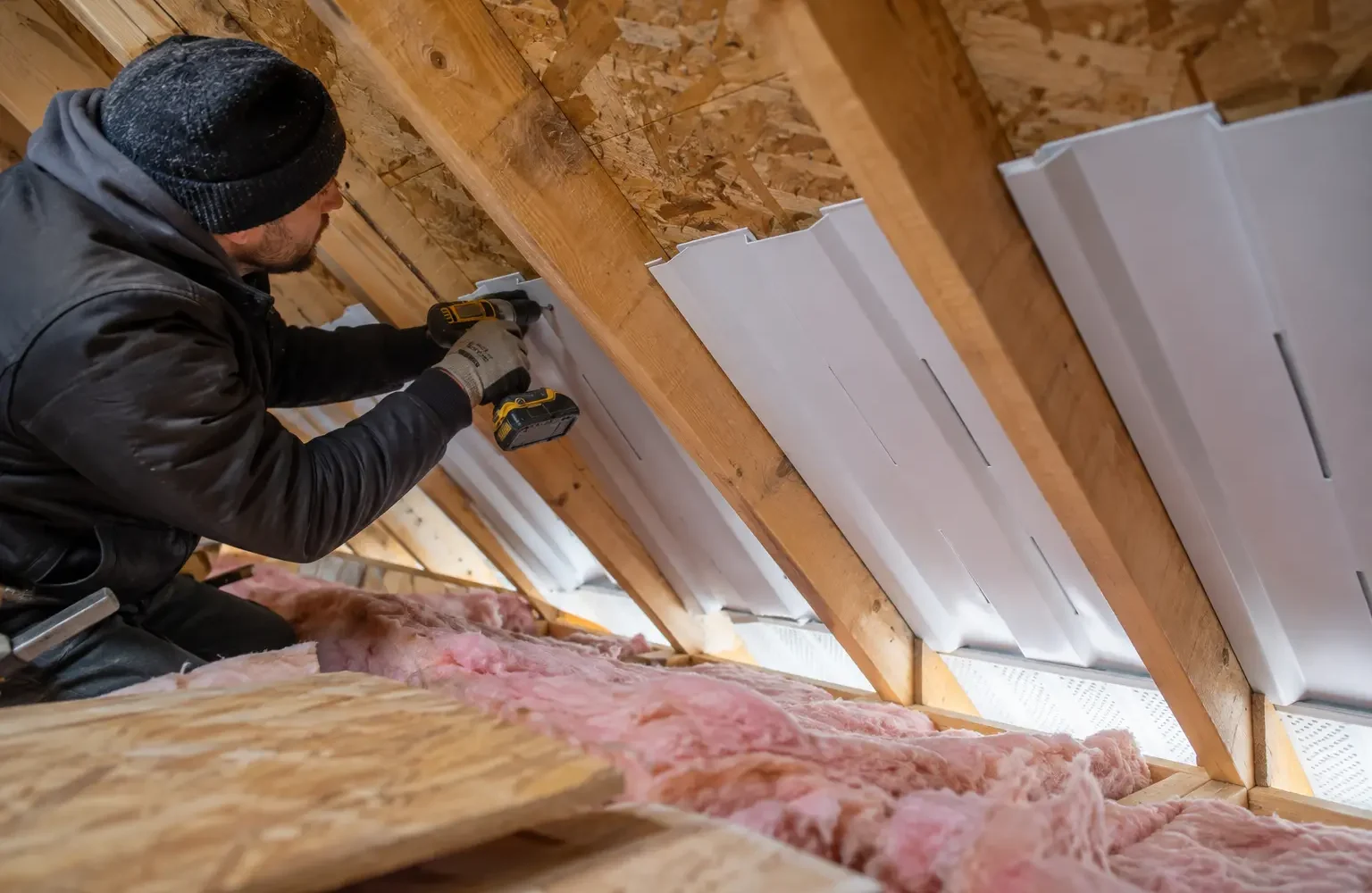
Assessment
What should be checked before the scope is set
- Soffit intake and roof exhaust configuration
- Baffle count, height and continuity
- Bath and kitchen exhaust termination
- Roof deck staining and seasonal moisture evidence
Possible scope
The work should follow the findings
These are common directions, not automatic inclusions. The final scope depends on access, existing materials and the condition found on site.
Install or extend baffles before adding insulation
Build insulation dams that keep intake routes clear
Refer roof-vent changes to the appropriate roofing scope when needed
Oakville planning context
How the local housing condition can shape the scope
Snow, wind and seasonal humidity can change how an attic symptom appears. For a conventional vented roof, the review should consider soffit intake, baffles, upper exhaust, ceiling leakage and mechanical exhausts together.
Important boundary
Ventilation should not be presented as a guaranteed cure for condensation. Uncontrolled indoor air leakage and high humidity can remain the dominant sources.
Questions homeowners ask
Attic Ventilation FAQs
Do more roof vents always help?
No. Vent location, intake balance and the roof assembly matter. Random additions can short-circuit intended airflow.
Can insulation touch the roof deck?
In a conventional vented attic, an airflow channel is normally maintained at the eaves. Other roof assemblies require project-specific design.
Should bathroom fans vent into the attic?
No. Exhaust ducts should terminate outdoors through an appropriate hood and be checked for connection and condition.
Related planning