Direct answer
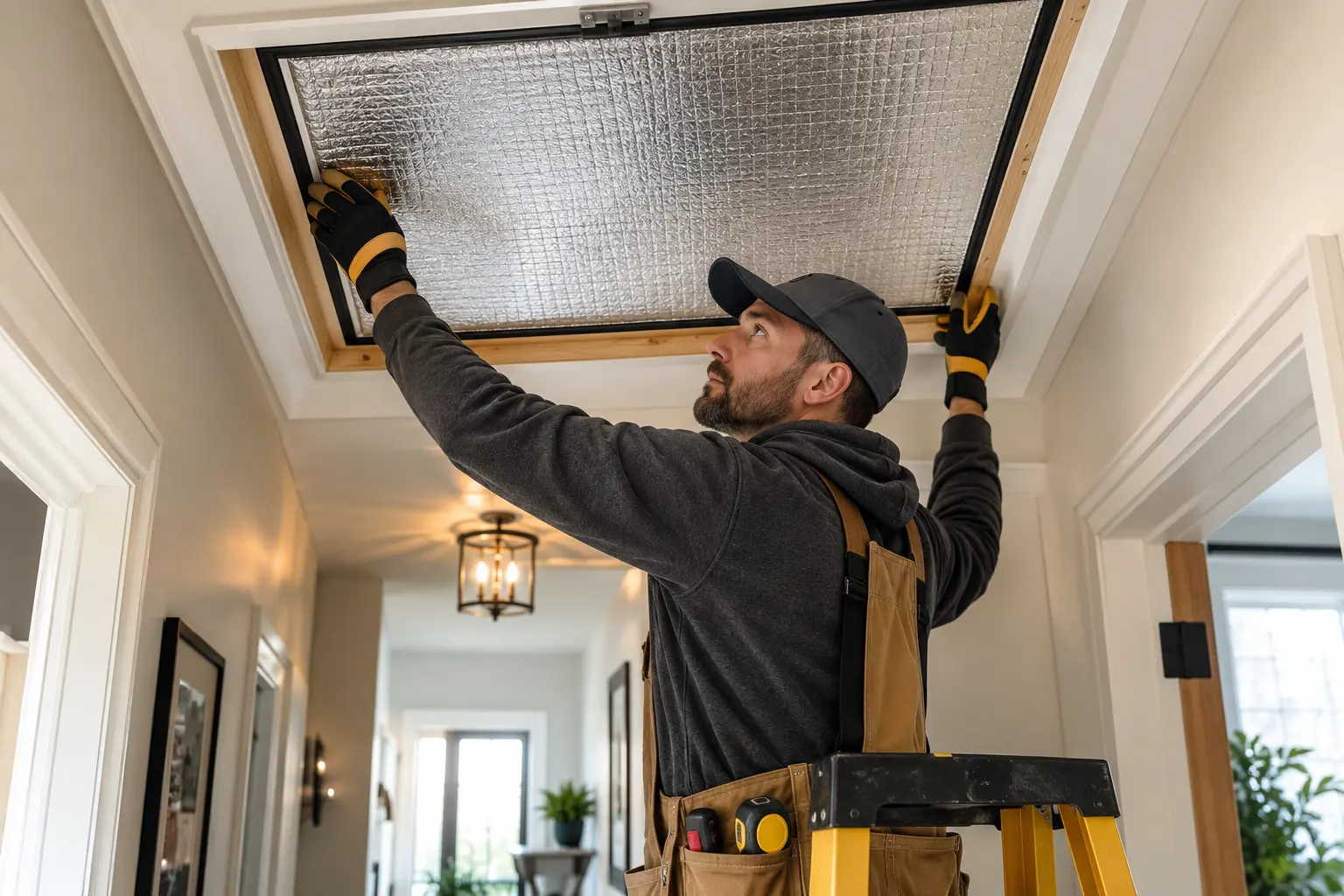
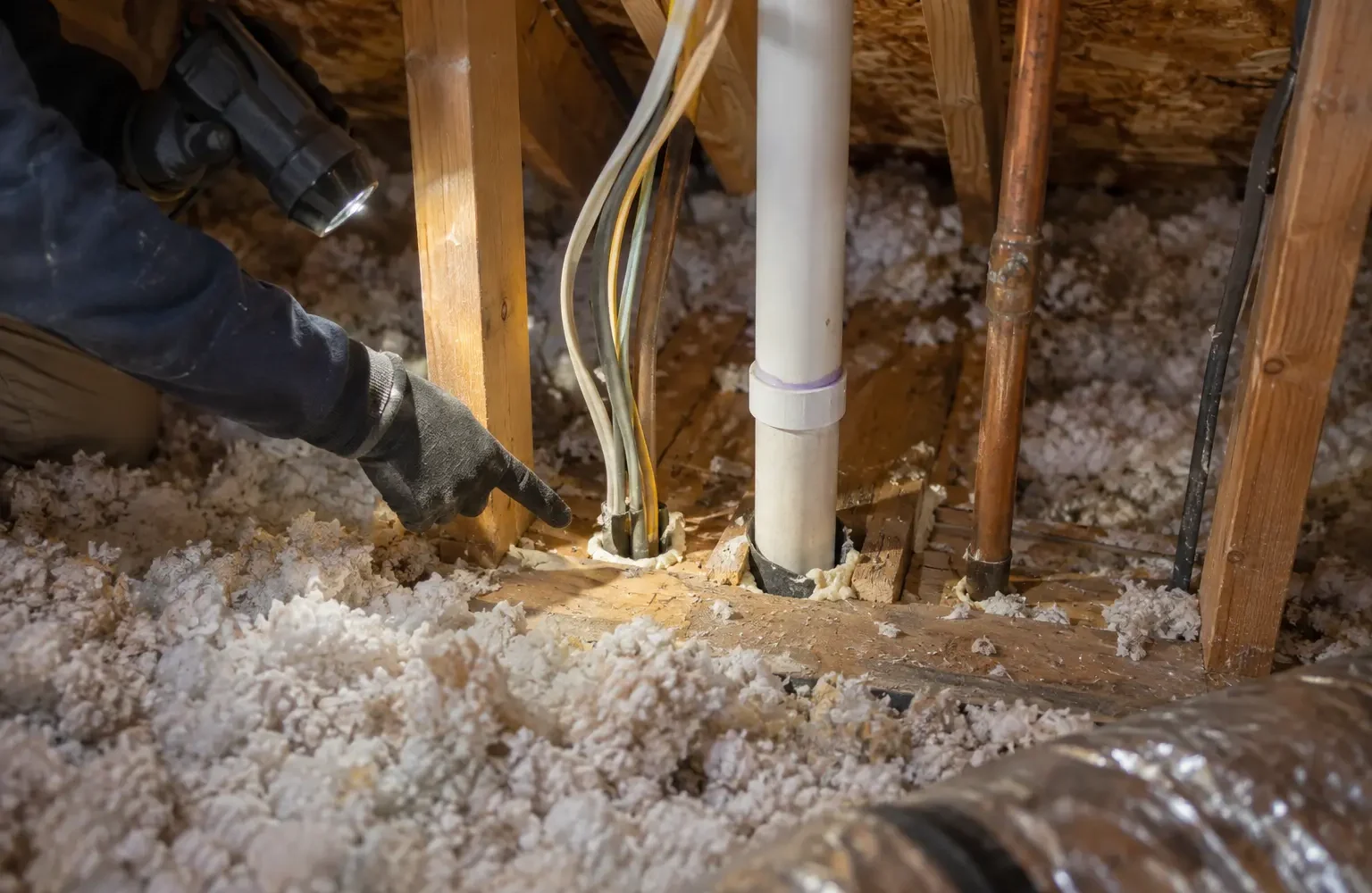
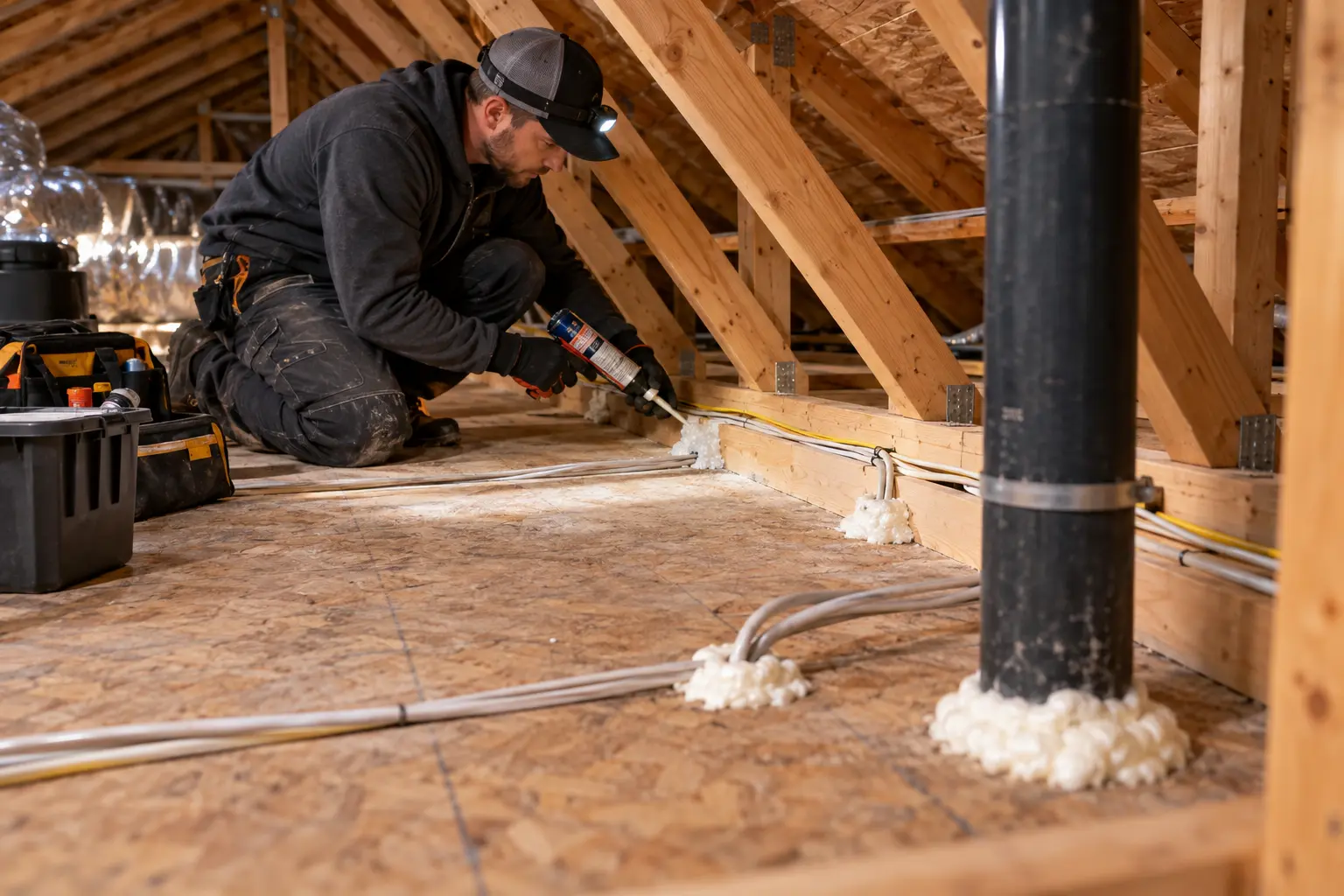
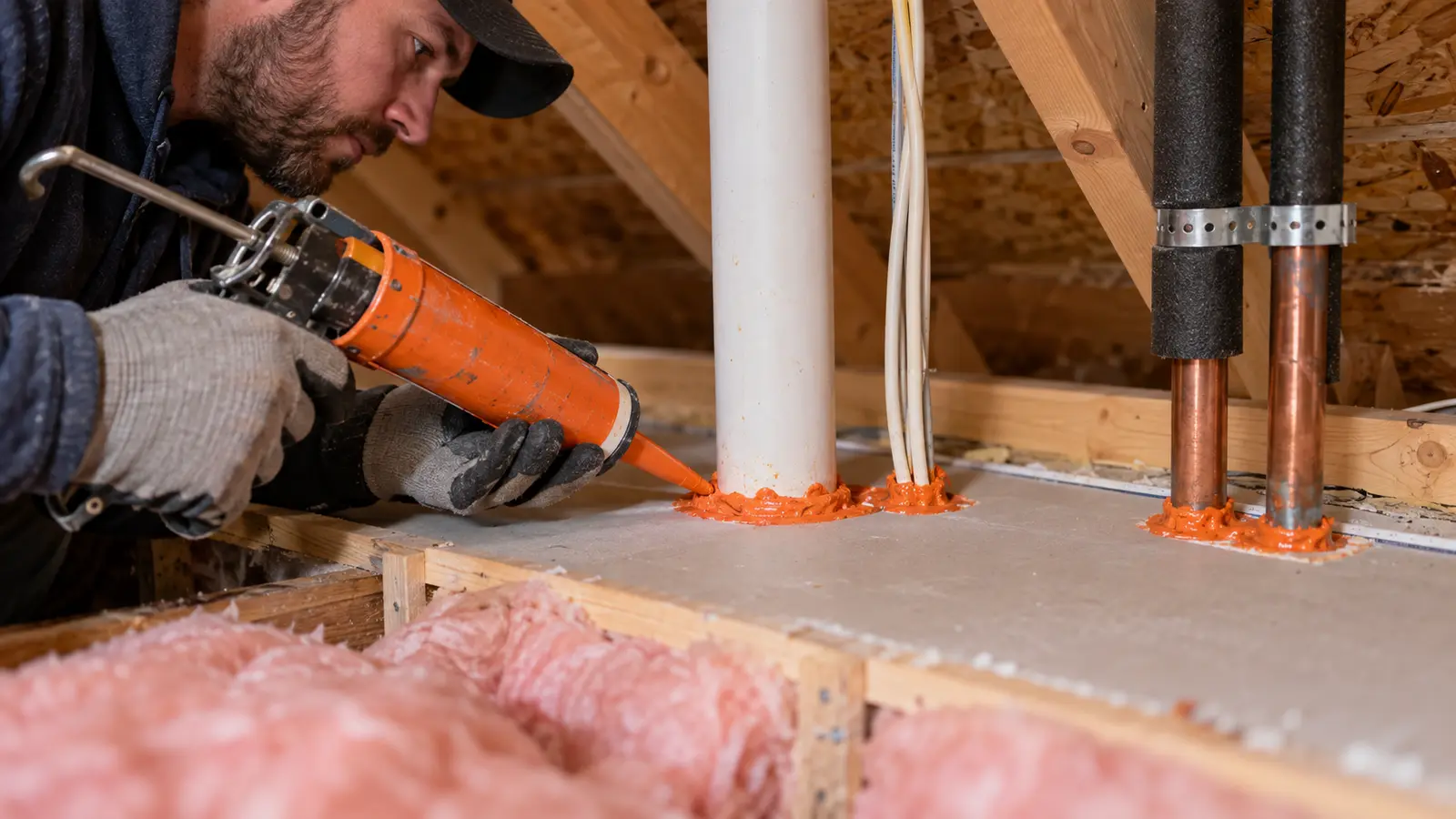
Attic air sealing reduces uncontrolled air movement through accessible gaps in the ceiling plane. Common locations include plumbing and wiring penetrations, partition top plates, attic hatches and some fixture details.
Start with the assembly
Plan the work around the existing condition
Warm indoor air can carry moisture into a cold attic through small openings. That can affect comfort and may contribute to winter condensation. Air sealing is different from attic ventilation: one limits leakage from the house, while the other manages intended airflow through a vented roof assembly.
- Drafts near the attic hatch or upper-floor partitions
- Visible gaps around services at the attic floor
- Frost patterns suggest indoor air is reaching the roof deck
- Insulation is being removed or upgraded, opening access
Assessment
What should be checked before the scope is set
- Top plates, chases and service penetrations
- Attic hatch curb and cover
- Recessed fixtures and heat-producing components
- Flue and chimney details requiring approved clearances
Possible scope
The work should follow the findings
These are common directions, not automatic inclusions. The final scope depends on access, existing materials and the condition found on site.
Seal accessible small penetrations with compatible materials
Build durable dams or covers around appropriate details
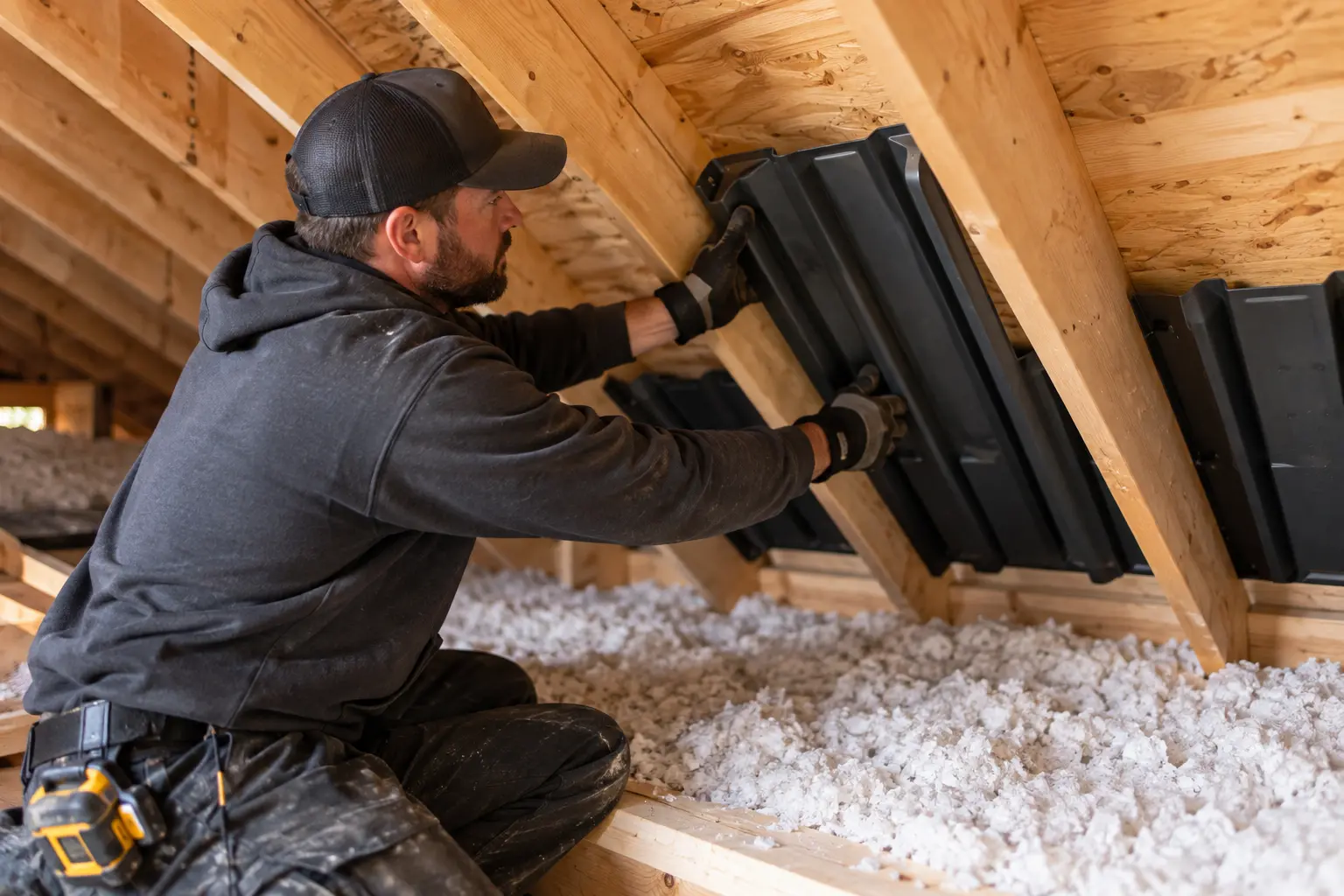
Coordinate air sealing before loose-fill placement
Oakville planning context
How the local housing condition can shape the scope
Cold Oakville winters make air-carried moisture especially visible when it freezes against roof sheathing. Accessible sealing at the ceiling plane can be important, but indoor humidity and exhaust routing still need to be considered.
Important boundary
Not every cavity is accessible from the attic, and combustion or fire-rated assemblies require the correct products and clearances. Air sealing also does not replace roof ventilation where the assembly is designed to be vented.
Questions homeowners ask
Attic Air Sealing FAQs
Is spray foam always used for air sealing?
No. Sealants, gaskets, rigid materials and approved fire-rated products may be used depending on the detail.
Will air sealing make the house too tight?
A whole-home ventilation question cannot be answered from one attic detail. Broader air-tightness work may warrant testing and ventilation review.
Should air sealing be tested?
An energy assessment with blower-door testing can quantify whole-home leakage and may be required for certain incentive routes.
Related planning