What this can mean
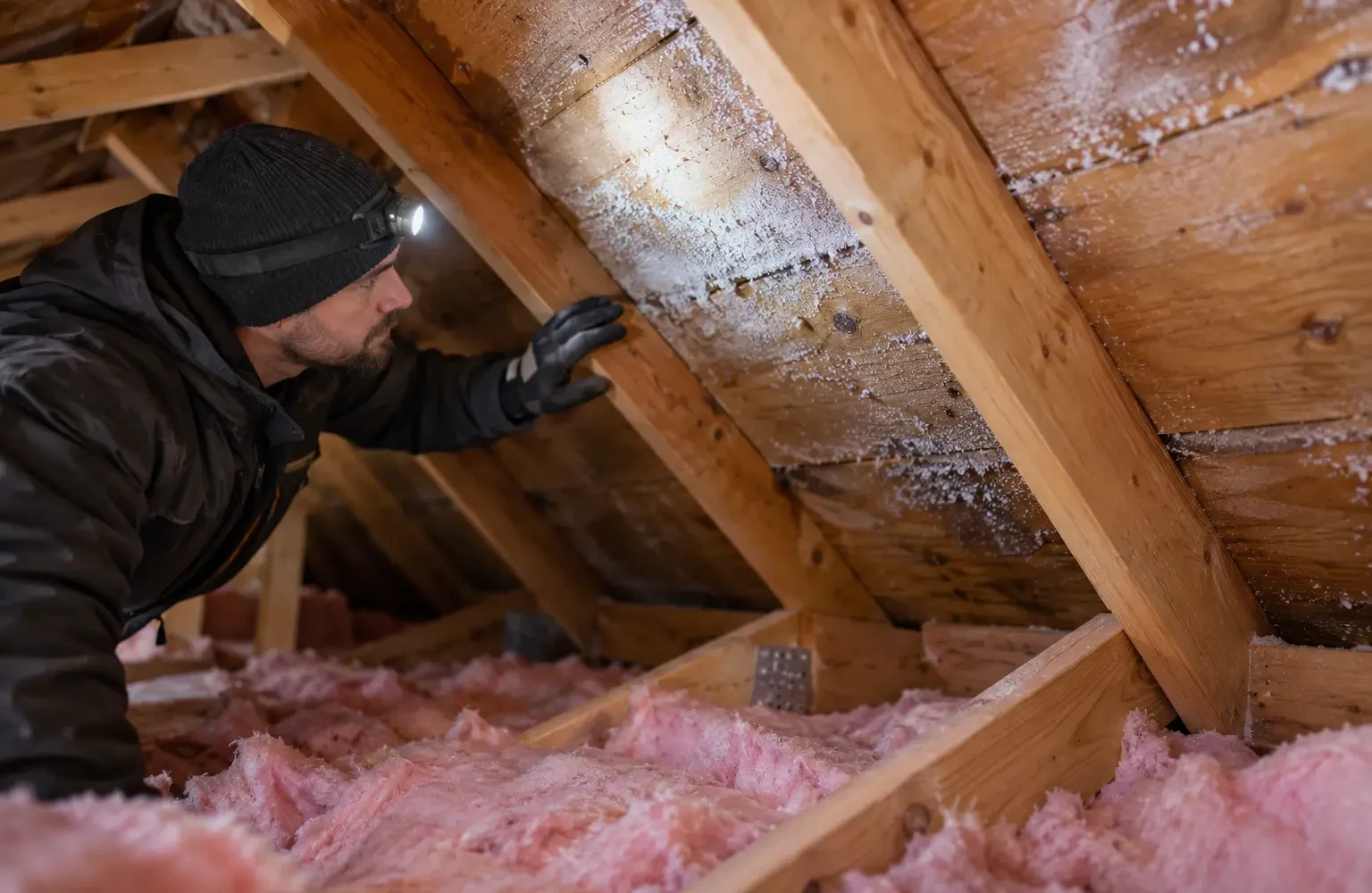
Winter frost forms when moisture reaches a cold surface and freezes. In attics, the moisture may come from indoor air leakage, a disconnected exhaust duct, high indoor humidity or, less commonly, an exterior water source.
Potential contributors
Look beyond a one-cause answer
- Warm moist indoor air leaking through ceiling gaps
- Bathroom or kitchen exhaust entering the attic
- High winter indoor humidity
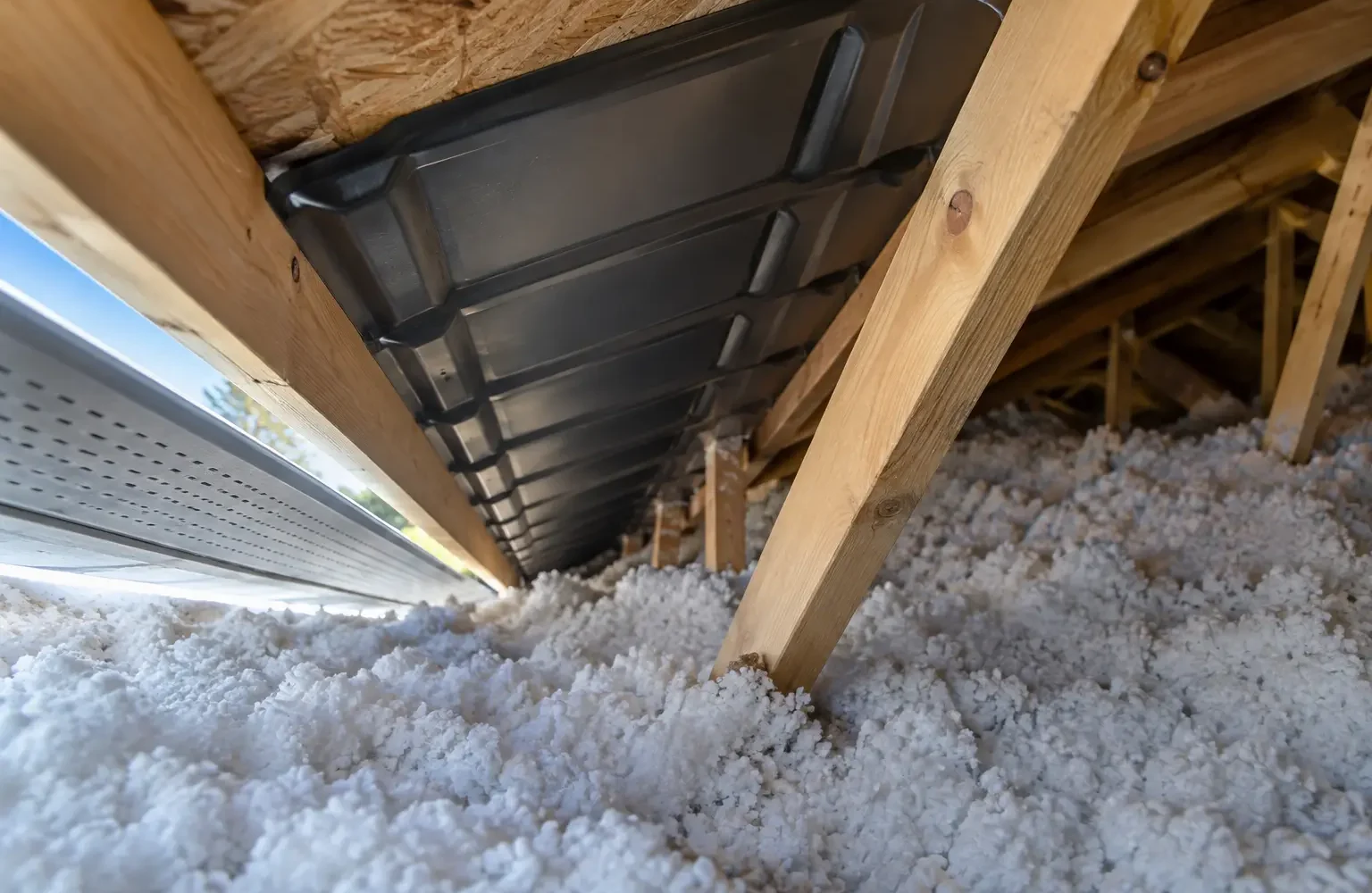
- Blocked intake paths or an unbalanced vent system
- Roof leakage that resembles condensation staining
Useful checks
Evidence that narrows the next step
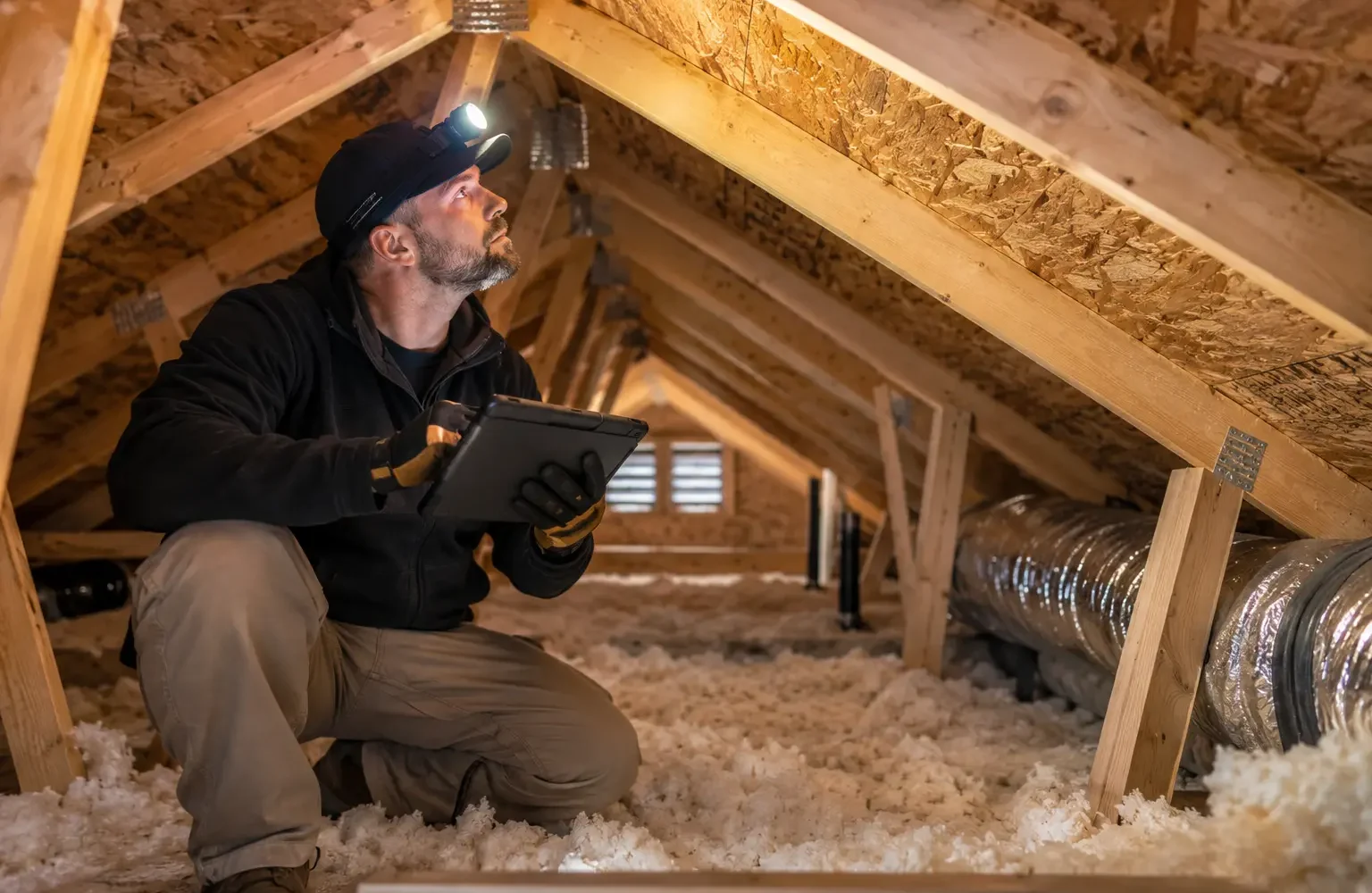
- Map frost and staining patterns
- Check exhaust duct connections and exterior terminations
- Inspect ceiling penetrations beneath affected areas
- Review indoor humidity and ventilation habits
Moisture investigation
The location and pattern of frost help identify how moisture arrived
Uniform light frost during an extreme cold event differs from heavy localized buildup below a plumbing chase or disconnected bath fan. Photograph the roof deck before the weather changes, note indoor humidity and map the pattern to rooms and exhausts below.
Indoor air can carry substantial moisture
Cooking, bathing, humidifiers, drying laundry and occupants add water vapour. When warm air leaks through the ceiling, it cools at the roof and releases moisture. Frost stores that water temporarily; a warm day can turn it into drips and wet insulation.
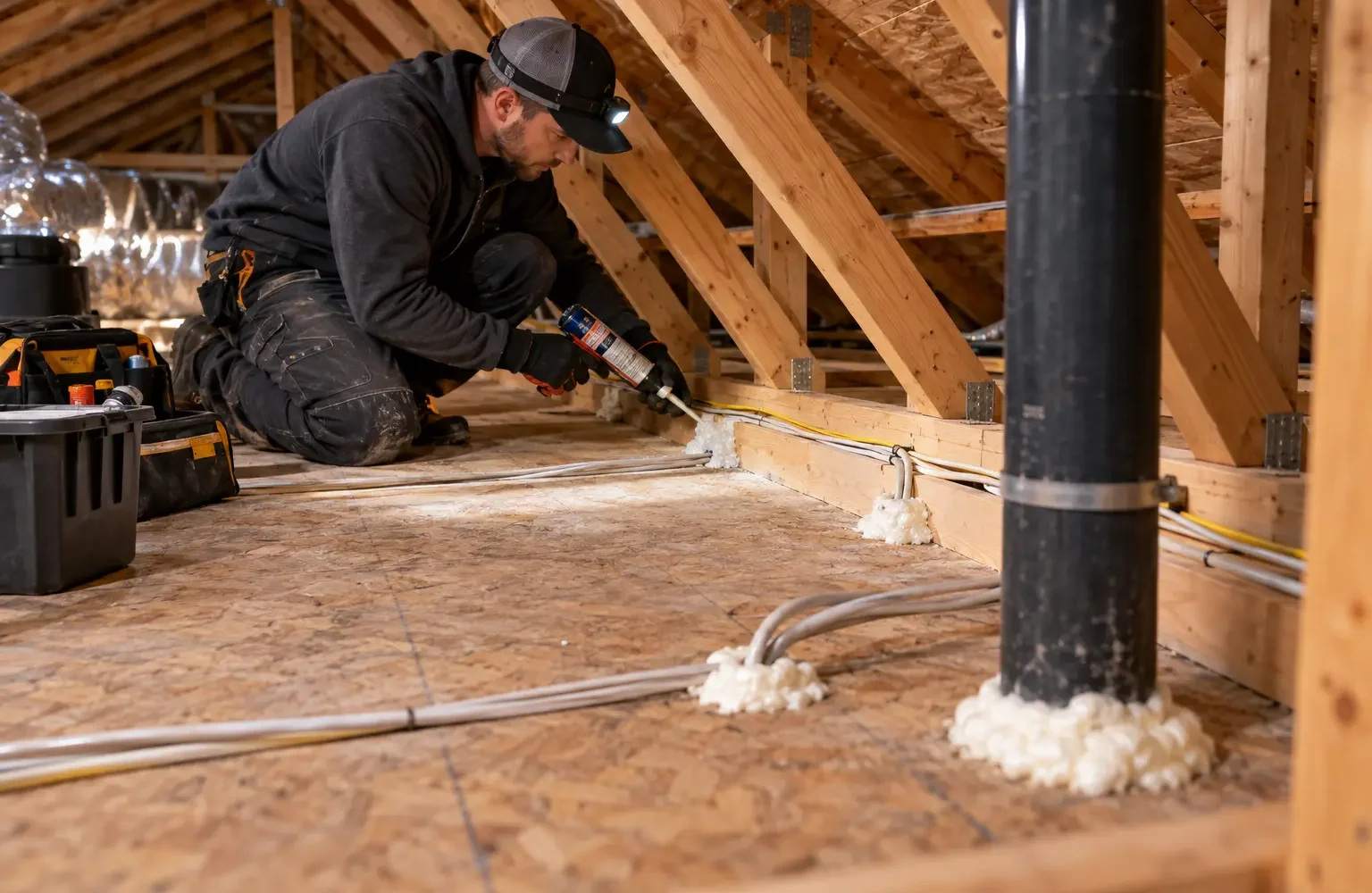
Accessible air sealing can reduce transport, but indoor humidity and exhaust performance still need attention. Closing one path without controlling the source may move the symptom elsewhere.
Water can also enter from outside
Roof coverings, flashings and vents can leak during wind-driven rain, snow or freeze-thaw events. Exterior water may follow framing before it stains the ceiling, so the wettest insulation is not always directly beneath the entry point.
Roof repairs and drying precede replacement insulation. A moisture meter and qualified roofing review may be appropriate when the source remains uncertain.
Roles
Insulation, air sealing and ventilation solve different parts of the problem
Reduces conductive heat flow through the ceiling but does not close a plumbing chase or connect a fan duct.
Limits accessible indoor-air paths while respecting fire and heat clearances.
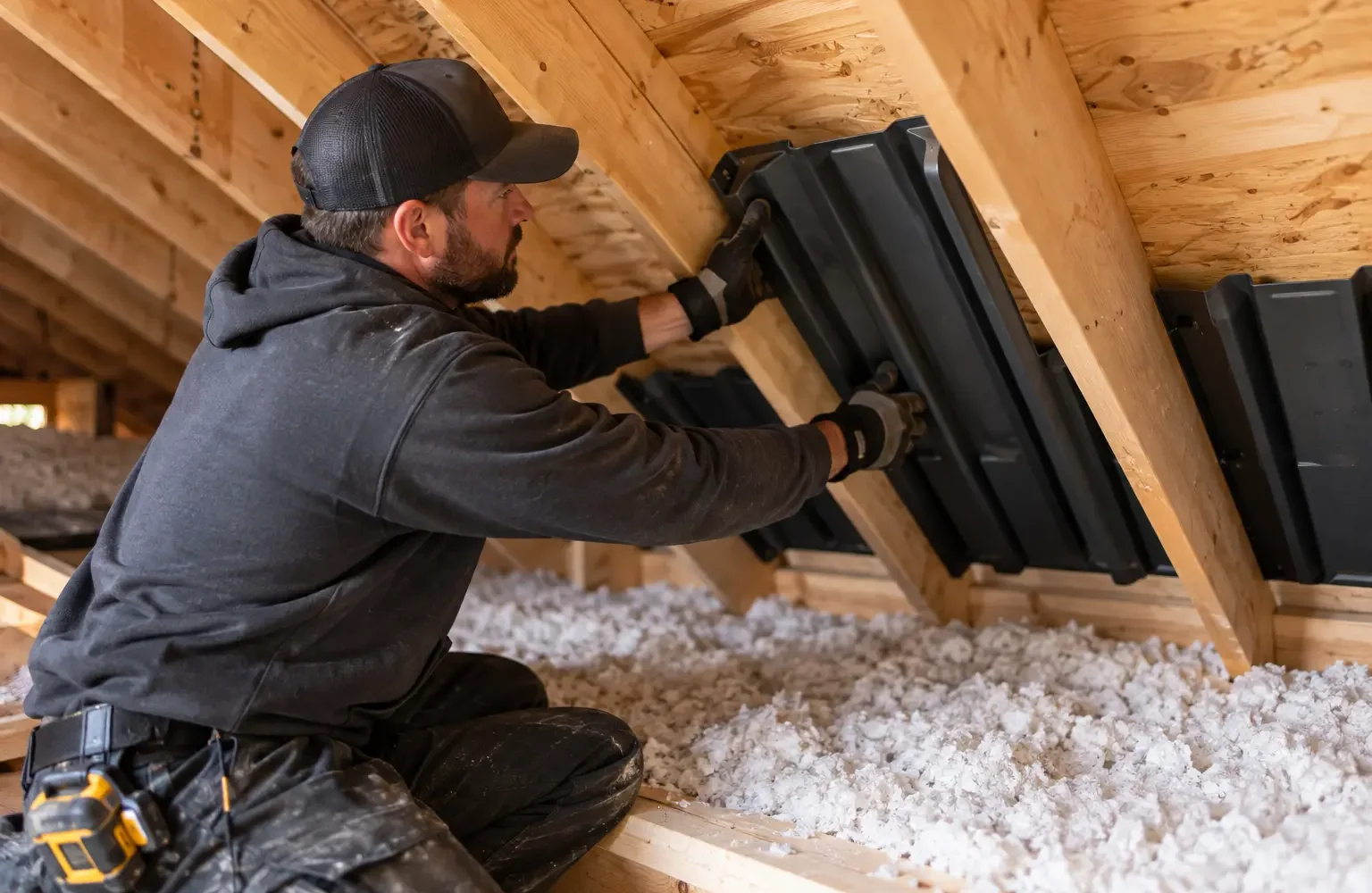
Moves small background loads through an intentional eave-to-roof path in a conventional vented attic.
Adding roof vents is not a substitute for tracing a disconnected exhaust. Adding insulation over wet fibre is not a drying plan. The remedy follows the identified source and the way the roof assembly was designed to operate.
Preserve evidence before it melts
Oakville frost can disappear between a cold night and a daytime inspection. Photographs, indoor humidity readings, fan use and the outdoor temperature create a useful record. Later staining, rusted nails or matted insulation can confirm history but may not reveal the original distribution as clearly.
Document the symptom
Create a record that can be compared after the work
Photograph the location and pattern before weather or repairs change it. Record the affected rooms, time of day, outdoor conditions, indoor humidity when relevant, equipment operation and recent roof or renovation history. These observations help separate an attic finding from window, HVAC, roofing or household factors.
Ask the written scope to name the finding it is intended to address, the areas included, preparation, material or repair approach and any cause that remains outside the insulation contractor’s role. If another qualified trade must act first, that sequence should be explicit. This keeps a symptom page from turning into a default product recommendation.
After corrective work, repeat the same observations under reasonably similar conditions. A useful review looks for a change in the original symptom and confirms that the completed scope preserved access, clearances, exhaust routing and intended ventilation. Record any area that remained concealed or inaccessible so a future inspection does not mistake absence of evidence for proof of condition.
Results should be described in terms the treated assembly can influence. Exact room temperatures, energy bills, humidity and roof behaviour still depend on weather, equipment, windows, other enclosure areas and household operation. It does not replace specialist testing where the original condition falls outside ordinary insulation work.
Oakville planning context
Connect the symptom to the home
During cold Oakville weather, moisture that reaches roof sheathing may freeze and disappear before a later inspection. Photographs of the pattern, indoor humidity readings and exhaust-fan use can help preserve useful evidence.
What may happen next
The scope may combine air sealing, exhaust correction, insulation restoration and baffle work. Vent additions alone should not be assumed to solve moisture carried from the house.
Clear answers
Questions about attic condensation & frost
Is a little frost normal?
Any recurring frost deserves attention because meltwater can wet insulation and sheathing.
Will more insulation stop condensation?
Not if moist air continues to leak into the attic or an exhaust duct is disconnected.
Relevant services