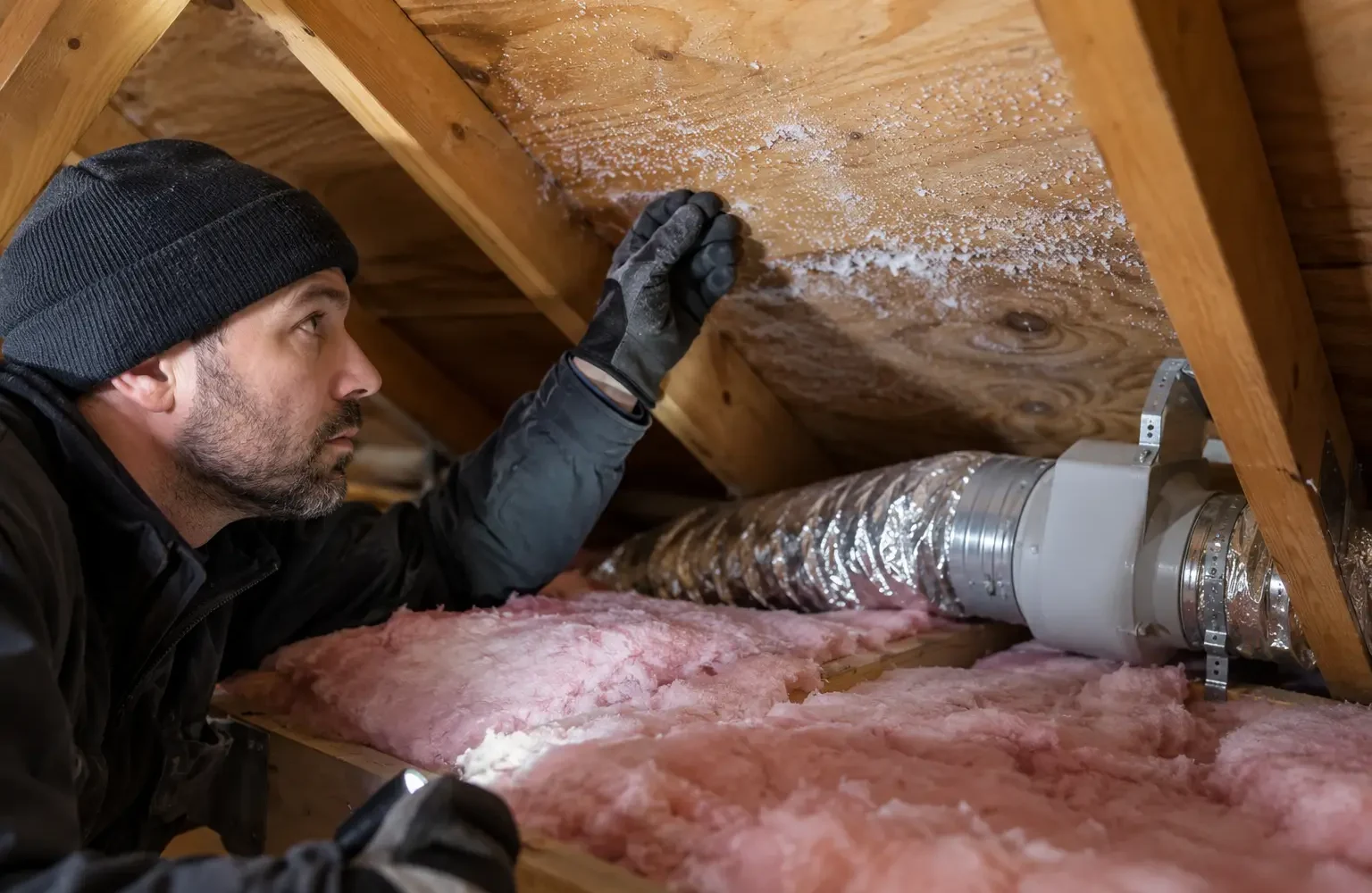
Frost is frozen moisture on a cold attic surface. The solution depends on where that moisture came from and why it reached the roof deck. Insulation, air sealing and ventilation play different roles.
Where attic moisture comes from
Indoor air contains moisture from cooking, bathing, people and plants. When that air leaks through ceiling gaps, it can reach cold roof sheathing and condense or freeze. A disconnected bathroom fan can deliver moisture even faster. Roof leakage and wind-driven water can create similar staining.
The role of insulation
Insulation reduces heat flow through the ceiling. Consistent coverage helps keep interior surfaces warmer and reduces heat reaching the roof. But insulation does not stop air movement through a plumbing chase or hatch gap, and it does not reconnect an exhaust duct.
The role of air sealing
Air sealing targets accessible leakage paths at the ceiling plane. Around heat-producing equipment and chimneys, approved details and clearances are essential. The best time to seal is often before a deep top-up hides the attic floor.
The role of ventilation
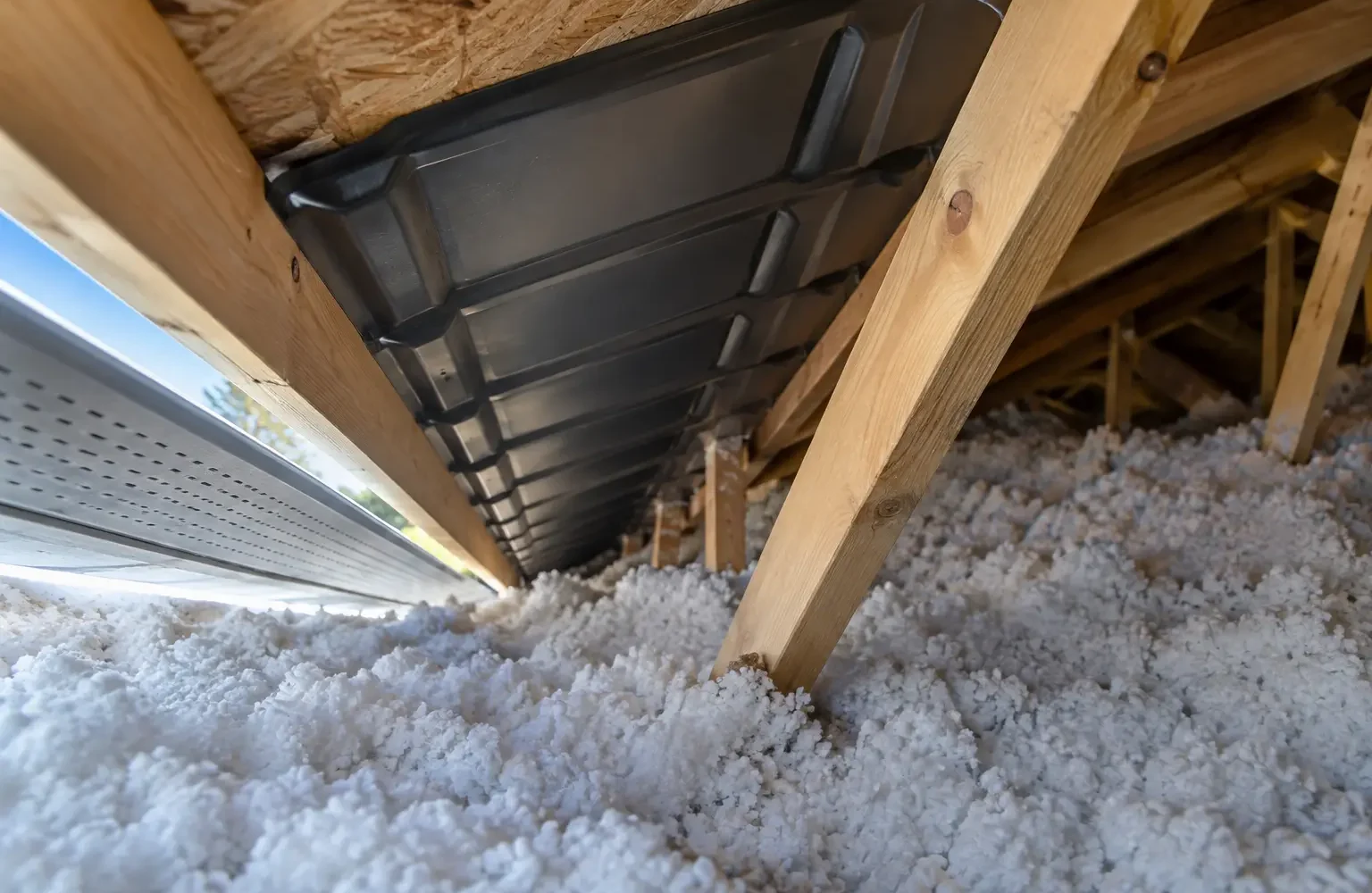
In a conventional vented attic, soffit intake and roof exhaust help carry away small background moisture loads and heat. Baffles keep insulation from blocking intake paths. More roof vents are not automatically better: a system needs a coherent path.
A useful investigation sequence
- Photograph the location and pattern before frost melts.
- Check indoor winter humidity.
- Trace bath and kitchen exhaust ducts to exterior terminations.
- Look for ceiling leakage beneath the affected roof area.
- Inspect soffit baffles and roof vents.
- Rule out exterior water entry.
Why spring stains still matter
Frost may disappear before the attic is inspected. Dark nail marks, tide lines, compressed wet insulation and staining can still show where meltwater travelled. Material condition and sheathing dryness should be checked before replacement.
Do not guess between vents and insulation
Map the moisture source first, then choose the combination of repairs and attic work that follows.